
High-Level Project Summary
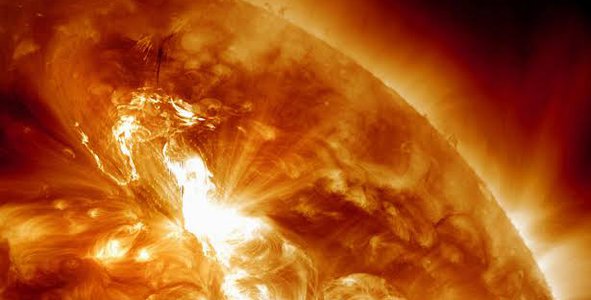
The Carrington Event was the most intense geomagnetic storm in recorded history, peaking from 1 to 2 September 1859 during solar cycle 10. It created strong auroral displays that were reported globally and caused sparking and even fires in multiple telegraph stations. we develop our solution by using machine learning and neural networks it is important because it need to cuts off the electricity.Electromagnets for storing information using magnetic recording devices. For example, when data is stored on a computer's hard drive, tiny magnetic pieces of metal are placed on the disk, forming a specific outline of the saved information. This data is stored in the computer as binary programming
Link to Final Project
Link to Project "Demo"
Detailed Project Description
for example if the data is in a period of 10 years, we will make a prediction for 6 months. If a day is in a storm, it will happen to me that there is a storm, and it will work with a neural network. I have a multiple var. I mean, I have 5 rows, one row comes out.
Select a row that is my reference or target, and I will start to see the prediction. If its target increases, this means that there is a Storm using RNN algorithms
resources and tools:
CDF Library, Python packages, Data product documentation, Data about solar flux, Machine learning algorithms
Space Agency Data
We used the data that was on the NASA website.. The data helped us understand the characteristics of the storm when it occurred in the past. By understanding the data, we can implement machine learning and neural network and train our model on the data so that it can accelerate the ability of spacecraft to quickly give the necessary warnings
Hackathon Journey
This challenge was important in knowing how to deal with cdf files.. as we were exposed to this type of files for the first time.. and we were able to deal with it and learn more about machine learning and neural networks
References
resources and tools:
we use data from Nasa website that there was in resources
tools :CDF Library, Python packages, Data product documentation, Data about solar flux, Machine learning algorithms
https://cdaweb.gsfc.nasa.gov/pub/data/wind/mfi/mfi_h2/2022/
https://omniweb.gsfc.nasa.gov/