
High-Level Project Summary
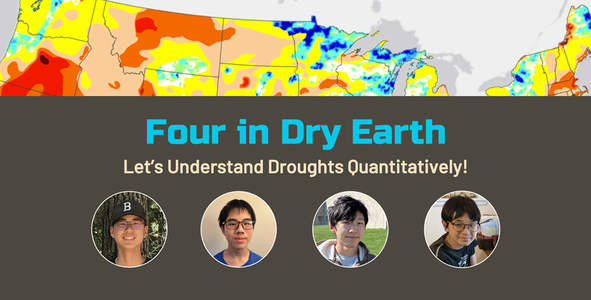
Severe droughts have become an increasing problem throughout the United States. To try and understand more about these droughts and places in severe droughts, we used hierarchical clustering to understand how features such as precipitation of cities with similar drought levels compared with each other. Moreover, we developed a Raspberry Pi device that was capable of displaying these drought severities and various features to allow people easier access to these useful pieces of drought information.
Link to Final Project
Link to Project "Demo"
Detailed Project Description
On average, in the year of 2019, droughts covered about 22% of the whole country (Annual 2019). Now, as of the year 2022, droughts cover a whopping 42.65% of the United States, an equivalent of 41 states (National). As these numbers show, this dramatic increase in drought occurrences has become an increasing problem over the last few years. Combined with the fact that droughts are capable of devastating months' work of crops, drying up water sources, and even contributing to other natural disasters such as wildfires, this natural disaster cannot be overlooked. To try and understand and eventually combat these droughts, we looked to see if there were any patterns or similarities between the features of locations with similar drought levels. Unfortunately, just looking at the numerical values of features in the NASA database proved very difficult to compare, especially when the number of features increased. Because of this, we used a method known as hierarchical clustering to compare these cities and their features. Moreover, accessing the NASA database and drought maps whenever someone wants to check the current drought statistics is not always feasible nor efficient; thus, we made a Raspberry Pi device that can display this information with more simplicity. These include things such as drought levels from 0-4, precipitation, irradiance, and many others.
For the clustering portion of the project, we first tried to figure out what features may affect a drought. As a hypothesis, we came to two conclusions: the amount of precipitation and irradiation a location gets impacts the droughts, and the large mountain ranges that separate places like Washington create wet and dry climates that also influences the droughts. For our first hypothesis, we chose to compare the precipitation and irradiance of 4 states, CA, KS, FL, and MA, and selected about 6 cities from each to input into the python clustering algorithm. This outputted 3 main groups: the CA group, the MA and FL group, and the MA and KS group. Looking into this in more detail, we were able to deduce that along with confounding variables, California had completely different precipitation and irradiance level compared to the other cities, even the severe drought cities in KS. As for the MA cities being split, the ones with low drought levels were with FL, and the ones with high levels were grouped with KS. This means that precipitation and irradiance have a high chance of greatly impacting droughts as they correspond to the level of drought severity. As for the second hypothesis, we chose random cities in Washington along route 90. Using the NASA databases, we gathered information about All Sky Surface Shortwave Downward Irradiance and Temperature at 2 Meters Maximum at the cities we chose, along with their elevations. We input them into the clustering algorithm and found that the elevation seems to matter because each clustered group had a similar elevation.
As for the portion with the Raspberry Pi device, our objective was to make a way to display the severity of droughts and other factors that affected the occurrence of droughts. To do so, we decided to use a Raspberry Pi, a small single-board computer, and a display, an E-Paper display (2.13 Inches), to show the data. To get the drought data, we imported the data from NASA Power to access factors of droughts such as irradiance, temperature, precipitation, humidity, and the severity of droughts in the current address of the Raspi. We also had to choose which information in the list we should show in the display since our display was really small. In the end, we chose to display the current address, the severity of drought, irradiance, and precipitation as we thought they were some of the biggest causes or factors that can affect if drought happens in that area or not. After choosing our features, we coded the Raspi so that information like current Address (Nearest County), the severity of the drought (0-4), surface level temperature, Humidity (%), a three-day forecast consisting of current/minimum/max temperatures of the present day, and the like could be presented on the Adafruit OLED display.
Overall, with this project, we successfully created an efficient and feasible method of comparing features of cities and a Raspi device that displayed these pieces of information. We hope that these items will be able to benefit or assist in the increasing problem of droughts, and we will continue to try and improve and build upon these devices.
Space Agency Data
This project used the following data.
Downloaded data are displayed on our OLED/e-paper display and supplied to a clustering algorithm.
NASA POWER: https://power.larc.nasa.gov/
Hackathon Journey
Before this project, many of us did not know the extent of how dangerous and devastating the droughts could be. After our mentors introduced us to the topic and we did the necessary research, we became intrigued. This project also granted us the opportunity to experiment with the E-Paper and OLED displays and the hierarchical clustering method, and we look forward to improving this project to advance its usefulness and accessibility. Finally, this has been a very educational and enjoyable experience for all of us, and we thank everyone who made this project possible.
References
NASA POWER: https://power.larc.nasa.gov/
US Drought Monitor (USDM) Comprehensive Statistics Data Service:
https://droughtmonitor.unl.edu/DmData/DataDownload/ComprehensiveStatistics.aspx
Drought.gov