Awards & Nominations
Aliennaires has received the following awards and nominations. Way to go!
Global Nominee

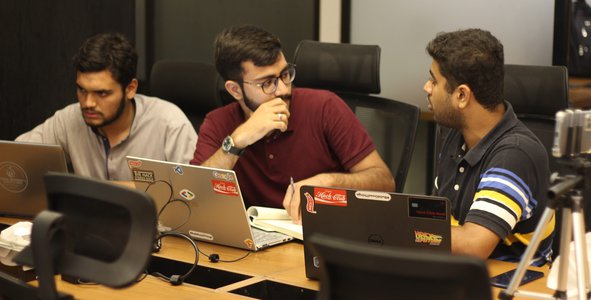
Aliennaires has received the following awards and nominations. Way to go!
We have successfully Developed a method to produce and store electricity for rover operation on venus. Considering the atmospheric conditions of venus.We used a thermal couple generator to create power The high temperature was provided by a radioactive thermal generator Powered on pol-289 and the reference temperature was generated by a cooling station that used the joule Thompson effect on heliumThe Voltage created by the thermal couple was told in a lithium sulfate battery stored in vacuumed white body
Thermoelectric Generation with Cooling Station and Vacuum Storage System
This system is based on four different chambers that include the radioactive thermal generator, a voltage generator, a cooling station, and a white body enclosed storage chamber.
• The radioactive thermal generator
Po-238 will undergo natural decay to produce a temperature of 1000oC. This chamber will serve as the high-temperature node for the thermocouples.
• A cooling station
The cooling station will be used to reduce the outside temperature by increasing the pressure using the principle of Joule Thomson’s Effect. Helium gas will be used for this purpose as it is highly compressible and nonreactive and therefore it will serve as an efficient gas for creating a cool environment.
Using this equation, we can reduce the temperature inside the chamber to 250 C by controlling the pressure. This low-temperature end will be efficient to create the difference in temperature for the running of the thermocouple in the voltage generator.
• A voltage generator
Thermocouples with one end having T=1000oC and the other end at Tref=250 oC will be used to generate the voltage using the following expression.
Vo = α (T – Tref)
Here α depends on the material.
• A white body enclosed storage chamber
The storage devices will be enclosed in a vacuum chamber with is further enclosed in a white body (reverse of blackbody). The white body serves to reflect the maximum radiation and then there is a layer of vacuum in which the lithium sulfate batteries are stored. The blackbody chamber absorbs about 97% of the radiation and keeps the temperature inside. A reverse system to a blackbody is a white body system where the maximum radiation will be reflected to maintain a particular temperature inside a chamber. In order to keep the batteries safe from exploding, we propose that the Lithium-Sulphate battery should be placed inside a white body chamber. This approach can help in keeping them safe from high temperatures and maintain an ideal temperature for the efficient working of the batteries.
We use most of the research from the NASA open library that includes the model and details about the rover Also we used some of the references to study the solar parker.
We use japan's aerospace exploration data to study the past visits to venus and last but not least the resources shared on the problems page helped a lot and we also used the data and research paper from google scholar as well.
Participating in this Hackathon has been one of the best experiences for us as our knowledge and interests kept evolving throughout. We started with minimal knowledge about Venus and the energy storage for space missions and came out of the hackathon with in-depth knowledge of Venus and some major energy-based space mission which is a huge achievement
We would like to that that Dr.Yazdani and other mentors who helped and guided us along the way to tackle the problem and find the most appropriate solution.
https://2019.spaceappschallenge.org/challenges/planets-near-and-far/memory-maker/details
https://techport.nasa.gov/view/92914
https://sbir.nasa.gov/SBIR/abstracts/21/sbir/phase1/SBIR-21-1-S3.03-3308.html
https://solarsystem.nasa.gov/news/1519/venus-resources/?page=0&per_page=40&order=created_at+desc&search=&tags=Venus&category=324
https://solarsystem.nasa.gov/resources/549/energy-storage-technologies-for-future-planetary-science-missions/
https://iopscience.iop.org/article/10.3847/1538-4357/abdf4a
https://sa-2019.s3.amazonaws.com/media/documents/Space_Apps_2022_Project_Submission_Guide.pdf
Some pdf files shared in the NASA SPACE APPS discord.
https://2019.spaceappschallenge.org/challenges/planets-near-and-far/memory-maker/details
https://techport.nasa.gov/view/92914
https://sbir.nasa.gov/SBIR/abstracts/21/sbir/phase1/SBIR-21-1-S3.03-3308.html
https://solarsystem.nasa.gov/news/1519/venus-resources/?page=0&per_page=40&order=created_at+desc&search=&tags=Venus&category=324
https://solarsystem.nasa.gov/resources/549/energy-storage-technologies-for-future-planetary-science-missions/
https://iopscience.iop.org/article/10.3847/1538-4357/abdf4a
https://sa-2019.s3.amazonaws.com/media/documents/Space_Apps_2022_Project_Submission_Guide.pdf
Some pdf files shared in the NASA SPACE APPS discord.
#venus #space #inovation #exploration
Your challenge is to design an energy storage system that will power a surface lander or rover on the surface of Venus for at least 60 days, so that there is a viable energy storage capability for long-duration exploration missions.