
High-Level Project Summary
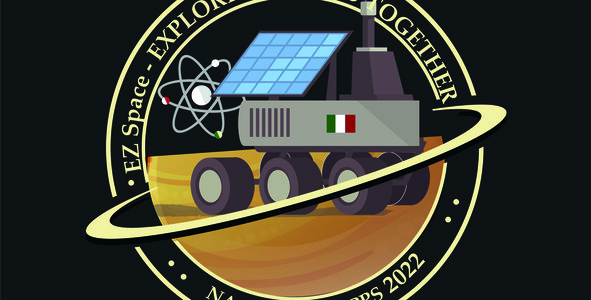
What did you develop?Develop an energy storage system that will power a lander or rover on the surface of Venus for 60 days.How does it "solve" the challenge?It is planned to implement a combined cycle turbine, which is a technology that unites a gas turbine with a condensing steam turbine in a way that increases efficiency. Why is it important?Our project is important since it offers a solution to extend the energy in the mission with the explorer Rover on the surface of Venus as well as the implementation of an energy storage system powered by the winds on the planet.
Link to Final Project
Link to Project "Demo"
Detailed Project Description
What exactly does it do?
The project solves the creation of energy on venus using the strong amounts of wind caused by hurricanes, with technology used to generate energy in a combined plant.
How does it work?
The operation is in two phases, the first phase is responsible for supplying energy to the complete rover with the first turbine, the second phase is responsible for feeding the batteries in the event that the first turbine fails here we use the aeregel to reduce the temperature of batteries and thus achieve a longer life of the same
What benefits does it have?
The benefit is that there is a contingency plan in case the first system fails and to be able to extend the life of the rover, it is not as expensive as making a weak nuclear function, and it is sought that maintenance is not needed and it has a long life.
What do you hope to achieve?
We hope to make it a cheap and quite efficient option when it comes to collecting data from venus, using technology that we have and in the future create new technologies.
What tools, coding languages, hardware, or software did you use to develop your project?
The tools we used were canva, word, discord, whatsapp, solidworks
Space Agency Data
Aerogel:
https://www.nasa.gov/topics/technology/features/aerogels.html
Power and batteries:
- https://solarsystem.nasa.gov/resources/549/energy-storage-technologies-for-future-planetary-science-missions/
- https://www.esa.int/Enabling_Support/Space_Engineering_Technology/Just_add_graphene_for_greener_Li-ion_batteries
- Just add graphene for greener Li-ion batteries
- Energy Storage Technologies for Future Planetary Science Missions |...
Rover:
Turbine:
Venus:
- https://solarsystem.nasa.gov/news/1519/venus-resources/?page=0&per_page=40&order=created_at+desc&search=&tags=Venus&category=324
- https://www.esa.int/Space_in_Member_States/Spain/Los_rapidos_vientos_de_Venus_se_estan_acelerando#:~:text=El%20resultado%20de%20dos%20estudios,el%20transcurso%20de%20la%20misi%C3%B3n
- Venus Resources – NASA Solar System Exploration
- Los rápidos vientos de Venus se están acelerando
Hackathon Journey
How would you describe your Space Apps experience?
A fascinating experience, sharing ideas for a project in so few hours is a real challenge. Seeing the other teams working on their projects is motivating, communication and organization with the team makes for a unique experience.
What did you learn?
We learned to work as a team to carry out a solution to our problems.
Organize time and work to have more efficiency in the progress of the project.
What inspired your team to choose this challenge?
The challenge that we chose on the exploration of venus was exciting since it is a little known planet and we are excited to discover the secrets it holds along with the future missions that NASA is preparing for its exploration.
What was your approach to developing this project?
The approach to develop our project was to find a solution to the energy storage system, as well as its loading on the planet's surface using combined cycle turbines. We also focus on the extreme conditions of the planet such as atmospheric pressure, temperature and winds.
How did your team resolve setbacks and challenges?
Designing a work plan, defining our objectives and using planning methods such as a Kanban table helped us visually see the process we are carrying out and measure our times.
Communication through specialized apps made us combine our ideas to define our solutions.
Is there anyone you'd like to thank and why?
To global and local organizers for their efforts in carrying out the event, sponsors and agencies that contributed their resources to offer solutions.
References
Canva
Excalidraw
Adobe Illustrator
Word
Discord
Website data for the turbine:
- https://www.tecnicaindustrial.es/wp-content/uploads/Numeros/105/4341/a4341.pdf
- https://history.nasa.gov/DPT/Technology%20Priorities%20Recommendations/Breakthrough%20Materials%20DPT%20Jul_00.pdf
- https://www.ingenieria.unam.mx/deptohidraulica/publicaciones/pdf_publicaciones/SELECyDIMENSIONAMIENTOdeTURBINAS.pdf