Awards & Nominations
FL-Active has received the following awards and nominations. Way to go!
Global Nominee

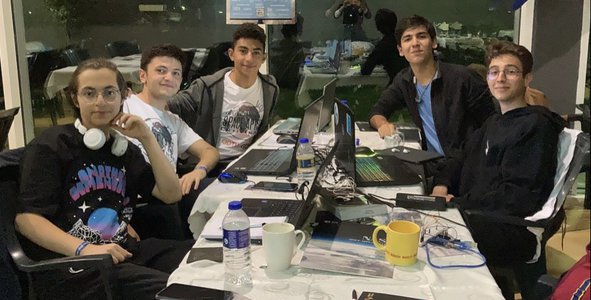
FL-Active has received the following awards and nominations. Way to go!
The rover to be sent to Venus needs an energy generation and storage system that will meet its energy needs for 60 days. In this environment where conventional batteries did not work due to the extreme conditions of Venus, more original and innovative ideas were needed. Our system uses MMRTG power supplies to generate electrical energy. We will use Cyclotron systems to store the energy we produce. These systems store kinetic energy on particles using electrical energy. In this way, we create polarization and allow a current to flow through the system, and from there we generate electrical energy again.
“The goal outlined in the Exploring Venus Together theme is to prepare a storage system that can power a Rover Lander to be sent to Venus for at least 60 days.”
RTG (Radioisotope Thermal Generator) systems are a kind of nuclear energy system. The logic of the system is that it converts the heat energy generated by the reaction of a radioactive material into electricity with the Seebeck effect.
MMRTGs (Multi-mission RTG) are designed according to the use of 8 GPHS compositions. Each MMRTG contains 4.8kg of PuO2, producing approximately 2000 watts of heat energy and 110 watts of electrical energy. MMRTG; It is 64cm in diameter, 66cm in length and weighs approximately 45kg.
The reason why MMRTGs are preferred as RTG systems is that they are light, safe and cost-effective compared to RTGs.
The Cyclotron is a particle accelerator that keeps particles in a spiral orbit by a static magnetic field and accelerates them thanks to a rapidly changing electric field.
It is a mechanical system formed by applying a magnetic field orthogonally to two semi- discs connected by an RF source.
Cyclotrons accelerate the particle, giving it "kinetic energy". Based on this, we decided to design an "energy storage system" from cyclotrons.
The particle, which comes to the last orbit of the cyclotron it is in, will pass to the larger cyclotron in a lower layer and go as far as the storage (infinite) cyclotron, which has no exit in the last layer. And it will be stored ready for use.
In the system we have created, the “pressure vessel” that will be used to protect the circuit from pressure and other factors will act as a protection shield.
The pressure vessel has a container like structure toprotect the system from high pressure in terms of design.
The power for the small sized cyclotron system to be used is 12.5 W, according to data from previous similar sized studies.
As a result of the calculations made from the data tables of the cyclotrons and the amount of energy that the conductor to be used will lose according to its resistivity, the cyclotron can increase an electron to 0.45 W, while this becomes 0.4428 W with the impedance.
While the system is waiting, it will not be discharged, but it will lose some power as its kinetic energy is converted into heat energy.
The recommended power value for science research is 98.4W, 68.4W during movement, 25.3W when not performing a task, 49.3W during communication.
Rover's average power value will be between 100-120W throughout the entire mission (Landis, 2014). The RTGs we use as a power system produce an average of 130-150W of power.
A system that will operate for 60 days needs to produce approximately 600 MW of power. Plutonium-238 is used for this production.
The targeted 60-day energy system has been achieved, and thanks
to this system, it has become possible to carry out missions longer
than 60 days.
In addition, most of the features and tasks that NASA wanted for the
system were fulfilled and errors were minimized.
In our project, we used the open studies published by NASA to calculate the power consumption of the rover, calculate the energy we will obtain from the RTG, and calculate the energy required for 60 days. In particular, we used NASA Venus Research resources to obtain the necessary information about the environment of Venus. Using this open data, we have improved the calculations of our project and achieved more accurate results.
We’ve been excited since the day we submitted to the space apps challange. Then at the competition, everybody was perfect and wonderful. They were all like angels to us. They also helped us in any kind of problems that we had. So it was a nice experience to participate in this year’s challange.
Surampudi,R. (2017). Energy Storage Technologies for Future Planetary Science Missions. California.
Breeze, P. (2018). Power System Energy Storage Technologies. 33-45.
Salazar,D. (2014). Non-Cooled Power System for Venus Lander. Texas.
Liu, H. (2021). High Temperature All Solid-State LiAl-CO2 Batteries for Venus Missions. New Castle.
Landis, G. A. (2010). Battaries for Venus Surface Operation. Ohio.
NASA. (2022, September 14). Venus Resources – NASA solar system exploration. NASA. Retrieved October 2, 2022, from https://solarsystem.nasa.gov/news/1519/venus-resources/?page=0&per_page=40&order=created_at%2Bdesc&search=&tags=Venus&category=324
NASA. (2022, September 14). Venus Resources – NASA solar system exploration. NASA. Retrieved October 2, 2022, from https://solarsystem.nasa.gov/news/1519/venus-resources/?page=0&per_page=40&order=created_at%2Bdesc&search=&tags=Venus&category=324
NASA. (2022, September 14). Venus Resources – NASA solar system exploration. NASA. Retrieved October 2, 2022, from https://solarsystem.nasa.gov/news/1519/venus-resources/?page=0&per_page=40&order=created_at%2Bdesc&search=&tags=Venus&category=324
NASA. (2022, September 14). Venus Resources – NASA solar system exploration. NASA. Retrieved October 2, 2022, from https://solarsystem.nasa.gov/news/1519/venus-resources/?page=0&per_page=40&order=created_at%2Bdesc&search=&tags=Venus&category=324
NASA. (2022, September 14). Venus Resources – NASA solar system exploration. NASA. Retrieved October 2, 2022, from https://solarsystem.nasa.gov/news/1519/venus-resources/?page=0&per_page=40&order=created_at%2Bdesc&search=&tags=Venus&category=324
#Venus
Your challenge is to design an energy storage system that will power a surface lander or rover on the surface of Venus for at least 60 days, so that there is a viable energy storage capability for long-duration exploration missions.