Awards & Nominations
Fly-High has received the following awards and nominations. Way to go!
Global Nominee

Fly-High has received the following awards and nominations. Way to go!
Different space agencies have been trying to explore venus since 1961. But every time the excessive atmospheric pressure, atmospheric chemicals and temperature create a challenge. To solve this problem we are going to use a composite made of Carbon Fibe and silicon fabric.This will protect energy source from high pressure and other chemical reaction.We are also using metal Carbon-di-oxide Battery which will work as a renewable energy source and provide us constant energy to explore venus.
It's been 30 years since NASA visited venus. But in June 2021 three new missions to Venus were announced. NASA announced two of them.But to explore the surface of Venus is difficult.The last spacecraft to land on Venus was the Soviet vega 2 mission in 1985.But it only survived 52 minutes. Nine Soviet probes achieve the feat. But none of them lasted longer than 127 min.

Fig: Verena 13 Surface on Venus
Because of the atmosphere of Venus. That's why we took the challenge to develop a spacecraft that can deal with the damage and can explore venus longer. Venus is the second planet from the sun. It is 108.2 million km far from the sun and 61 million km from the earth. The surface temperature on Venus is about 900 degrees F(475 degrees C ).

Fig: Thermal view of Venus
This temperature is hot enough to melt lead. It is sometimes called earth tween because venus and earth are almost the same size, have the same mass, and have very similar composite(same materials). That’s why it’s very important to gather more knowledge about Venus. And to do so we need enough time to explore it.
But the problem we are facing to do so is enough energy, battery storage, and pressure.
The surface of venus is one of the most challenging environments for the operation of spacecraft with a surface temperature of around 460 degrees Celcius and a surface atmospheric pressure of 92 bar of CO2 conventional power technologies are not useable. Some battery technologies can be adapted to the high-temperature environment. New primary battery technology for venus surface operation is proposed, which uses the in situ CO2 atmospheres as a reactant. This technology would allow high-specific energy density and thus extend the operating time of a battery-powered surface mission.
For situ planetary exploration missions, energy is required to power scientific instruments gather and process the data collection and communicate the result back to earth .Energy is also often required to move a vehicle on the surface. Batteries are typically used to store and deliver this energy . However currently available batteries can’t operate in the extremely hot (460 degrees C ) and the high-pressure atmosphere (93 bar) containing caustic chemicals (SO2, HCl, HF)exposed to these conditions, common batteries would rapidly fail. All previous missions the components were contained in a pressure vessel, which eventually heated up to a temperature at which components could no longer operate and the mission ended.

FIG:3D model of our proposed composite-made model
To solve the temperature and pressure problem we are using a composite made of carbon fiber and silica fabric. This composite can also solve the chemical reaction problem.
1. It has a tensile strength of ability to tolerate 5,00,000 PSI.
2. Low thermal expansion.
3. Low weight(Five times than steel).
4. Non-Hazardous for the environment.
It's going to protect the battery from high pressure and Chemicals but we need to use a protective layer of Silica Fabric to protect the system from excessive heat conductivity.

FIG: Layer of Carbon Fiber

Fig: Layer of Silica Fabric
These two fibers are going to make a composite protector which going to protect the battery and the power storage from venus's harsh atmosphere.
We are going to use PES(Poly Ether Sulfone) resin to attach those materials together.
All these properties together make the resin a good choice for joining.

FIG: Vacuum Chamber
The vacuum chamber helps the system to protect the Internal components.
Because the vacuum is a good isolator. It reduces heat that comes out from our composite layers and hardly conducts through the vacuum.

For the energy storage problem, we will use the metal-carbon battery. Metal carbon (CO2) batteries can create energy by using atmospheric carbon. The hostile environment of high temperature and CO2 pressure has limited previous Venus surface mission durations to less than 2 h giving only a glimpse of the Venus surface, despite the use of considerable insulation, phase-change materials, and similar heat sinks to isolate the payload and avionics from high surface temperatures. NASA has initiated studies to develop new power technologies that can tolerate the high Venus surface temperature of 465 °C and pressure of 92 bar, and operate for future long-duration Venus landers and probes. Such in-situ investigations are crucial to gather basic information on the crust, mantle, core, and bulk composition of Venus for understanding the evolutionary paths of Venus in relation to Earth. In this paper, we describe the development of high-temperature primary batteries based on lithium alloy anodes, transition metal sulfide cathodes, and molten salt electrolytes. Among the various cathode materials examined for thermal stability and for electrochemical activity, this has emerged as the most suitable cathode. With optimized cell components, cell design, and operational parameters, laboratory test cells were fabricated, which demonstrated the continuous operation of ~26 days at 475 °C. These batteries will enable new long-duration surface missions for detailed surface exploration of Venus.
CO2

FIG: Metal CO2 cell
Our proposed composite will protect the battery from the atmospheric temperature and chemical reactions caused by the H₂SO₄, SO₂ or HCl etc. It will also protect the battery from the atmospheric pressure of venus. we get enough time and energy to explore venus.
As we need to make a sustainable storage system without changing the battery size or weight, a metal-carbon battery is suitable. As venus has full access to atmospheric carbon. This battery can produce energy as long as it gets atmospheric carbon. Venus hides a wealth of information that could help us better understand Earth and exoplanets. NASA's JPL is designing mission concepts to survive the planet's extreme temperatures and atmospheric pressure. This image is a composite of data from NASA's Magellan spacecraft and Pioneer Venus Orbiter.
Advantages of our project 'Venus Master':
1.By using silica fabric protect the outer layer of power energy storage.silica fabric has thermal resistance up to 100 degree Celsius to 1000 degree Celsius and it's also acid resistance which going to protect the outer layer from harsh enviornment.
2)By using Carbon fibre sheet in the inner layer of our energy storage we give the protection because of high temperature, high melting point and high tensile strength of the carbon fiber.
3)The carbon metal batteries will recharge itself from the atmospheric carbon which is a sustainable system for long exploration like 60 days.
4)Suitable for Harsh Chemical Enviornment , where it is rich in CO2,H₂SO₄,HCl etc.
5)Overall the composite will improve the performance of our battery system,that will help future rover mission to sustain longer then 60 days.

Fig:Venus
These are the space agency data which are used for making the project successful.
1.https://www.nasa.gov/feature/jpl/the-return-to-venus-and-what-it-means-for-earth
2.https://www.nasa.gov/feature/goddard/2021/davinci-ten-mysteries-of-venus
4.https://solarsystem.nasa.gov/missions/venera-13/in-depth
5.https://images.app.goo.gl/GEJPZzAzv6zUwNv66
6.https://www.nasa.gov/feature/jpl/nasa-wants-your-help-designing-a-venus-rover-concept
7.https://youtube.com/watch?v=EmWQiq-tAy4&feature=share
8.https://youtube.com/watch?v=EmWQiq-tAy4&feature=share
9.https://appel.nasa.gov/2012/07/30/5-7_venus_engineering-html
10.https://solarsystem.nasa.gov/missions/venera-9/in-depth
11.https://www.nasa.gov/feature/automaton-rover-for-extreme-environments-aree/
12.https://www.nasa.gov/feature/jpl/the-return-to-venus-and-what-it-means-for-earth
13.https://www.nasa.gov/feature/goddard/2021/davinci-ten-mysteries-of-venus
15.https://solarsystem.nasa.gov/missions/venera-13/in-depth
16.https://images.app.goo.gl/GEJPZzAzv6zUwNv66
17.https://www.nasa.gov/feature/jpl/nasa-wants-your-help-designing-a-venus-rover-concept
18.https://www.nasa.gov/feature/jpl/the-return-to-venus-and-what-it-means-for-earth
19.https://www.nasa.gov/feature/goddard/2021/davinci-ten-mysteries-of-venus
21.https://solarsystem.nasa.gov/missions/venera-13/in-depth
22.https://www.nasa.gov/feature/jpl/nasa-wants-your-help-designing-a-venus-rover-concept
23.https://appel.nasa.gov/2012/07/30/5-7_venus_engineering-html24.https://solarsystem.nasa.gov/missions/venera-9/in-depth
25.https://www.nasa.gov/feature/automaton-rover-for-extreme-environments-aree/
27.https://techport.nasa.gov/view/92914
28.https://sbir.nasa.gov/SBIR/abstracts/21/sbir/phase1/SBIR-21-1-S3.03-3308.html
30.https://www.nasa.gov/feature/automaton-rover-for-extreme-environments-aree/
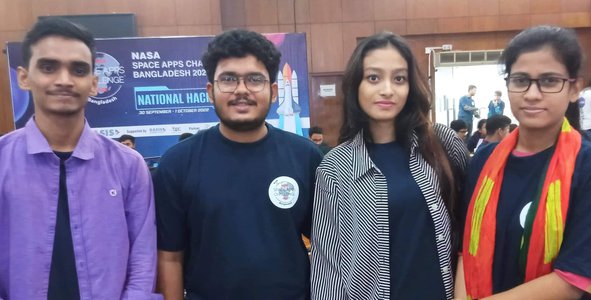
It's our first hackathon experience. Because of covid 19, we couldn’t attend in 2020 and 2021. It had been a hectic one but it's going to leave us with a lifetime of memories. Attending a hackathon improves our competitive brain like nothing else. We interact with people and work on problems, learn teamwork. and learn techniques that we might never have used, at least this was what happened with us. Moreover, we have met people like us from all over the country and got a chance to interact with them. This year's Hackathon was really challenging for us because it happened during our final exam. But our challenges inspire us so much that we still continue our journey.
1)Blender-For 3D Modeling.
2)Solidworks-For 3D Modeling.
3)Inshot-For video editing.
4)Capcut-For video editing.
5)eDrawings-viewing 3D Models.
https://drive.google.com/drive/folders/1fWDRE84XV0hr7LhijsD0tZ8Vi3X0Jntm
1.https://www.sciencedirect.com/science/article/abs/pii/S0921509311002838
3.https://www.seeker.com/stories/nasa-wants-this-rover-to-explore-venus
5.https://www.sciencedirect.com/science/article/abs/pii/S0921509311002838
7.https://www.seeker.com/stories/nasa-wants-this-rover-to-explore-venus
8.https://www.researchgate.net/figure/Properties-of-silica-fibre-and-coating-materials_tbl2_270543853
9.https://2019.spaceappschallenge.org/challenges/planets-near-and-far/memory-maker/details
10.https://dragonplate.com/tips-and-tricks-to-bonding-carbon-fiber-strips
11.https://www.harperintl.com/complete-carbon-fiber-lines/?
gclid=CjwKCAjwhNWZBhB_EiwAPzlhNnuqVnDUXNNXGSyu9GSmh3m_2S2mAEin_2-IiNPhmVqB30-7WUkrhxoCZeUQAvD_BwE
13.https://www.sciencedirect.com/science/article/abs/pii/S0921509311002838
#venus, #rover, #exoplanet,#acids, #pressure, #Temperature,#carbon fiber #silica fabric #vaccume high temperature and pressure ,#polyether sulfone,#earth