
High-Level Project Summary
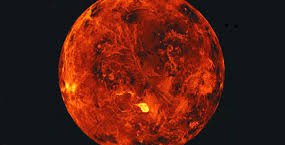
RedRock Spectrum focused on creating modified hybrid spacecraft to solve the challenge of exploring the hostile Venus environment for prolonged periods. The solution is a 4 component storage system comprising of: Peltier Pressure Vessel, Thermoelectric generator, Mechanical Oscillator and Venus Pneumatic Turbine. These components function by cycling and amplifying mechanical force until required for use in locomotion, actuation and communication. This is a mechanical battery system able to withstand the adverse conditions of Venus. This allows collection of scientific data for prolonged periods. Hence, it allows better understanding of the environmental evolution of the "Earth-like" planet.
Link to Final Project
Link to Project "Demo"
Detailed Project Description
The Venus Rover-Design features
Dimensions:
Length 3m
Width 2.5m
Height 2m
Materials: Aluminium alloys and titanium since they can resist high temps and is also light
Total mass: approximately 1000kg
Source of Power…Thermoelectric generators and extra energy can be stored in a mechanical round oscillator batteries for a more balanced energy density. The stored energy is proportional to the moment of inertia is the material used to make the rotor and the square of angular velocity E=0.5Iw^2. These mechanical batteries release energy at a 95.5% efficiency. It has to be made of high tensile materials such as titanium or magnesium or aluminium alloys as it increases the energy storage capacity.
Dimensions: 2cm thick hollow cylinder with a 2cm wide border and find for rotation inside.
Mass …approximately 600g
Moment of inertia….0.03kgm^2
Estimated velocity….50mps
Estimated energy stored per second….75J
Operational temperature 500 deg C……
Energy use
Most of the energy produced by the generators is used for locomotion and maintaining internal conditions.
Some is used for processing of information and transferring the information as well.
The stored energy is used when the generator malfunctions and gives out 100J of energy per second. This means it would last about 10 days since the storage capacity of the battery is around 500kwh.
Safety
There is an inlet that uses a mini pump to draw in gases and filters them so that only CO2 is stored for purposes of extinguishing any sparks that may form since it’s too hot on Venus.
There won’t be too many electric cables in the surface rover. Rather there will be a mini plane that orbits in middle atmosphere that will relay the information between the earth and the rover.
The rover has an outer layer comprising of ceramics as there are unreactive and have very high melting points to prevent any possible unintended chemical reactions.
The rover is installed with springs made of titanium alloys to withstand the strong impact with the surface on landing.
The landing mechanism will deploy a parachute (made of heat resistant material.) consisting of a reefing system. The parachute will be deployed many km away from the surface and the reefing cable will melt as the rover descends into lower orbit to increase the surface area of the parachute.
Tools used:
For proper simulation of all the stated components, we had to modify open source simulations from the GRABCAD Community. Applications used were Autodesk 360, Canva, Filmmaker and Fusion to properly present and document the research as well as neatly presenting the simulations and prototypes.
Space Agency Data
We read all the articles provided as resources in the NASA Space Apps Exploring Venus Together Challenge. The main aim was to get a swing and enlightenment on the required content of the project. We used the content in the articles to further research certain innovations in the international space exploration industry.
From doing so, we were able to envision the right project to make and the right inventions to bring to life in the simulation making process. We used space agency data on automotive rover for extreme environments, mechanical battery structures e.g. the flywheel, spacecraft design materials, the planetary conditions of Venus, previous missions to Mars and data collected as well. Most of the data collected was for use in authenticating the technical and economic feasibility of the spacecraft simulations.
Hackathon Journey
The Space Apps Challenge came our way awkwardly; a request by The Space Apps Challenge Harare to follow us actually. We didn't have an idea of what it exactly was but we chose to take the leap of faith and engage directly with the opportunity. As we got to learn more about the opportunity, we certainly got obsessed with the challenge and found something that was completely new and uncharted territory for us: Venus Space Exploration!
We specifically chose this challenge because it's unfamiliarity to us made us want to prove our worth and go the extra mile. We began by drafting a rough description of what we would want to visualise at the very end. From there onwards, it was now thorough brainstorming to find the most feasible, convention breaking and novel ideas. There was division of the task into invention drafting and simulating, web and content creation then documentation and system calculations. Interestingly enough, the approach made the challenge more approachable and solvable.
The Venus Exploration Challenge was quite demanding, given we're just A level students trying to draft, formulate, simulate and authenticate hybrid space crafts. There was demand for creativity, resilience, hope, perseverance, teamwork and positivity to ensure that the project becomes a success. During the 1-2 October challenge period, we had to work for lengthy periods of time and into the late night hours as well. It wasn't particularly easy but we enjoyed the adrenaline punch of the adventurous journey we had chosen to take. We felt further refined and made worthy by the trial of completing the challenge.
We'd simply like to offer a sign of gratitude to the Space Apps Challenge for finding us; if it wasn't for their humility to reach out to us we wouldn't have been exposed to this brilliant experience. And much thanks is also offered to all RedRock Spectrum team members for their service and decisive effort.
References
- https://arc.aiaa.org/doi/pdf/10.2514/1.41886
- https://www.nasa.gov/feature/automaton-rover-for-extreme-environments-aree/
- https://www.nasa.gov/exploring-hell-venus-rover-challenge
- https://solarsystem.nasa.gov/news/1519/venus-resources/?page=0&per_page=40&order=created_at+desc&search=&tags=Venus&category=324
- https://solarsystem.nasa.gov/news/1519/venus-resources/?page=0&per_page=40&order=created_at+desc&search=&tags=Venus&category=324
- https://techport.nasa.gov/view/92914
- https://solarsystem.nasa.gov/resources/549/energy-storage-technologies-for-future-planetary-science-missions/
- https://grabcad.com/library/tesla-turbine-180mm-od-152mm-id-1
- https://grabcad.com/library/peltier-cooling-unit-thermoelectric-cooling-system-1
- https://grabcad.com/library/thermoelectric-generator-teg-with-candle-1
- https://grabcad.com/library/thermo-electric-cooler-1
- https://grabcad.com/library/tesla-wind-turbine-1
- https://grabcad.com/library/tesla-turbine-18
- https://grabcad.com/library/pressure-vessel-108
- https://grabcad.com/library/pressure-vessel-107
- https://www.google.com/search?q=radioisotope+battery&client=tablet-android-samsung-nf-rev1&tbm=isch&prmd=isvn&sxsrf=ALiCzsZB3uaUzftHNNk4QOEw0yNfy-JxFw:1664620804398&source=lnms&sa=X&ved=0ahUKEwjqh-3d6776AhXYRUEAHdSWABUQ_AUIFigB&biw=800&bih=1280&dpr=1.5#imgrc=0F8rY3nHdGD3mM
- https://grabcad.com/library/termoelektrik-generator-1
Tags
# hardware # space exploration #advanced