Awards & Nominations
The warriors has received the following awards and nominations. Way to go!
Global Nominee

The warriors has received the following awards and nominations. Way to go!
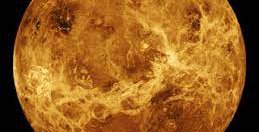
The main objective of this power system is to create a simple and effective power generation and storage system. In this project the storage system is going to be broken down into multiple stages and methods of power extraction in case any one of them fails or is not able to operate. There are 2 main sources of power that we are going to be using from Venus. The first is the air and the atmosphere and the second is the heat. This solution solves the challenge because we are able to use the resources of Venus and use little or no resources from Earth, thus making it a 90%+ INSITU utilization project. This is important as missions need to sustain without resupply missions.
The main project is called the Zeus power system. The main reason why it is called the Zeus power system is because the main thing about the system is that it does not need any electricity for itself and instead only relies on generating electricity which makes the amount of electricity required is 0, this is something unique as a lot of systems need electricity to operate certain units which reduces the amount of output electricity that is needed thus making those systems less efficient. The main way our system works is by utilizing 2 main types of power generation systems, the first one is a Venusian wind system which relies on the winds and the pressure of Venus to spin the turbines of the power module to generate electricity. This is going to be the primary source of power. The second system is a heat based thermoelectric system that relies on the heat of Venus and the heat that's present inside the power modules to convert the heat into electricity and thereby convert and extract the heat on the surface's of the power systems to make them cooler. The thermoelectric system is going to be the secondary and backup power systems as it is going to be used only when there is a increase in temperature inside the main power system. The main way the Venusian windmill works is when the wind and the pressure on Venus causes the blades to start spinning the turbines and changing the induction inside the copper coils to generate electricity. This is then transferred by the electronics such as the mosphets and the SiC (silicon carbide) electronics on the power modules. The secondary system works by extracting the heat using the Seebeck effect, after this happens the heat that is converted and absorbed can be converted into electricity. This can act as a cooling and a power system at the same time which makes it very efficient, this is because when the temperature rises the thermoelectric system can absorb that energy and convert it into electricity and thereby reduce whatever heat is remaining. The main way we are going to be insulating the systems is by using layers of MLI including hafnium carbide, aerospace gold, reinforced titanium and layers of aerogels. The main structure of the power system and the windmill is going to be made out of titanium and carbon fibres as well as steel alloys combined together. This is to make sure that the entire system is reinforced properly and so that it can sustain the pressures of launch/descent/cruise. The main system is going to be insulating and providing long term insulation as well however the main cooling system is going to be made out of thermal tapes and is going to be utilizing the Seebeck effect based thermoelectrical generators and aerogels to absorb the heat, in addition to all of this the main module is going to be operating in complete vacuum so that we are able to limit the amount of heat transfer that happens by conduction and convection and limit it to only radiation. When this happens there will be very little heat that will still be there, with the cooling systems the remaining heat can be extracted and used thereby reducing it even further. The operational temperature is expected to be around 40-80 degrees Celsius in the main system. This is going to be achieved as the main module is going to be in a vacuum state from the point of launch from Earth and before launch the main system is going to be loaded with cryogenics and cooling systems that would allow the electronics and the microcontrollers to work, whenever there would be a increase in temperature on Venus the Seebeck and the cooling systems would be initiated thereby reducing the temperature, the sensors on the module would wait for approximately 10 degrees Celsius in increase of temperature before coming into play and cooling the system again and utilizing the heat. The main systems and the heat-electricity systems are going to be made out of materials such as tin telluride. The insulation and the cooling systems is going to be the same for the turbines as well however they are all going to be centralized to the one located in the power module. The windmill electronics would need to be cooled as well as they would be directly in contact with the Venusian atmosphere and hence the cooling will be wired into the electronics module and will be compartmentalized as a separate module and hence would follow the same procedure as the main power module does in terms of cooling systems. The main wires and cooling systems will be reinforced by metallic tubing and will also be pressure tight. The main wires are all going to be properly insulated a few layers of thermal tape and the main modules and electronics are all going to be attached to heat sinks and a thermoelectric system as well as the thermal tape to ensure that there is very little heat. Our cooling system is going to be working when 2 magnets of different fields are going to be placed in a specific locations near the main system, the main magnets are going to be used to spin a liquid that has cooling properties at a fast pace so that the temperature does not reduce, since the liquid is going to be in a tubing the cooling effect can spread throughout the entire system to cool the system down and work together with the other cooling systems on the system.
Some things that make the system unique is that it the system can work in any orientation due to the structural integrity of the system and also because there is going to be very less use of fluids. However this is true it would be better to work it upright as the main rotor power systems relies on Venus’s atmosphere to spin the turbines and create energy and hence it should not be obstructed or facing downwards due to it being obstructed. The main structure of the entire frame of the modules are going to be made of titanium and steel and hence the entire system is going to be broken down into enclosures to limit and centralize the parts of the systems based on the amount of insulation required. The main frame of the power system is going to be networked and linked similar to the structure of a CubeSat, this is going to be done so that there is a very high structural integrity to survive in the launch, descent and the cruise phase of the missions. In addition to this due to the pressure of Venus this kind of system would work better. The main reason why we are relying on methods that are primarily mechanical rather then using electrochemical cells is because electrochemical cells require electricity and hence it can reduce the efficiency of the system, our system uses the winds and the heat of Venus so that the end result of the system is a system that generates 100% of electricity making it more efficient.
The main aim of the system is to create approximately 300W worth of energy to last 120 days from the time of touchdown on Venus. We think this is achievable because the thermoelectric generators are expected to generate approximately 150 watts worth of energy and our Venusian windmill system is expected to produce approximately 175 watts of energy, this in total leads to around 375 watts which is very close to 400 watts. The stored energy is expected to be 20W and the main source of energy storage is going to be lithium ion and chemical cells to store the energy. The main reason why we have kept a extra margin of extra 60 days is because the system is going to be considering backups in case something goes wrong. The main reason why there are going to be 2 methods of power generation is to keep 1 for backup depending on the circumstance. The power module can be used 1 hour after the system has completed a cycle just in case there are electric discharges that could threaten the system. The main power storage module is going to be SiC and electronics to store energy efficiently to be used whenever required. The main systems capacitors and power distribution modules. The entire system can be recharged as it is meant to be in a system which is something that also makes it unique. The main mass of the system is expected to be approximately 200kg and the size of the system is expected to be around 6M in breadth and around 10M in height with the windmill being 10M above the system with windmill blades being 6.0M in total. There are expected to be 3 blades weighing 30Kg in total. The main way they are going to be maintain the structural integrity on Venus is by making the blades out of alloys of titanium and primarily out of carbon fiber. The system is going to be semi deployed where the Venusian wind mill is going to be deployed pyrotechnically so that launch space is saved, the power module is going to be 4M in height without deployment.
The main advantage of using this system is that it is very redundant and takes most things into account such as temperature, pressure, time duration, current, discharge rate, tasks and energy required, use of I2C, structural integrity, efficiency, feasibility, risk rate and other things that makes system unique and safer as most of the things chosen have been considered and have been given a large margin, in addition to this the system relies on simple and fundamental systems to work rather then using materials that may fail such electrochemical cells making it very safe.
Among the software/apps used in the development of this project were Discord, Notion, Zoom, Autodesk fusion 360, GrabCAD, unreal engine, NASA visualization tools, Word, Excel, PowerPoint, Tinkercad and Pycharm. Our main product was a CAD file of the system we aim to propose and hence the main tools used were Tinkercad, Fusion 360 and GrabCAD.
NASA and ESA. We used the data from NASA and ESA such as:
https://www.sbir.gov/node/886303
https://2019.spaceappschallenge.org/challenges/planets-near-and-far/memory-maker/details
https://www.nasa.gov/sites/default/files/atoms/files/niac_2016_phasei_saunder_aree_tagged.pdf
https://www.nasa.gov/directorates/heo/scan/engineering/technology/technology_readiness_level
https://www.nasa.gov/exploring-hell-venus-rover-challenge/
https://sbir.nasa.gov/SBIR/abstracts/21/sbir/phase1/SBIR-21-1-S3.03-3308.html
https://techport.nasa.gov/view/92914
https://nssdc.gsfc.nasa.gov/planetary/planets/venuspage.html
https://www.esa.int/Science_Exploration/Space_Science/Venus_Express/Past_missions_to_Venus
https://www.esa.int/Science_Exploration/Space_Science/ESA_selects_revolutionary_Venus_mission_EnVision
https://www.nasa.gov/press-release/nasa-selects-2-missions-to-study-lost-habitable-world-of-venus/
https://sci.esa.int/documents/34571/36233/1567256526094-SivacWeb.pdf
https://www.esa.int/Science_Exploration/Space_Science/Venus_Express/Venus_Express_propulsion_and_electrical_system_tests
Our hackathon experience was amazing and memorable. I think no matter what the outcome is we have won because have gained a lot of experience. During the challenge we had many nights where we were just trying to research and find solutions to our challenges due to the complexity of Venus. In the end we were able to find the solution and we think we were able to accomplish the tasks eventually. We learnt lots of concepts relate to electronics, systems engineering, CAD modelling, simulation, theoretical approaches to solutions and many more lessons, since its our dream to work for NASA one day we think this was a very valuable life lesson for us as well. We chose this challenge because I had worked with NASA in the past on the AREE rover and also because I have had past experience on working on robotic concepts with NASA related to Mars exploration and developing new systems which is why this challenge seemed interesting, in addition to this the other reason was because of the CAD aspect which is also something that got me interested. We had lots of setbacks when it came to our system however we brainstormed new solutions and analyzed existing solutions that could be similar to our problems to come up with our solutions. We would like to thank our mentor Ms.Almas and the entire NASA community for helping us and being the reason for why we want to explore further.
Ad astra
https://www.sbir.gov/node/886303
https://2019.spaceappschallenge.org/challenges/planets-near-and-far/memory-maker/details
https://www.nasa.gov/sites/default/files/atoms/files/niac_2016_phasei_saunder_aree_tagged.pdf
https://www.nasa.gov/directorates/heo/scan/engineering/technology/technology_readiness_level
https://www.nasa.gov/exploring-hell-venus-rover-challenge/
https://sbir.nasa.gov/SBIR/abstracts/21/sbir/phase1/SBIR-21-1-S3.03-3308.html
https://techport.nasa.gov/view/92914
https://nssdc.gsfc.nasa.gov/planetary/planets/venuspage.html
https://www.esa.int/Science_Exploration/Space_Science/Venus_Express/Past_missions_to_Venus
https://www.esa.int/Science_Exploration/Space_Science/ESA_selects_revolutionary_Venus_mission_EnVision
https://www.nasa.gov/press-release/nasa-selects-2-missions-to-study-lost-habitable-world-of-venus/
https://sci.esa.int/documents/34571/36233/1567256526094-SivacWeb.pdf
https://www.esa.int/Science_Exploration/Space_Science/Venus_Express/Venus_Express_propulsion_and_electrical_system_tests
https://www.britannica.com/place/Venus-planet/The-atmosphere
https://www.darpa.mil/work-with-us/heilmeier-catechism
https://en.wikipedia.org/wiki/Zephyr_(rover)
https://www.science.org/content/article/cheap-material-converts-heat-electricity
https://news.mit.edu/2018/topological-materials-turning-heat-electricity-0117
https://en.wikipedia.org/wiki/Thermoelectric_generator
https://en.wikipedia.org/wiki/Power_MOSFET
https://citeseerx.ist.psu.edu/viewdoc/download?doi=10.1.1.503.9158&rep=rep1&type=pdf
https://www.gibiansky.com/blog/electrical-engineering/computing-with-transistors/index.html
https://en.wikipedia.org/wiki/Gallium_nitride
https://www.rohm.com/electronics-basics/sic/what-are-sic-semiconductors
https://www.nasa.gov/feature/goddard/2018/traveling-to-the-sun-why-won-t-parker-solar-probe-melt/
#Hardware #Venus #VERITAS #DAVINCI #Artemis #Technology demonstration #Harsh conditions