Awards & Nominations
Jovian Data Analyzers has received the following awards and nominations. Way to go!
Global Nominee

Jovian Data Analyzers has received the following awards and nominations. Way to go!
Hello, and welcome to "Jovian Data Analyzers" team!We are a group of science enthusiasts and active members of respected STEM fields who are collaborating together to create a process for developing an imagery database that will help researcher's of Jupiter learn new information of the planet's function in the solar system. This project details how the RGB imagery processing of Jupiter's "JunoCam" satellite camera can be used to determine the chemical constituency the lunar surface, its similarities to Earth, and how this data can be interpreted for scientific and artistic purposes using Open-Source research within NASA and other respected aerospace organizations.
Hello, and welcome to "Jovian Data Analyzers" team!
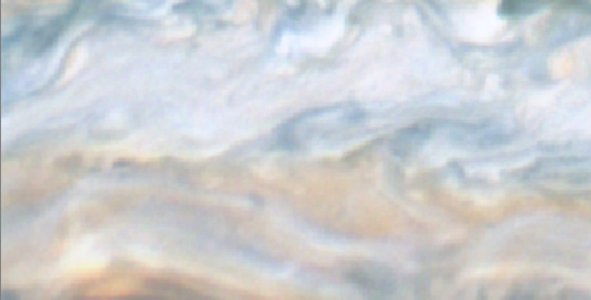
We are a group of science enthusiasts, citizens scientists, and active members of respected STEM fields who are collaborating together to create a process for developing an RGB processed imagery database using raw images of Jupiter from NASA's JunoCam satellite camera that will assist researcher's of Jupiter learn new information of the planet's function in the solar system.
This project details how the RGB imagery processing of Jupiter's "JunoCam" satellite camera can be used to determine the chemical constituency the lunar surface, its similarities to Earth, and how this data can be interpreted for scientific and artistic purposes using Open-Source research within NASA and other respected aerospace organizations.
Our Goals:
____________________________________________________
Similarities Between Earth and Jupiter:
Similarities:
Magnetic Field :
The magnetic field of Jupiter is four times more powerful than the one of Earth and extends 100 times farther than Jupiter's radius.
Occasional occurrence of sub-storms resulting in flux dropouts reducing the magnetic field's strength.
Auroras:
Ocean Current and Cloud Bands:
Quasi Biennial Oscillation (Change in Stratospheric wind direction):
Ring Currents:
X-rays:
____________________________________________________
Affiliate Links From International Space Agencies:
NASA:
Canadian Space Agency:
European Space Agency:
Our hackathon journey was incredible. Our team came together to create a comprehensive data analysis method that would help us process JunoCam images rapidly and accurately, and we found a distinctive method to display our data through our team site. The incredible teamwork that we produced was the main reason for our success.
Our incredible team included:
Founder and Team Leader: Madison C. Feehan
Title: External Peer Reviewer and Executive Panelist for NASA NSPIRES Planetary Science Division; Data Analyst For European Space Agency CERN x EGO-VIRGO Project; Full-Time Student at Harvard University and Athabasca University.
Role in Project: Organizer, Researcher, Data Analyst, Transcriber.
Collaborator: Takao Oba
Title: Third Year UCLA Student Pursuing a Double Major in Statistics and Mathematics; Minoring in Data Science Engineering; Composite Knowledge in STEM and Data Analysis.
Role in Project: Lead Researcher, Key Collaborator, Data Analyst.
Collaborator: Triparna Poddar
Title: CSE student from Vellore Institute of Technology; Composite Knowledge in Cosmology and Web Development (Frontend Development and C++, Java).
Role in Project: Researcher, and Collaborator for Jupiter's space weathering and similarities to Earth's atmosphere.
Collaborator: Vindhya Agarwal
Title: Class 12th Student; Majoring in Science; Composite Knowledge in Astrophysics And Cosmology, with Experience in Programming (Java and Python).
Role in Project: Researcher, Collaborator, Key analyst; processed JunoCam images with an RGB software to locate anomalies on Jupiter's surface.
Collaborator: G.M. Sifat Iqbal
Title: Undergraduate Student at the Metropolitan University, Sylhet, Studying Electrical and Electronics Engineering; Composite Knowledge In STEM, Robotics, and Expertise In Hardware and Lunar Rover Instrument Development.
Role in Project: Researcher and Collaborator.
Collaborator: Yash A.
Title: Class 10 Student, STEM Advocate, Composite Knowledge in Astronomy and Space Sciences. Goal of becoming an Astronaut.
Role in Project: Researcher, Collaborator and Innovator for JunoCam's relevance to Jupiter.
#Jupiter, #JunoCam, #ImageProcessing, #Data, #DataAnalyzation, #Data Analyst, #Science, #Art, #STEM, #RGBColor, #Innovation
While NASA’s space probe Juno orbits the planet Jupiter and its moons, its visible-light camera, JunoCam, captures dazzling views of the Jovian system in spectacular detail. Your challenge is to create innovative ways to process JunoCam raw images for scientific, artistic, or other fun purposes.