
High-Level Project Summary
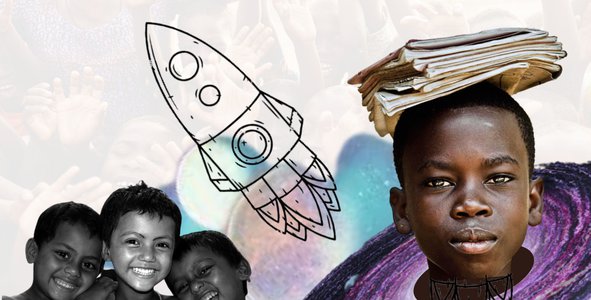
Most of NASA public information are available digitally but can only be accessed by the little that's privileged. Especially in local parts of Africa where children and young youths are not granted access to these digital devices, enjoying and engaging with NASA data becomes a problem. Our software aims at helping creators, space story tellers, teachers and parents in harvesting space data for creating engaging arts for students, wards and young youths. While it helps to educate the young people about our space, it's also helps to strengthen the youngs cognitive abilities as they couple up these autogenerated interpolations
Link to Final Project
Link to Project "Demo"
Detailed Project Description
The application at its primary will help children and young youths that do not have access to mobile phones see the wonders of our space beyond just a static photo.
The application makes available, data from the JUNOCAM, NASA’s APOD and NASA Images And Videos Gallery. Creators can easily search for images and select the ones that suit the story they want to tell.
The images are collected by the app which then does a pre-defined interpolations on the Images based on the selection of the creators.
The auto generated output will now require a little effort from the students to make it a full work of art that not only intrigues the student, but also make them want to create more arts while learning about the space stories from the creator. With this, seemingly overwhelming NASA data is communicated, wrapped in arts , fascination and stories.
How it works
A creator is prompted to select the type of art they want to create then they will search and select suitable images from the NASA’s image database. Corresponding images text/stories are written by creators and sent to the manipulator for threshing.
The app manipulator currently contains three interpolation algorithm listed below
The Twin View
The twin view will accept two images and build an interpolated image from the two data supplied. After which the interpolated image can then be printed out. The printed image on a paper will appear stretched as it’s a blend of two images. The image can then be given to a learner to figure out a way to corrugate the image in zigzags. If it is successfully done, the zigzagged image when viewed from adjacent perspective will show distinctly, the two images and text that was passed by the creator.
The motion Imagery
This may contain reasonably two to five images that the creator wants to discuss. The interpolator then takes in these images and generates an interpolated image with a mask image which only contains black strips. After printing of both, the black strip is given to the student that will put in effort in cutting off the white region of printing not covered by the mask strips. The trimmed mask when moved over the interpolated image will now show distinctly the creator selected images in order. Making the view look like a looped short video.
The story in folds
The story in fold teaches the young the processes of creating an origami while displaying different space images at every paper fold. Based on the slicing vectors of the origami, the creator is prompted to pass the required number of images to create a template slice. The interpolator collects these images and creates two interpolated images that will then be printed on different pages of the same paper with same scale. The child is challenged to figure out which side of the image paper to fold first while comparing the images that must have been discussed prior. Every correct fold completes an image. And if all folds are correct, an origami is born!
What we hope to achieve
We believe space should be for everyone and inaccessibility to phones should never be a barrier to seeing the wonders in the skies beyond. While the creators get the joy of fulfillment in educating a child, a child gets the joy of taking a step closer to being the wonder they only see in their heads. At the end, we all get the joy of a progressive existence.
Space Agency Data
To help the creators see a wide range of photo of the JOVIAN system and the space at large, we used the API of a large image database provided by NASA,
The NASA’s Image and Video Library (api.nasa.gov),
Hackathon Journey
Being the very first hackathon some of the team members will be jumping on, it was full of excitement and anxiety. A number of us are able to meet and connect even more closely. A tech newbie on the team was able to have a hands-on experience of what it is to ideate, develop and deploy a python web application. Though we had a bit of a difficult period beating the time, we came out happy knowing we eventually were able to make our submission.
Approach We used
We started by brainstorming on the challenge we are jumping on. We selected the one that will be really worth our time. The lead dev then handpicked some little development task for the junior dev, while the non-coder are given the task of making researches and writing.
References
All used images and videos are fetched from the NASA OPEN API
NASA APOD : www.api.nasa.gov
NASA Image and Video Library(www.api.nasa.gov)
JUNOCAM data
NASA APOD(Astronomy picture of the Day) and JUNOCAM.
https://link.springer.com/article/10.1007/s11214-014-0079-x
https://www.missionjuno.swri.edu/junocam/processing
https://www.freepik.com/
Template inspired by templatemo
Free hosting by Heroku
Website built with love & DJANGO :)
Tags
#art, #software, #compassion, #love, #computervision, #origami