
High-Level Project Summary
We’ve aimed to produce a modular system for building 3D printable objects made from Martian regolith and atmospheric materials. From this we’ve created a multi-part replacement wheel for the martian rover, a furnishing system of easily join-able and custom built parts using the J-Scale Furniture system and the Spivoter assembly device. We’ve also built a mass-material movement device that can function under normal human lifting capabilities based on ancient leverage techniques.
Link to Final Project
Link to Project "Demo"
Detailed Project Description
Spivoter and the Spivot
We’ve designed a Space Rivet (Spivot) system that can be 3D printed and used to quickly join materials. The model is parametric to fit multiple needs, strengths and sizes for any project where 2 things need to be joined.


J-Scale Furniture System
Using a variation on the 4-bar mechanism we’ve come up with away to manufacture furniture that can be re-arranged and compressed quickly and efficiently. It can be assembled using the Spivot and Spivoter assembly method. Amongst the innovations is the Space Hammock or the Spammock.


The Spug
Mug that can also serve as a 50mm socket or 60mm allen key! Parametric for a 25mm/35mm variant

SpaceKey
3D printable Socket set with 1-6mm, 10mm and 11mm socket, bottle opener and hair brush all in one tool!


Spebuchet and Space Mass Transport System
Lets face it, Mars Needs Trebuchets. It’s not really interplanetary exploration without a good 3D printable, mobile and portable siege engine! This can be produced on the large-scale Regolith Printer. The Mass Transport System can be used to move heavy objects in and out of the MAB as well as moving large boulders out of spaces needed for movement. We’re working on a trailer hitch so it can be towed via a rover.


Rover Replacement Wheel
This model was created in OpenSCAD. It is designed to be printed on the metal 3D printer as multiple parts, and assembled into a single functional wheel unit.
Design:
OpenSCAD is a Constructive Solid Geometry modeling program that provides a programming language for creating objects using primitives, transformations, and boolean operations.
All dimensional values for this model are defined as variables. This allows making dimensional changes easily and quick regeneration of the model components. For example, the spoke width could be increased by 5mm, or the number of tread bars increased from 5 to 8 as additional information and analysis becomes available. There are some design factors that limit minimum or maximum values.
The current design should be subjected to additional engineering analysis.


Tetris Shelves
Doo-doo-dee-doot doo dee-doot doo-dee doo doooo deet-doo-doo-doot. Because Tetris is cool and can be used for storage space.

Carol Table
Heavy-duty workbench that can be used as a dining table or recreational station

Space Agency Data
We examined the materials listed from the APSX Composed analysis of the Martian soil and atmosphere to determine available materials and composites. We’ve determined that you can produce anything from Regolith-based cement to high-carbon and stainless steel, aluminum and various polymer based plastics. We have also reviewed images and structures from the NASA Data Archives of 3D models and designs.
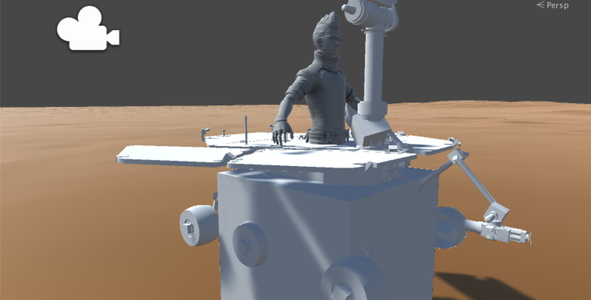
We also did a render using the Pahrump Hills data to make a serviceable splash page.
Hackathon Journey
It was a heck of a ride; struggling to do deadlines, the joy of discovery and the unabated realization that we’ve produced marketable products for terrestrial applications as well! I’m going to make a Spammock for my own recreational use for certain.
References
https://nasa3d.arc.nasa.gov/models
nasa.gov
Tags
#hardware #regolith #trebuchet #Spivot #3D-Printing #3D #stl