
High-Level Project Summary
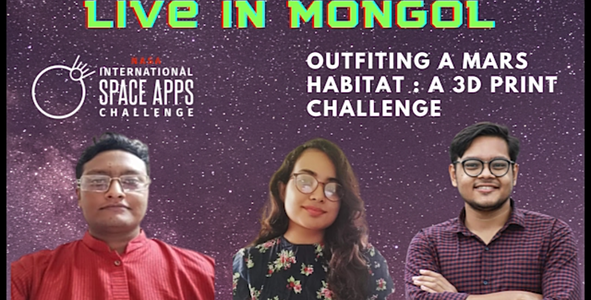
We ,the team, Live in Mongol (Mars) working to make efficient design with 3D printed tools, furniture, and other items to assist the astronaut to complete one-year mission. We are using 3D printer that can print plastic, metal and concrete model simultaneously and our target is to solve multiple problem at a time and with the minimum number of tools. It will help to make Mars a human habitat place. Our plan is to create efficient model with multipurpose design that are must needed for an astronaut by helping to find solution with minimum tool engagement. The Multipurpose tool with other model will help astronaut to get every necessary things in hand from recreation to medical purpose.
Link to Final Project
Link to Project "Demo"
Detailed Project Description
We are the team Live in Mongol (Mars) working to nake mars a habitat for astronaut for one year mission. As only three 3D printer will be present at mars, an astronaut has to get required things using these printers.
In these case, we, the team consists of three members studying materials, biomedical and computer science are working for efficient solution that can meet the need. We are designing the CAD model by using NASA provided data and also developing necessary designs. We are focusing on designing Multipurpose tool that can be used in multiple tasks. Not only design but also we are printing them in 3D so that we can know how that works. And we have enriched our knowledge through this process. We are creating more and more models and modifying these day be day. The materials we are using for prototype are also usable with respect to the environmental condition in Mars for an astronaut.
We have designed our plan considering 3 divisions:
1) Research:
Environmental condition, Must required things, Pros and cons of every material, Placement of every materials at correct position, Budget analysis, etc
2) Designing prototype:
Designing CAD model, deciding the 3D printer model, Starting to make model, Trial & error to make efficient design
3)Final Design:
Building model including tools, furniture, other 3D printed items, Making proper guidelines how to use,Making pathway with respect to real life condition to use while living in Mars.
We have printed multipurpose furniture, recreational equipment, medical graded parts, building platform, daily necessary tools, analyzing devices,etc. We are researching more, to know and implement what should be added here and should be implemented properly. We have also combined metal with plastic printable parts together to make better design. We have already printed 20+ model and believe to make mars a beautiful place for the astronaut to be there for one-year mission with maximum efficiency designed by three 3D printer.
Space Agency Data
Space agency data is the main things that helped us to build our concept regarding the solution. Our time is under the category where 3d printable parts have to be made and improved. In these case, we have analyzed the astronauts life and their task with space agency to find out what is really must needed for astronaut. We have designed various models that have been added to our website link (https://nishat33.github.io/LiveInMongol/) by taking data and encourage from NASA data. NASA data have helped to improve the quality and design. We have designed and printed multipurpose furniture, recreational tools, medical support materiels, artificial limb, plant analyzer pot, building shape, etc by taking previous open source NASA data.
The individual link that have been used is added below:
1)https://www.nasa.gov/pdf/315851main_Akin_UMd.pdf
2)https://ntrs.nasa.gov/citations/20150001238
3)https://nasa3d.arc.nasa.gov/detail/mpmt
4)https://www.nasa.gov/mission_pages/station/research/news/3Dratchet_wrench
5)https://www.nasa.gov/pdf/143163main_Space.Food.and.Nutrition.pdf
6)https://2016.spaceappschallenge.org/challenges/space-station/astrocize/projects/space-rock
7)https://www.nasa.gov/audience/forstudents/postsecondary/features/F_Food_for_Space_Flight.html
8)https://www.nasa.gov/sites/default/files/atoms/files/food-for-thought-educator-guide.pdf
9)https://www.nasa.gov/feature/students-design-space-habitat-concepts-for-mars
10)https://ntrs.nasa.gov/citations/20150001238
11)https://mars.nasa.gov/mars2020/spacecraft/rover/wheels/
12)https://nasa3d.arc.nasa.gov/detail/hammer
13)https://www.nasa.gov/feature/farming-in-martian-gardens
14)https://ntrs.nasa.gov/citations/20150001238
15)https://ntrs.nasa.gov/api/citations/19970027081/downloads/19970027081.pdf
16)https://www.futureengineers.org/spacetools/gallery/2083
17)https://www.nasa.gov/mission_pages/station/expeditions/expedition18/journal_sandra_magnus_7.html
18)https://www.nasa.gov/centers/johnson/news/releases/1999_2001/j00-36.html
19)https://www.nasa.gov/audience/foreducators/postsecondary/features/F_At_the_Hostipal_with_NASA.html
20)https://www.cnet.com/science/nasa-finds-mars-water-ice-deposits-astronauts-21)could-reach-with-a-shovel/
https://www.nasa.gov/feature/jpl/nasas-treasure-map-for-water-ice-on-mars
Hackathon Journey
We would say that it is great experience to participate.We learnt how to manage team work, handle stress, be responsible and do
the task efficiently. We are studying engineering and that inspired us to solve the challenge using 3D printed technology. Our approach to solve the challenge started with making efficient multipurpose design and 3D printed model had been made after that to practically use them and analysis them for better modification. We have solved problems and resolved all problems
combinedly through team work. We want to thank Fablab KUET for getting us introduced to 3D print technology.
References
1)https://www.nasa.gov/pdf/315851main_Akin_UMd.pdf
2)https://ntrs.nasa.gov/citations/20150001238
3)https://nasa3d.arc.nasa.gov/detail/mpmt
4)https://www.nasa.gov/mission_pages/station/research/news/3Dratchet_wrench
5)https://www.nasa.gov/pdf/143163main_Space.Food.and.Nutrition.pdf
6)https://2016.spaceappschallenge.org/challenges/space-station/astrocize/projects/space-rock
7)https://www.nasa.gov/audience/forstudents/postsecondary/features/F_Food_for_Space_Flight.html
8)https://www.nasa.gov/sites/default/files/atoms/files/food-for-thought-educator-guide.pdf
9)https://www.nasa.gov/feature/students-design-space-habitat-concepts-for-mars
10)https://ntrs.nasa.gov/citations/20150001238
11)https://mars.nasa.gov/mars2020/spacecraft/rover/wheels/
12)https://nasa3d.arc.nasa.gov/detail/hammer
13)https://www.nasa.gov/feature/farming-in-martian-gardens
14)https://ntrs.nasa.gov/citations/20150001238
15)https://ntrs.nasa.gov/api/citations/19970027081/downloads/19970027081.pdf
16)https://www.futureengineers.org/spacetools/gallery/2083
17)https://www.nasa.gov/mission_pages/station/expeditions/expedition18/journal_sandra_magnus_7.html
18)https://www.nasa.gov/centers/johnson/news/releases/1999_2001/j00-36.html
19)https://www.nasa.gov/audience/foreducators/postsecondary/features/F_At_the_Hostipal_with_NASA.html
20)https://www.cnet.com/science/nasa-finds-mars-water-ice-deposits-astronauts-could-reach-with-a-shovel/
21)https://www.nasa.gov/feature/jpl/nasas-treasure-map-for-water-ice-on-mars
Software Tools:
1)Ultimaker cura
2)Prusa slicer
3)Solidworks
Hardware Tools:
1)Ultimaker 3 extended
2)Prusa i3 MK3
Tags
#hardware #3dprint #design #mars_habitat #astronaut