
High-Level Project Summary
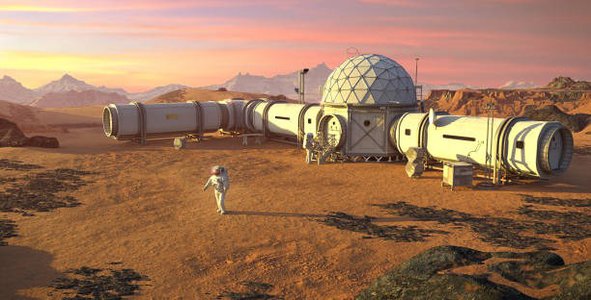
The context for our astronaut is the following:He had an abrupt landing on Martian soil, so the fuselage of the capsule was damaged, fortunately neither the oxygen recycler nor our friend's cockpit were affected. The leak on the spacecraft made him lose a variety of things, such as:- Toolbox - Storage furniture, food, bed- Cutlery kit- Agronomy equipment- A Rover wheelThe challenge we have as a team is to design these objects in order to repair our spacecraft, try to grow crops and live fairly well within the mission time frame (One Earth year).
Link to Final Project
Link to Project "Demo"
Detailed Project Description
We started the project by dividing the tasks into what we considered to be four important needs for survival in the Martian module and brainstormed ideas for each:
-Tools (to create structures).
-Structures (to create the crops)
-Crops (to have food)
-Furniture (to make the best use of space).
After discarding some of the ideas we started to conceptualize the objects, structures, i.e. everything was sketched and what we could we also designed in 3d (.stl file). The last and most complex for the time factor was to make the final project, the demo and everything that would be presentation of projects.
Space Agency Data
we use part of the marcian terrain disposed by NASA on this link: https://trek.nasa.gov/mars/#v=0.1&x=67.57277194034498&y=-66.63299850019126&z=1&p=urn:ogc:def:crs:EPSG::104905&d=&locale=&b=mars&e=-224.2240976166026,-230.81268293765453,359.36964149729255,97.546685937272&sfz=&w=
for the visualization of the habitat where our astronaut would be
we viewed the same in the page http://asrl.utias.utoronto.ca/datasets/3dmap/p2at_met.html of Autonomous Space Robotics Lab
Hackathon Journey
We described the space applications experience as an exciting, challenging
and creative day of developing crazy, yet groundbreaking ideas, and a day of
dreaming the impossible. We learned a little bit about everything, but I think
what all of us on the team agreed on is that while certain ideas are simply
associated with engineering or aerospace/industrial design, ideas from
someone from another field can be incredibly rich for the project, and
interdisciplinary minds are far superior to uni-disciplinary minds in what makes
up a project development team. The approach was, to make tools and
furniture that adapt according to what the user wants, in our case the
astronaut, without the unnecessary expenditure of resources in addition to
optimizing spaces, the multifunctional point was a key point of our project. we
distributed the time in phases, in addition to distributing tasks according to
what each one knew how to do more. We would like to thank all the
volunteers who clarified doubts, SMEs and GO team participants, as well as
the organization (local leader) and the representative of girls in tech uruguay
who clarified design doubts and gave us advice.
References
- the industrial design uses https://www.autodesk.com/products/fusion-360/personal for all propietary designs
- our hidroponic ideas go from https://www.portalfruticola.com/noticias/2020/10/26/como-crear-un-sistema-hidroponico-casero-con-168-plantas/
- the weel of the curiosity rover is from https://cults3d.com/es/modelo-3d/juegos/mars-curiosity-rover-wheel-assembly
Tags
#Creative, #Tools, #Hardware, #hidrophonic, #Design, #Mars, #Furniture, #Rover, #Curiosity