
High-Level Project Summary
Our team at S.O.C.K.S sought out to develop a fun and accessible web app to seamlessly integrate moonquake data into visual 3D data representation formats - something for everyone, no matter what level of seismic understanding they held. With this objective in mind, we developed SeismoVis.LUNA - a seismological data visualiser that is set apart from all the rest by its highly adaptable yet simple functionality model. With a concrete framework in place that holds the potential to host highly creative and complex features in the near future. SV LUNA is the practical middle-man for complex scientific data and student-teacher learning in classrooms - The future of Lunar Seismology Visualization.
Link to Final Project
Link to Project "Demo"
Detailed Project Description
Our web app will plot the location of moonquakes on a 3D moon map using bars in colour coded magnitudes; which, when clicked will display a graph of the seismic activity at the corresponding point in time. Each bar is colour coded in a gradient that goes from Green to Red, with Red representing a moonquake with high intensity, Yellow representing a moonquake with a medium intensity and green representing a moonquake with low intensity. The color displayed on the bar graph is chosen according to the value represented on the gradient, hence displaying different hues of color (even colors in between basic greens, yellows and reds!) based on magnitude.
When a bar is clicked, it will display a graph of the seismic activity at the corresponding point in time in a pop-up box, that also includes data such as magnitude, latitude, longitude, depth, as well as optional scientific data for interested individuals. This data is adaptable to field names within the CSV files being read by the program.
The web app is coded in Unity WebGL which is used to create the actual 3D model of the moon. Using the information from NASA’s Planetary Data System (PDS), we were able to obtain the locations of moonquakes. The actual moonquake data is processed using programs such as obspy to convert the numerical data into graphs which would be displayed to the user upon clicking on one of the many bars that represent the locations of moonquakes.
The web app comes with the benefits of making moonquake data accessible to people of all ages and backgrounds and allowing the data to be interpreted visually, without going through the hassle of processing the data yourself. Our team hopes to not only make moonquake data more accessible, but to present the complicated data in a fun and interactive format that can be used by anybody regardless of their age or experience in seismology. Moreover, through this program, we hope to educate and inspire the users about space and seismology.
We implemented the use of Microsoft Excel to read and edit the moonquake data. Unity and C++ were used to create the 3D moon model and code the camera movements. Our team also made use of Python when using obspy which was used to process the moonquake date from a csv file to a visual graph.
Space Agency Data
We used the NASA CGI Moon Kit for the scans of the moon to project initial moon images.
For data, we used the official nakamura_1979_sm files as demo files to test our data visualisation algorithms, and develop our code. Furthermore, we used arrival and location data found from other nakamura mission launches to correlate along with the provided data and strengthen our algorithm processing.
Hackathon Journey
Our space apps experience starts with the curiosity of the challenge and the hunger to learn and solve the problem. In the process of finding the solution, our team as a whole had gone through ups and downs, facing hurdles and setbacks as we progressed through. But through strong communication and good teamwork, our perseverance as a team helped us get through the challenge and create a product that was composed of the blood, sweat and tears of our members, reflecting all the hard work that went into making the app.
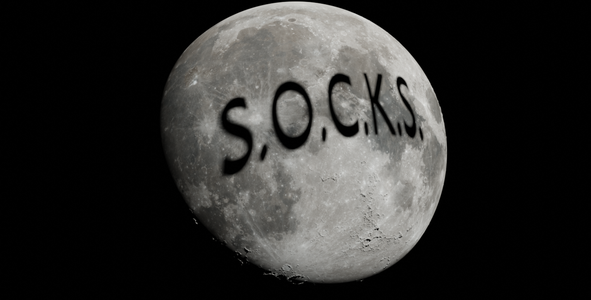
A fun fact about the origin of our team’s name S.O.C.K.S; is that the acronym SOCKS is a vague nod to a song by AJR titled “Adventure is out there”, in which the band sings about losing their socks and them pondering on the possibility of the socks going on adventures such as floating on the sea, which inspired us to name our team SOCKS in the spirit of adventure.
Our team is composed of 6 diverse members, each with their own unique set of skills that provided us with all the skills required to tackle the challenge; from technical, to artistic. The space apps challenge provided all the members the opportunity to learn skills outside the members comfort zone which made each member of the team more flexible in their area of specialty. Another crucial skill that we have learned is that of teamwork. Through the space apps challenge our team had learned how to coordinate and communicate problems and solutions, delegate tasks and share responsibilities, discuss ideas and improve and create the vision for our app.
When picking the challenge we wished to attempt, the moonquake map grabbed our attention and piqued our interest as a project of apt difficulty along with requiring skills that were possessed by all members of our team.
Approaching development of the project started with the planning phase, where we as a team compiled any information pertaining to the topic and had multiple discussions on the vision of the project which could be used to sketch a vague plan on how we planned to create our demo. We conducted research on the methods and tools required for the project to prepare for the same. The next phase would be the delegation phase where each member was made clear on their roles and responsibilities and were assigned tasks based on their role. The next phase would be the action phase, where each member was given time to complete their tasks. Frequent online meetings were held with the group in which problems or hurdles were discussed with the group and where each member could offer their input or a solution. Discussions weren’t just limited to virtual meetings, but in a group text chat which played a key role in achieving strong communication. Development progress was made clear through the system of a online progress board (Trello), where progress, problems and resources were displayed for all members to access.
Overall, this activity helped us gain significant appreciation for each other, for the people who come up with these challenges, and of course, our computers for putting up with our rather tiresome and repetitive error compilations.. so, thanks for not overheating to bits our binary friends <3
References
Tags
#moon, #moonquake, #earthquake, #student, #seismology, #unity, #python, #coding, #NASA, #blender, #3D, #concept, #NASA, #JAXA