
High-Level Project Summary
Based on what Parker reached the use of materials that went into the manufacture of Parker for the manufacture of satellites to protect them from fluctuations in temperature and space weather
Link to Final Project
Link to Project "Demo"
Detailed Project Description
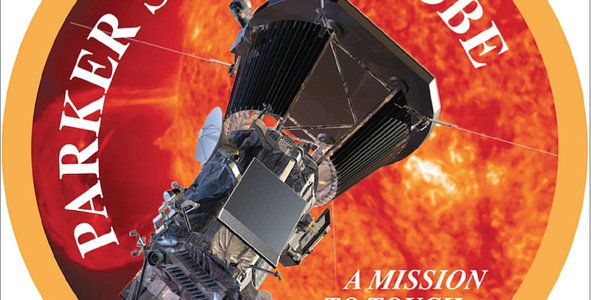
https://images.app.goo.gl/ei3eXJvnTLs4438S6The journey of the Parker Solar Probe to the sun, passing through Venus, the achievements that have been discovered, and the problems that scientists want to explain so far, such as protecting satellites from solar storms and temperature fluctuations in space weather. High for 4 years in the manufacture of satellites to protect them from temperature fluctuations These materials, such as tungsten metal, were manufactured The grids that produce the electric field of the Faraday Cup in the Parker Solar Probe Tungsten is a metal with the highest known melting point of 6,192 degrees Fahrenheit. What will you face from temperature fluctuations in space weather in general and sun weather in particular?
As for the satellites in space, we invented a solution using nanorobots
Our goal is to protect satellites in space from temperature fluctuations and solar storms
We came up with an idea, which is coating or coating the satellite with materials that withstand high temperatures, such as tungsten or the alloys that were used in the manufacture of the Parker probe to face high temperatures.
This idea will be done by manufacturing a device with a nanorobot loaded with the materials to be painted or encapsulating the satellite with it. The device will be sent to the satellite and when it arrives, the device will stick to it and the room full of the nanorobot opens and the nanorobot moves in a constructive manner and encapsulates the entire satellite
One of the characteristics of nanorobots is that micro/nanorobots can effectively convert other forms of energy into thrust and movement, as well as move to target locations under physiological conditions and environments. And the use of nanorobots has produced impressive results in medical sciences that are of high accuracy and successfully reach the target place. With these characteristics, the satellites will be successfully painted with the same mechanism of action to program the nanorobot on the target place, and the complete packaging will be done in a constructive manner without defects, and this will make the satellite his The ability to sustainably withstand solar storms and temperature fluctuations
Later, the device can move to another satellite in the same orbit and perform the same process, and it can be moved to another so that we can encapsulate the largest amount of satellites and protect them from the fluctuation of space weather, sun weather and solar storms. One of the problems that scientists want to explain so far is that the corona layer has a much higher temperature From the layers before this, such as moving away from fire, so the temperature increases? How is this being searched until now, and when we look at the layers of the sun, we will find ahttps://images.app.goo.gl/ei3eXJvnTLs4438S6
 n called the solar transition region (STR). This region separates the corona layer and the chromosphere layer below the STR. Gas and the various processes of energy exchange
Above STR, the movement and shape of the layers are more dynamic, dominated by magnetic forces. These magnetic forces can activate solar events such as coronal rings and solar wind. Our idea will protect the satellites from all these fluctuations and will make them respond to storms and solar winds sustainably and in the long run.
Space Agency Data
https://www.nasa.gov/feature/goddard/2018/nasa-s-parker-solar-probe-and-the-curious-case-of-the-hot-corona
https://www.nasa.gov/feature/goddard/2021/switchbacks-science-explaining-parker-solar-probe-s-magnetic-puzzle
https://www.nasa.gov/feature/goddard/2019/nasas-parker-solar-probe-sheds-new-light-on-the-sun
https://www.nasa.gov/feature/goddard/2018/nasa-prepares-to-launch-parker-solar-probe-a-mission-to-touch-the-sun
https://www.nasa.gov/feature/goddard/2021/nasa-scientist-kelly-korreck-on-journey-to-sun-and-what-it-takes-to-get-there
المسبار الشمسي باركر يقدم إطلالة مذهلة على كوكب الزهرة | ناسا
https://www.nasa.gov/feature/goddard/2021/parker-solar-probe-offers-a-stunning-view-of-venus
https://www.nasa.gov/feature/goddard/2018/nasa-prepares-to-launch-parker-solar-probe-a-mission-to-touch-the-sun
https://www.nasa.gov/parker/
https://www.nasa.gov/feature/goddard/2021/nasa-enters-the-solar-atmosphere-for-the-first-time-bringing-new-discoveries
Parker Solar Probe https://www.nasa.gov/content/goddard/parker-solar-probe#.Yzlo28_A83c.whatsapp
Hackathon Journey
The hackathon experience was a wonderful experience to gain a lot of information and to benefit from the scientific benefit from the supervisors and the team. I benefited by forming many friends who love the same field and are looking for knowledge. My team and I chose this challenge because of our interest in the idea of reaching the sun for the first time and our passion to know more information about the Parker probe’s journey and its achievements.
References
https://www.nasa.gov/feature/goddard/2021/parker-solar-probe-offers-a-stunning-view-of-venus
https://www.nasa.gov/parker/
https://www.nasa.gov/feature/goddard/2021/nasa-scientist-kelly-korreck-on-journey-to-sun-and-what-it-takes-to-get-there
https://www.nasa.gov/feature/goddard/2018/nasa-s-parker-solar-probe-and-the-curious-case-of-the-hot-corona
https://images.app.goo.gl/jR7FhdPe3yT5vhDW6
https://images.app.goo.gl/3g4kzRkGbxuRxE2e7
https://www.nasa.gov/feature/goddard/2018/nasa-prepares-to-launch-parker-solar-probe-a-mission-to-touch-the-sun
https://www.nasa.gov/feature/goddard/2019/nasas-parker-solar-probe-sheds-new-light-on-the-sun
https://www.nasa.gov/feature/goddard/2021/switchbacks-science-explaining-parker-solar-probe-s-magnetic-puzzle
https://blogs.nasa.gov/parkersolarprobe/
https://www.nasa.gov/feature/goddard/2018/nasa-prepares-to-launch-parker-solar-probe-a-mission-to-touch-the-sun
https://www.nasa.gov/feature/goddard/2021/nasa-enters-the-solar-atmosphere-for-the-first-time-bringing-new-discoveries
https://www.nasa.gov/content/goddard/parker-solar-probe#.Yzlo28_A83c.whatsapp