
High-Level Project Summary
Friend x: Can you please tell me the story of sun? I want to know more about sun in space.Friend y: Okay so let me tell you an interesting story of Parker's mission. After the struggle of so many years scientist launched THE PARKER SOLAR PROBE with the mission of getting more closer to the sun. The superhero starts its journey on 12 Aug 2018 and meet the planet Venus to say hi! Parker faced so many difficulties to reach near the Sun after fighting with high temperature, debris, solar winds, comets etc. On April 28 2021 our hero came nearer to the solar atmosphere at 4.46 million miles away from the sun. Friend x: This is interesting. Now I will follow the journey of Parker Solar Probe.
Link to Final Project
Link to Project "Demo"
Detailed Project Description
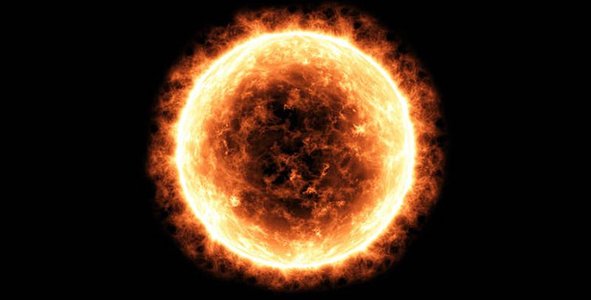
The Sun is the only star in our solar system. It is the center of our solar system. The Sun is about 100 times wider than Earth and about 10 times wider than Jupiter. The Sun orbits the center of the Milky Way, bringing with it the planets, asteroids, comets, and other objects in our solar system.
The main regions of the Sun are divided into the regions in the interior of the Sun and the regions of the Sun’s atmosphere.
The Sun’s interior consists of three main regions:
1. The core
2. The radiation zone
3. The convective zone
The regions of the Sun’s atmosphere consist of:
1. The photosphere
2. The chromosphere
3. The corona
For the first time in history, a spacecraft has touched the Sun. Parker Solar Probe was launched in 2018 to explore the mysteries of the Sun by traveling closer to it than any spacecraft before. The probe dipped into the corona three times on April 28, at one point staying in the outer atmosphere for approximately five hours. Parker Solar Probe senses conditions in the magnetically dominated layer of the solar atmosphere – the corona – that we never could before. In 2019, Parker discovered that magnetic zigzag structures in the solar wind, called switchbacks, are plentiful close to the Sun.
It has also studied comets, detected radio emissions from Venus' atmosphere, and even captured the first-ever images of Venus' surface in visible wavelengths. With its closest passes of the sun still ahead in 2024 and 2025, only time will tell what new discoveries await?
The Thermal Protection System (TPS) was designed by the Johns Hopkins Applied Physics Laboratory and was built at Carbon-Carbon Advanced Technologies, using a carbon composite foam sandwiched between two carbon plates. This lightweight insulation will be accompanied by a finishing touch of white ceramic paint on the sun-facing plate, to reflect as much heat as possible.
Tested to withstand up to 3,000 F (1,650 C), the TPS can handle any heat the Sun can send its way, keeping almost all instrumentation safe.
NASA's Parker Solar Probe spacecraft is being bombarded with space dust and debris on its way to the Sun. Thousands of tiny dust grains strike the spacecraft at hypervelocity (faster than 6,700 miles per hour). These impacts generate clouds of debris that slowly expand away from the spacecraft. Findings could lead to new insights into space weather around the sun and have major implications for the safety of future spacecraft.
Space Agency Data
Our challenge is mostly about research so we used NASA official website data for our challenge.
Hackathon Journey
The hackathon was full of excitement, as we learned a lot about different aspects of Space Sciences and mostly about our topic that was on the way to the sun by narrating the story of incredible Parker Solar Probe.
The journey of Parker is so fascinating so we decided to work on it!
Also we would like to thank our lead team management and judges they all were so kind and they motivate us to do more in future to win next NASA SpaceApps Challenge.
References
https://www.nasa.gov/feature/goddard/2021/parker-solar-probe-offers-a-stunning-view-of-venus
https://www.nasa.gov
https://www.nasa.gov/feature/goddard/2021/parker-solar-probe-offers-a-stunning-view-of-venus/
https://www.nasa.gov/feature/goddard/2022/sun/parker-solar-probe-captures-its-first-images-of-venus-surface-in-visible-light-confirmed
https://www.nasa.gov/feature/goddard/2021/nasa-enters-the-solar-atmosphere-for-the-first-time-bringing-new-discoveries
https://blogs.nasa.gov/parkersolarprobe/2021/11/10/space-dust-presents-opportunities-challenges-as-parker-solar-probe-speeds-back-toward-the-sun/
Tags
#story#ParkerSolarProbe#Sun #spacescience #nasaspaceappschallenge #nasa #nasakarachi