
High-Level Project Summary
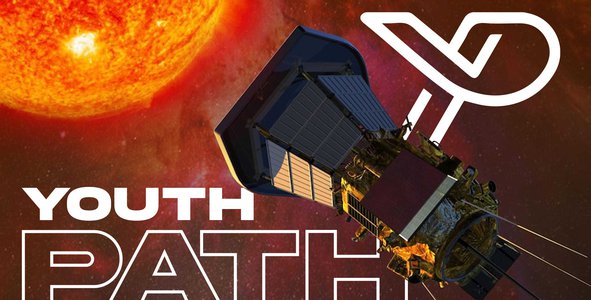
YouthPath is a storytelling game application that will help youth to learn about the Solar Parker Probe mission and its importance, not only learning but playing too. This project aims to provide a realistic experience of technologies to the youth. The players are asked to answer the questions that were shown on the app for example (where does the probe's energy come from?) Players will learn at the same time they are having fun with all the missions the game includes, seeing the Parker Probe live location as AR from their own phone. Also at the end players will see the score of their own, Youth Path is important because it brings a realistic experience that will arouse the youth's interest.
Link to Final Project
Link to Project "Demo"
Detailed Project Description

Dear space enthusiasts! YouthPath, what exactly does it do?
How does it work?
First, YouthPath lets the player choose a personalized rocket and a nickname for the game.
The game starts by giving a brief introduction about the Parker Solar Probe and the hard path it faces, to get a better feeling and understanding of the mission itself before starting. The game briefly gives information about the mission by playing the game itself (e.g., Creating the Parker Probe piece by piece, Entering the quiz, Seeing the live location of the Probe through a mobile device by pointing the camera to the sky) to keep in mind while traveling in space.


After players choose the color of their rocket, the learning phase begins, players will read the short description of the mission, and they should keep it in mind so to get the highest point on the quiz. The game will present the player’s statistics that players should keep up the knowledge in their mind to get on the peak of the leaderboard and to achieve a Space and Sun enthusiast badge.


Creating the probe piece by piece
Players will put all the most important parts of the probe in the place where it belongs on the Probe, and while choosing the instruments one by one, they will also see a short description of the instruments or parts for what they are used.


Right after completing all the parts of the Parker Probe, the players will have access to the real-time place of the Parker Solar Probe, which they will be able to use the Virtual Reality technology to feel the experience to the peak. Seeing which encounter is the Probe currently and how much distance it has to the Sun in real-time.
We choose the Virtual Reality technology experience in our app, especially according to research from the digitalyouthwork.eu, teens are attracted and interested in this technology to use it while playing games. So adding this feature to our app is a creative way to make the kids more interested to learn.


After experiencing the Virtual Reality game, important achievements that the Parker Solar Probe achieved, are displayed with short but sharp information. To make the youth or the players, gain the knowledge as easy as possible.
Augmented Reality

The AR or Augmented Reality will be able to use when clicking the pop-up link on the last page of the achievement section. This function will work together with the live data extraction from parkersolarprobe.jhuap, theskylive.com, and NASA's Official website.
With this data extraction from the official websites, we can locate the Parker Solar Probe's exact place in the sky from the player's camera facing the sky.
The Quiz
The quiz will be the competitive section for the players because they will need the knowledge that they achieved from the images and the information, and also these answers will be the results of the leaderboard at the end. So players can see the points that they achieved or their competitors.


The main questions of the mission are asked of the players so that they are not that hard to find but sharp to keep in mind.

Ranking
The ranking is the place where players can see the score that they achieved while answering the questions.

The progress without a prize at the end is a disappointment, so we thought that it will be great to give the players that have finished the game a badge of "Space and sun enthusiast" so they can share it with their friends and inspire them to play this game to create progress together.
Important Facts
One of the most important features of the game is that it offers many facts about the Sun and its importance and why we have to know it closer. That will be shown throughout the game.
What benefits does it have?
The benefits that the application offers are that youth have fun by learning through games, quizzes, and such technology systems (VR, AR), where they can even see the progress that they did. We propose a game where they can become more interested in spatial science from a young age, and why not, be the next space explorer.
What do you hope to achieve?
We hope that the game generates impact, that youth find it entertaining, and that they take advantage of the information they can learn from the game. We also identified that many of them have more fun playing in a competition, so the ranking component seemed a fundamental aspect to help us get their interest.
What tools, coding languages, hardware, or software did you use to develop your project?
We developed this prototype using Adobe XD, some of the icons and images were designed by us using CorelDraw and Adobe Photoshop, and other icons and images were taken from www.freepik.com and www.flaticon.com.
Space Agency Data
We used the data that NASA offers regarding the mission of the Parker Solar Probe. Data obtained from NASA provided us with valuable information about when this mission launched, what goals it does have, statistics, and the engineering behind it.
We use this information to present it in the game in the "play to learn" style. In order that the player does not feel an information overload and the player do not get bored while playing. Information about the instruments, flyby's, encounters, metrics, and use cases, are all based on information found on the NASA website.
For example, the data provided by NASA Goddard was used through its website, videos about how this Probe doesn't melt. This information inspired us to implement quizzes, puzzles to create the probe, and a rank list so that it will be fun, informative, and competitive for the player.
Another example is the data provided by parkersolarprobe.jhuapl.edu. and theskylive.com through its website about the data of the live location of the Probe, which helped us to create a live location video and AR experience in which they can see the exact place of the probe from their own device by pointing the camera to the sky, which will help the youth to get better feeling and understanding about the project.
Furthermore, we used data from the YouTube videos of the NASA Goddard to inform us that the Parker Solar Probe officially touched the sun and it is the first human-made object ever that became the closest to the Sun.
Finally, we used data provided by Wikipedia, for example, information about the instruments and their functions on the probe, and also the unexpected discovery that made the engineers say "Wow!".
Hackathon Journey
Our experience in this Space Apps was awesome. We learned a lot about the great engineering behind the Parker Probe, what milestones it does have, and what plans to have in the future. What most inspired us to choose this challenge was the impact we saw it would let a smiley and interested face on the children. We made a small presentation to an elementary school in our region, and we felt that if we had got a cool and informative game as a youth, we would have been more curious about these important topics, and it is exactly what we want to generate in the youth. The approach we used was to learn by playing, we prototyped a game that will be fun and most important, informative for space enthusiast youth. Every challenge we got, we faced as a team, together with my colleague. We never worked alone on a specific task, because by helping each other we could make things better and faster.
We want to especially thank the ICan Cowork Center in Gostivar, which kept the center open 24/7 for us and gave us the opportunity to get ideas from Mentors.
References
Data
The links that we got knowledge and stats from:
https://www.nature.com/articles/s41586-019-1818-7
https://www.nasa.gov/feature/goddard/2018/traveling-to-the-sun-why-won-t-parker-solar-probe-melt
https://www.nasa.gov/content/goddard/parker-solar-probe-instruments
https://blogs.nasa.gov/parkersolarprobe/
http://parkersolarprobe.jhuapl.edu/The-Mission/index.php#Where-Is-PSP
https://www.digitalyouthwork.eu/?material=virtual-reality-in-youth-work-en
Resources
The links that we got the images and icons:

https://fonts.google.com/specimen/Montserrat
https://commons.wikimedia.org/wiki/File:NASA_Worm_logo.svg
https://www.seekpng.com/idown/u2q8e6r5r5y3u2e6_real-sun-png-sun-solar-system-png/
https://commons.wikimedia.org/wiki/File:NASA_Worm_logo.svg
Most of the icons were retrieved from www.freepik.com,and www.flaticon.com
Furthermore, we take resources from: https://www.pexels.com/
Tags
#space #parkersolarprobe #prototype #augmentedreality #youth #sun