
High-Level Project Summary
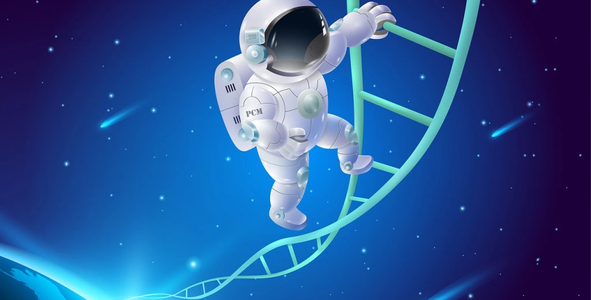
In our project we had to create a Biology Space Superhero. In order to achieve this outcome we had the idea of putting together charakteristics from on eurth organisms who are resiliant to extreme enviromental conditions such as radiation, pressure or gravity, heat, vacum space, oxygen levels, toxicity, dissecation e.t.c.In our way to have a creative way of creating the project we made an analog card game (with physical cards who are presented in the local commity presentation and are also avaible in the site below).The rules of the game are explained below, and basicly we have the players trying to take charakteristics from organisms such as bacteria, fungi, archaia, animals & plants.
Link to Final Project
Link to Project "Demo"
Detailed Project Description
Basically the rules of the game are explained below.


Furthermore we created a site via webflow, a qr code who can be scanned, and lots and lots of cards.
Space Agency Data
At first, we did a research on the risks and dangers that organisms are going to face in space. For this purpose we used NASA’s webpage about the effects of space on human bodies (https://www.nasa.gov/hrp/bodyinspace).
We explored more about those dangers in order to define the challenges that a human would have to put up with on order to survive in space. Moreover, we watched some of the videos that NASA haw uploaded in YouTube in order to understand those risks in the best way possible.
Apart from the risks, a major part of our research was focused on the various organisms with specific characteristics that would potentially allow them to survive some of the space’s extreme conditions. The links https://astrobiology.nasa.gov/classroom-materials/tradingcards/ and https://www.nasa.gov/feature/ames/microscopic-superheroes-to-help-protect-astronaut-health-in-space were very helpful in order to categorize the organisms.
Specifically, the tardigrade inspired us and gave us the idea of combining the different attributes of the organisms to form a superhero. We chose to inform the audience with a creative and innovative way, such as a board game. Therefore we created a card game , which include all the important information about the most resilient organisms in our time.
As we continued designing new cards, we needed to create questions for the players. We accomplished that by getting inspired from plenty of space organisation sites and we found answers at them too.
Hackathon Journey
It was definately a unique experience, both educational and inspiring.
Through the preparation of our boardgame we learned a lot about extremophiles, exoplanets, effects of space to biological organisms. We gained technical skills related to graphic design and how can somebody create a game from the beginning. Most importantly we learned how to cooperate and think out of the box.
Our team is compromised by people from different backrounds ( engineering, pharmacy, chemistry, economics) with a common love for everything related to space and boardgames. So, this challenge seemed ideal for us.
We decided to create a boardgame because people often consider science something difficult or boring and this is so unfortunate. Our boardgame educates people of alll ages about astrobiology, a field relatively unknown in a fun way.
We tryed to take advantage of each member's unique skills and we shared the work load accordingly. Also, we discussed the problems we had us a team. This is why we created a Discord server.Also because two of our member couldn't have a live presence. Furthermore we got precious help from experts that were here to help us. Some specific setbacks we met were the closed bookstrores that could print our Game Cards, the slow internet connection, the complexity of the rules and the little time.
We would like to thank the Greek Newspace Society for the organisation of the event and the mentors that helped and inspired us.
References
References
https://en.wikipedia.org/wiki/Anaerobic_organism
https://en.wikipedia.org/wiki/Gliese_667_Cc
https://en.wikipedia.org/wiki/List_of_potentially_habitable_exoplanets
https://exoplanets.nasa.gov/alien-worlds/strange-new-worlds/
https://en.m.wikipedia.org/wiki/Animals_in_space
https://www.americanscientist.org/article/tardigrades
https://scienceline.org/2018/03/fungi-love-to-grow-in-outer-space/
https://link.springer.com/chapter/10.1007/978-94-017-7321-8_10
https://www.nasa.gov/jpl/extreme-shrimp-may-hold-clues-to-alien-life/
https://science.nasa.gov/biological-physical/programs/space-biologyhttps://en.wikipedia.org/wiki/List_of_microorganisms_tested_in_outer_spacehttps://europepmc.org/backend/ptpmcrender.fcgi?accid=PMC2832349&blobtype=pdfhttps://www.esa.int/Science_Exploration/Human_and_Robotic_Exploration/Columbus/Live_long_and_prosper_i_Xanthoria_elegans_i
https://en.wikipedia.org/wiki/Brine_shrimp
https://www.nasa.gov/feature/ames/microscopic-superheroes-to-help-protect-astronaut-health-in-space/https://onlinelibrary.wiley.com/doi/abs/10.1002/9780470015902.a0000376.pub2
https://astrobiology.nasa.gov/news/life-at-low-pressure-planetary-protection-and-the-habitability-of-mars/https://www.nasa.gov/hrp/bodyinspace
Τools
https://webflow.com/?gspk=c29udWt1bWFyb2l6dWMyOTkx&gsxid=38VaadrTQNU7&utm_medium=affiliate


