
High-Level Project Summary
The Super-Tardigrade game informs the user about the challenges of the human body in space traveling and introduces the genetically modified tardigrade with the photosynthesizing genes of a sea slug, Elysia cholorotica. The transgenic tardigrade performs photosynthesis to increase oxygen on the surface of Mars. It will perform a symbiotic relation with the algae Vaucheria littorea, which will also be transgenic in order to adapt to radiation from Mars, acting as the source of food to the tardigrade.
Link to Final Project
Link to Project "Demo"
Detailed Project Description
The Super-Tardigrade game will help people understand that, in order to perform space exploration, we must understand how the human body and other living beings as plants and microorganisms change and adapt to the unique environment in space. The game was designed on the Scratch platform, and consists of two levels. In the first level, the user will be informed about the consequences of space traveling on the human body, in a 11 question quizz about space adaptation syndrome, bone and muscular changes, risk of anemia, nephrolithiasis and the problem of radiation. Some questions also describe some experiments performed by NASA such as the DNA analysis of astronaut twins and the space farm for food production. By the end of this level, the user will get a score to assess their level of knowledge about the human being in space. https://scratch.mit.edu/projects/737708330
On the second level of the game, the user will be presented to the tardigrade, an arthropod resistant to radiation, extreme temperatures and with the ability of hibernation which is already being tested in experiments in space. In this way, the player will be able to experience the creation of a genetically modified tardigrade which will be able to perform photosynthesis and increase oxygen concentration on the surface of Mars. The genetically modified tardigrade will get genes from the sea slug Elysia chlorotica, which stabilizes an intracellular symbiosis with the active chloroplasts of the chromophyte algae Vaucheria litorea, which will also be introduced to the martian environment. In the genetic engineering process the tardigrade will receive the 11 algae genes present on the animal, such as rbcL, rbcS, psaB, psbA e 16S. These species were chosen due to the relative genetic similarity between the associated organisms. To enable the adaptation to radiation on the algae which will act as food source for the tardigrade, it will also be genetically modified with radiation resistance genes from the bacteria Deinococcus radiodurans. The tardigrade will be sent to space in hibernation till Mars, where it will feed on the algae, stabilize a symbiotic relationship in order to perform photosynthesis and increase oxygen levels on the surface of the planet. The tardigrade, with its special characteristics of resistance to extreme conditions on Earth, tested in scientific experiments on space and going through genetic engineering procedures, could be a superhero of space biology and start the colonization of Mars.
Space Agency Data
NASA SCIENCE. Space Biology Program. https://science.nasa.gov/biological-physical/programs/space-biology
NASA. 5 Hazards of Human Spaceflight. https://www.nasa.gov/hrp/5-hazards-of-human-spaceflight
NASA. Astronomy Picture of the Day. https://apod.nasa.gov/apod/ap170326.html. 2017 March 26
Hackathon Journey
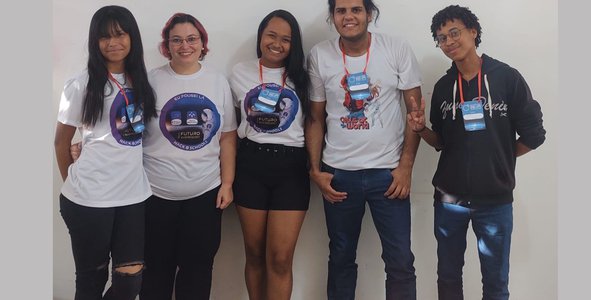
Our experience with Space Apps was very rich. It was such an innovative journey, filled with creativity, learning and teamwork. We learned what happens to living beings in space traveling, the genetics of the sea slug and of the algae Vaucheria littorea, besides the characteristics of tardigrades and Mars colonization, as well as other aspects of Space Biology. We got the opportunity to learn about space and biology education and the adaptation of living beings in space. We chose this challenge due to our passion for space and its mysteries, our love for biology, illustrations and the ludic world of superheros. We solved problems and challenges with the help of our mentors, monitors and organizers, with patience and group work. Our team has a great diversity of skills, such as programmers, illustrators, designers, biologists and writers, characteristics which helped the transmission of ludic and scientific knowledge. Rocket Team sincerely thanks NASA Space Apps Salvador, NASA for the experience and data, Hy-Brasil Idiomas, an English language institution with immersive methodology, and the Youth Culture and Science Center with the organization of Hack School in the city of Vitória da Conquista. We also thank friends and families for their support.
References
FUJIWARA, Daisuke et al. Mutation Analysis of the rpoB Gene in the Radiation-Resistant Bacterium Deinococcus radiodurans R1 Exposed to Space during the Tanpopo Experiment at the International Space Station. Astrobiology , v. 21, n. 12, pág. 1494-1504, 2021.
MUJER CV, Andrews DL, Manhart JR, Pierce SK, Rumpho ME. Chloroplast genes are expressed during intracellular symbiotic association of Vaucheria litorea plastids with the sea slug Elysia chlorotica. Proc Natl Acad Sci U S A. 1996 Oct 29;93(22):12333-8. doi: 10.1073/pnas.93.22.12333. PMID: 8901581; PMCID: PMC37991.
Illustration of the astronaut, the super tardigrade, the images in the game are illustrated by the team members themselves.
External illustrations were used by the canva education platform e-commerce em www.canva.com
Scratch is a software that uses logical blocks, and sound and image items, for you to develop your own interactive stories, games and animations, in addition to sharing your creations online. Scratch is a project of the Lifelong Kindergarten group at the MIT Media Lab (Massachusetts Institute of Technology), where it was conceived by Mitchel Resnick.
It is specially designed for ages 8 to 16, but is used by people of all ages. Scratch is used in over 150 countries, is available in over 40 languages, and is provided free of charge for all major operating systems (Windows, Linux, and Mac). access in http://www.scratchbrasil.net.br/
Tags
#superheroofspacebiology #atrobiology #transgenics #experiments #adaptationinspace #game #education