Awards & Nominations
NASAcre has received the following awards and nominations. Way to go!
Global Nominee


NASAcre has received the following awards and nominations. Way to go!
We think it is important to have a good understanding of how different organisms respond to the space environment and if these organisms share these reponses. In order to accomplish that, we have prepared an informative essay. We hope, by reading our essay people will understand how organisms react to the space conditions and which features from these organisms we can gather in one single organism to create a "biological superhero"!
In our project we aimed to inform people about the troubles of space traveling and how different organisms deal with those troubles. We gathered information from reliable USA based sources. We prepared our project in an understandable language so that people from all ages can understand! We used Movavi Video Editor,Canva, Google Docs, Canva and Blogger in the process of making this project. 
We only used data from NASA.

 This is event was such a great experience for us. Unfortunately we couldn't be there phisically for the event but on the 1st of October we met up at one of our teammates house and we worked on our project for hours but we also didn't forget to have so much fun and eat pizza! We joined this challenge knowing it wouldn't be easy but we think we did a pretty good job! We want to thank our teachers who helped us throughout this journey and Antalya's local lead Selman Canlı and his team.
https://www.nasa.gov/feature/twelve-biology-of-spaceflight-papers-represent-groundbreaking-workhttps://www.sciencedaily.com/releases/2020/12/201209115149.htm#:~:text=Two%20specimens%20from%20different%20spider,the%20first%20didn%27t%20survive
https://history.nasa.gov/animals.html
https://www.cnet.com/science/nasa-astronaut-reacts-to-spiders-on-the-iss/
https://www.nasa.gov/hrp/bodyinspace
https://www.smithsonianmag.com/smart-news/fish-dont-do-so-well-space-180961817/
Space.gov
One Year on Earth – Seen From 1 Million Miles
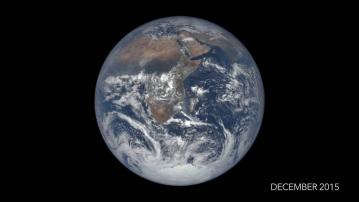
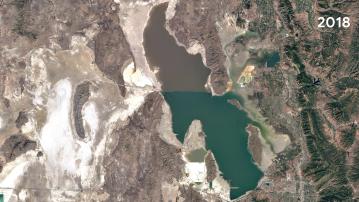
NASA
Summaries from Biology of Spaceflight Papers
12 plain language summaries from Biology of Spaceflight publications

NASA History
ScienceDaily
Spiders in space: Without gravity, light becomes key to orientation
Humans have taken spiders into space more than once to study the importance of gravity to their web-building. What originally began as a somewhat unsuccessful PR experiment for high school students has yielded the surprising insight that light plays a larger role in arachnid orientation than previously thought.
https://www.nasa.gov/feature/twelve-biology-of-spaceflight-papers-represent-groundbreaking-work
https://history.nasa.gov/animals.html
https://www.cnet.com/science/nasa-astronaut-reacts-to-spiders-on-the-iss/
https://www.nasa.gov/hrp/bodyinspace
https://www.smithsonianmag.com/smart-news/fish-dont-do-so-well-space-180961817/
https://en.wikipedia.org/wiki/Lesser_house_fly
Tardigrades: nature's great survivors | Biology | The Guardian
{Word of Mouse}: Top 5 Talking Rodents - The Prompt Magazine
Monkeys and apes in space - Wikipedia
https://www.youtube.com/watch?v=q7lgj3aZ8dU
Laboratory mouse biology – Research Animal Training
https://www.nasa.gov/multimedia/imagegallery/image_feature_838.html
What Can We Learn About Isolation From NASA Astronauts? | NASA
https://tr.m.wikipedia.org/wiki/Dosya:Radiation_warning_symbol.svg
Space.gov
#biology #space #organism #radiation #isolation #earth #gravity #animals #mice #superhero