Awards & Nominations
Into The Void has received the following awards and nominations. Way to go!
Global Nominee

Into The Void has received the following awards and nominations. Way to go!
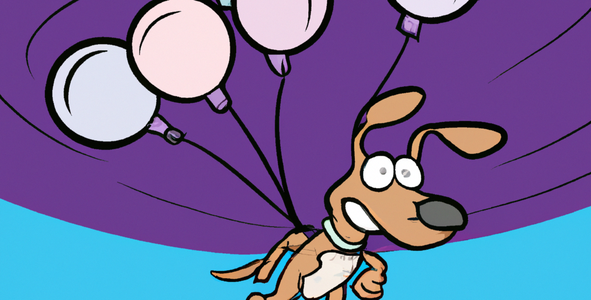
We have developed a game for children in KS3 to learn about the instruments on the James Web Satellite Telescope (JWST) that give it such immense power through the exploration of space in 3D.The goal of the game is to find Fluffy, the long lost and much loved space dog, who has floated into the 'void' of space previously unreachable by NASA's telescopes - until now.Player searches space to find the instruments that make up the JWST. As each is found, they learn what it is, how it works, and compare its impact to other telescopes using real satellite images. The instrument is then added to their 3D model of the JWST and brings them one step closer to bringing Fluffy home.
Into the Void is a game with the aim of making the James Webb Space Telescope accessible for people of younger ages by presenting the information in a simplified and entertaining manner. The game helps demonstrate how each different instrument within the telescope works whilst also providing some information about the science behind why this works, to provide children in KS3 with an understanding of both the applications of the James Webb Space Telescope and how the technology carries out this job functions.
We hope that this game will inspire children to further explore the amazing work that it currently taking place from the James Webb Space Telescope but also to develop an appreciation of the importance of the technology behind the James Webb Space Telescope observations.
Beyond this, we would love for this to become a tool integrated in the UK KS3 Science curriculum. We can communicate the science behind the JWST through this game in a way that will stick with the learners, as they'll get to experience its application beyond the classroom. We hope that from playing the game and becoming familiar with the JWST, that learners get excited if they see it again out in their everyday lives (e.g. on TV, in a textbook (a very new textbook), or in a movie). We hope the knowledge gained from the game will give them the confidence to talk about it with the friends, family, and peers, hence spreading the word about how cool it is!
Flow of game submitted:
An information box will pop up, giving the player time to read all of the information. This will tell the player: Name of the instrument, How it works using KS3 curriculum language, What it allows you to see, Why scientists need this information, A practical way for the students to test the concepts, Image of the instrument, REAL image/output and comparison to illustrate what it does.

 asteroids once again act as hints, then when Fluffy is found the games ends happily.
Future Additions:
 Benefits of Into the Void as a solution to this brief:
Tools:
The majority of the sources we used in the development of our project originated from either NASA or partner space agency sites. This ensured that all of the information presented within the game is both reliable and educational.
Most importantly, the 3D model of the James Webb Space Telescope contained within our game was sourced from NASA. It is important that we used an accurate model because as the children play the game they will learn from exposure what the JWST looks like, and we hope get excited if they see it again out in their everyday lives (e.g. on TV, in a textbook (a very new textbook), or in a movie). We hope the knowledge gained from the game will give them the confidence to talk about it with the friends, family, and peers, hence spreading the word about how cool it is!
Another key components of the game, the sky, initially seen through the Hubble telescope, was retrieved from the source solarsystemscope.com, whom generate their images using data from NASA. Due to the time restraints, it was out of reach to produce this visualisation ourselves - so this was the next best thing! It produces a beautiful visual aid, whose vastness both intrigues children, therefore encouraging them to explore the night sky, and provides them with a concept of what the sky looks like when viewed from outside of the Earth’s atmosphere. We layered our own effects onto the night sky when the NIRCam is discovered, however if real images were available in the future this would drastically increase the realism, hence appeal more to the older end of our target audience. These effects were produced to best replicate the image data provided by NASA.
In the future we will add more level and instruments to find, each with its own associated effect. We looked at generating/comparing graphs (including spectrographs) from NASA raw data (found via the MAST Portal) however found this outside of the scope of what we could achieve in a weekend. By adding more instruments and allowing the children to explore space via different methods such as graph comparison, we hope they gain a deeper understanding of how each instrument works and the benefits associated with the each different method of imaging.
The Space Apps Experience was action packed and energy filled from not only the team but also all of the other participants at our venue. It was well ran and in a very cool venue (Exeter Met Office!).
During the event we explored and discovered just how cool and powerful telescopes are, especially the James Webb Space Telescope. We learned about the different instruments onboard, and how each of them has different capabilities that allow us to see deeper into space (and further back in time) than ever before. We also learnt that there's quite a lot to game development, and that changing audience can cause a 180 degree turn on initial concepts. We also learned to quickly adapt to changes and that scope creep is something to really keep an eye on! We quickly got good at reeling things in when we started to get carried away ideating extra features - ending with a solid MVP. We also learned more about the design and prototyping tool Figma, which gave us a great way to quickly mock-up ideas and communicate them effectively to the rest of the team.
Our team chose this challenge primarily because we found it fun and interesting, and also because while brainstorming ideas we were able to bounce ideas off each other really well. Our team was skewed heavily towards to non-technical side, so this challenge enabled everyone to stay engaged in the creative process. We also liked the idea of bring the joy of space to children in a fun and accessible way. Many people have never considered careers in the space-sector because they weren't exposed to it during the critical life-stage when you start considering what direction to take your life in. An introduction to the basic science behind these tools could inspire a child to take the Physics GCSE more seriously, then take the Physics A-level, and perhaps a degree in Astrophysics beyond that! Maybe they'd even be inspired to make a bigger and better telescope 30 years from now!
We primarily focused on developing the project by prioritising the design first, so that we could iterate on the gameplay without having to rewrite lots of code! We drew from everyone's experiences - as we varied a lot! From someone who has children of their imagining what they would like, to someone who only a few years ago was in high school themselves, to someone who has taught children across all ages. We were very aware of the time crunch, so initially decided that 2D animation would be easier to implement, hence did our comparative case studies on BBC Bitesize, whose games target KS2. We then started the JWST research phase, however quickly discovered the intensity of knowledge required to understand the science behind the JWST Cameras was too much to simplify for KS2. To combat this, we moved our age range to KS3 - and upgraded the animation style to near-realistic 3D immersion, as what we originally prototyped felt far too childish. We wanted to make sure that this was a game children would return to and retain the information from, so we nailed down the story of the long lost dog (because who doesn't like dogs?) as adds that element of silly that KS3 children still enjoy (even if they're too cool now to admit it). We then redesigned the game assets in Figma and got to developing!
Finally, we'd like to give a big shout out to the catering, security, and the leaders at our venue - they were very friendly, approachable, and clearly worked very hard to pull off a great event!
Instruments
https://webbtelescope.org/resource-gallery/images
Contains images taken by JWST
https://mast.stsci.edu/portal/Mashup/Clients/Mast/Portal.html
MAST is the repo of the Images/etc. from all the Telescopes (Incl. JWST)
https://www.nasa.gov/mission_pages/webb/observatory/index.html
Main Overview of JWST - Large Physical Components
https://webbtelescope.org/news/first-images/resources/microshutters#:~:text=Magnets%20selectively%20open%20tiny%20doors,to%20100%20celestial%20objects%20simultaneously.&text=Instruments%20behind%20Webb's%20microshutters%20spread,about%20distant%20stars%20and%20galaxies
Instrument images
NIRspec:
https://www.flickr.com/photos/nasawebbtelescope/albums/72157627124336667
https://www.flickr.com/photos/nasawebbtelescope/albums/72157624436752374
https://www.flickr.com/photos/nasawebbtelescope/albums/72157624413830771/with/51412207042/
NIRcam:
https://www.flickr.com/photos/nasawebbtelescope/albums/72157627248683106
https://www.jwst.nasa.gov/content/observatory/instruments/nircam.html - infromation about JWST’s NIRcam
NIRISS:
https://www.flickr.com/photos/nasawebbtelescope/albums/72157627248689796
MIRI:
https://www.flickr.com/photos/nasawebbtelescope/albums/72157627124342395
JW vs Hubble
https://www.jwst.nasa.gov/content/about/comparisonWebbVsHubble.html
https://webb.nasa.gov/content/about/faqs/facts.html
Side scrolling game
https://www.bbc.co.uk/games/embed/junkateers?exitGameUrl=https%3A%2F%2Fbbc.co.uk%2Fbitesize%2Farticles%2Fzm7qjhv
Real world images (possibly same links)
https://www.flickr.com/photos/nasawebbtelescope/13313063673/in/album-72157627248683106/
The “near infrared camera 3 being fitted
https://www.flickr.com/photos/nasawebbtelescope/8705462356/in/album-72157627124342395/
Mid-infrared instrument 4
https://www.jwst.nasa.gov/content/observatory/instruments/fgs.html
This is the slitless spectrograpgh 1
near infrared spectrometer 2
https://sci.esa.int/web/jwst/-/52749-near-infrared-spectrograph-nirspec
Infrared dogs
https://science.nasa.gov/ems/07_infraredwaves
Coding
https://github.com/thetechnicalartist/2022-SpaceApps
JWST, KS3, game, 3D animation, search, lost dog, IntoTheVoid, education