
High-Level Project Summary
The launch of the JWST marks an unprecedented event in human history as its findings could change the way we perceive the universe. Our goal is make all this knowledge accessible to the general public in a clear, interesting and easy-to-understand way.We developed an interactive experience that allows players to simulate a mission, where the player is accompanied by a robot that travels to space and explains how the JWST works. There will be different stages where the player can learn various important aspects about this telescope such as its parts, basic operation and the pictures obtained by it. As a bonus challenge, players will learn to differentiate images from different telescopes.
Link to Final Project
Link to Project "Demo"
Detailed Project Description
Our web page allows users to learn about the JWST in an interactive way. We created a space assistant called BeepBop which guides users through the parts of the telescope and its features so people can have a better understanding of it. For each of the main parts we have designed a game that can solidify the understanding of how the telescope works. Once users have identified the parts, they can be challenged to observe and differentiate the images obtained by JWST and Hubble, emphasizing on the great improvement in image quality.
The main benefit of our project is that we manipulate the technical information and turn it into a story that can help to have a better understanding of how this telescope is made and the great capacity it has to obtain images of a quality that we had not seen before. Furthermore, by implementing mini-games and/or graphic activities, we can reinforce the knowledge that users have acquired.
Our team was inspired by the amazing capabilities of the telescope and decided it was not enough to show just the results comparing the output. We want people to learn more about this fantastic invention and how important, extraordinary and difficult it can be to obtain this kind of image. We wanted to showcase all the effort that is behind the final product.
We expect our project to be included in the NASA’s web page about the telescope: https://jwst.nasa.gov/content/webbLaunch/needToKnow.html#webbImages . This page has a section dedicated to Education & Activities which provides different resources such as coloring books, image gallery, challenges and even other interactive games. We noticed these games talked about telescopes in general, so we believe the interactive space experience we designed will be perfect to learn specifically about the James Webb Space Telescope.
Space Agency Data
To build our project we used two types of data, general information about the James Webb Space Telescope to provide facts to the public and design the game on the exploration section and images obtained from telescopes for the challenge part. We used resources available by NASA, making sure all the facts and images were legitimate and appropriate. We realized the JWST has more pictures than the ones we selected but with the aim to provide quality information we decided to use only the peer-reviewed ones.
This link was our main source of information: https://www.nasa.gov/webbfirstimages
Hackathon Journey
It was amazing to have the opportunity to participate in this challenge. We learned a lot about it and had a great time figuring out how to better implement our solutions. Even when we had trouble we did not give up and continued working trying to do the best we could. We hope we can come back next year for the next edition of the Space Apps Hackathon.
References
Tools
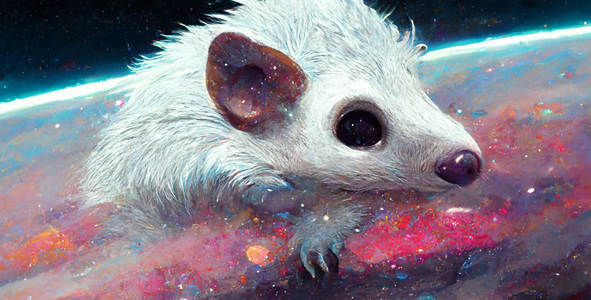
We decided to build an interactive web page, which features built-in minigames. The programming languages we used are: HTML, CSS and JavaScript. The web page is designed to be responsive so bootstrap libraries were included. To code our solution we used Visual Studio and Visual Studio code. For the visual part of the project (character and background design) we used photoshop and an AI bot that given a prompt it generates 4 images to choose between called Midjourney.
References
Garner, R. (2015) James Webb space telescope, NASA. NASA. Available at: https://www.nasa.gov/mission_pages/webb/main/index.html (Accessed: October 2, 2022).
NASA. (n.d.). Instruments and ISIM (Integrated Science Instrument Module) Webb/NASA. NASA. Retrieved October 2, 2022, from https://jwst.nasa.gov/content/observatory/instruments/index.html
Garner, R. (2015, February 20). The james webb space telescope observatory. NASA. Retrieved October 2, 2022, from https://www.nasa.gov/mission_pages/webb/observatory/index.html
NASA. (n.d.). Comparison: Webb vs Hubble Telescope - Webb/NASA. NASA. Retrieved October 2, 2022, from https://www.jwst.nasa.gov/content/about/comparisonWebbVsHubble.html
Challenge: LEARNING THROUGH THE LOOKING GLASS. NASA Space Apps Challenge. (2022). Retrieved October 2, 2022, from https://2022.spaceappschallenge.org/challenges/2022-challenges/through-the-looking-glass/details
Tags
#videogame#webpage#telescope#jwst#images#funfacts