
High-Level Project Summary
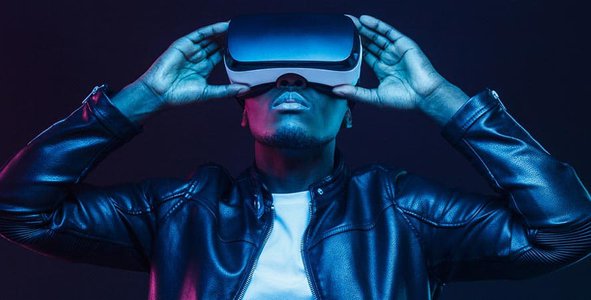
"Stellar Variability Investigation in VR" is exactly what it is. Created a VR environment where anyone, including those without no prior understanding of astronomy, can learn about the study of stellar variability using the most well-known lightcurves. Initially a lot of user-friendly video courses with interactive code are available. The second phase retrieved all the necessary data from the NASA server and displayed it in a style that was user-friendly for beginners, including a flux vs. time graph, peridogram, live video simulation, and basic information. Now it is up to the user to use prior knowledge to determine whether they have discovered an exoplanet or unique variability pattern.
Link to Final Project
Link to Project "Demo"
Detailed Project Description
Project “Stellar variability investigation in virtual reality” is all about how can we make a common person with no prior knowledge can comprehend tough astronomy concepts like stellar variability using the immersive power of virtual reality. Project is divided into two parts:
- Learn:
The user is welcomed by an immersive VR space experience in this scene. The user begins his educational journey by looking at some of NASA's most well-known space exploration missions, including the Kepler Space Telescope, the Transiting Exoplanet Survey Satellite (TESS), and the James Webb Space Telescope, along with an accurate 3D model of the spacecraft (a NASA 3D resource), and a mission-related NASA video. Using a user-friendly video made by a NASA employee, the following user is introduced to the fundamental idea of "Stellar variability." After learning the fundamentals of "Why stars brightness fluctuates?" the user proceeds to "How to understand different light curves and its meaning?" and "How to understand different light curves in depth?"
- Explore
The user can use this knowledge to investigate a specific star once they have mastered all the subtleties of stellar variability and comprehended its significance using the most popular technique, transition method analyses by light curves from stars. The user can use StarID (e.g., TIC 22344284), StarName (e.g., Pi Mansae), or any other identifier to search for a specific star in the scene. To access processed pertinent information, a VR headset (Meta quest 2) connected to the same network calls a Flask server hosted on a local PC with the same star identifier. Local Flask servers are used to build customized APIs with various endpoints that use packages like "LightKurve," "K2Flix," and others to access real-time data from MAST servers. Finally, preprocessed light curves and pertinent data are shown to the user so they can continue their investigation and determine what causes stellar variability.
Benifits : With learning modules and an immersive VR experience of the stars in the sky, an astronomy novice can explore becoming a professional investigator of stellar variability. Experience is developed considering all age groups.
//Tried to achieve most in time crunch many future aspects can be improved with more improvised data input and relevant visualization
Package and Language : Flask, Python, LightKurve, K2Flix, Unity3D, C#, requests, MAST API, matplotlib, numpy,
VR Device : Meta Quest 2
Space Agency Data
Majorly used MAST(NASA) space data specically for ransiting Exoplanet Survey Satellite (TESS) data fetched from lightKurve package complemented by k2flix. Ideology was to get most effective data from beginner point of view.
Hackathon Journey
Crazy learnt a lot from no experience about space to developing a app, even submitted this at last minute. No food no sleep but yeah all worth it. Will attach all the roughs and experience in GitHub and carry as souvenir.
References
https://docs.astropy.org/en/stable/io/fits/api/files.html
https://heasarc.gsfc.nasa.gov/docs/tess/community-tools.html
https://archive.stsci.edu/tess/bulk_downloads/bulk_downloads_ffi-tp-lc-dv.html
https://docs.astropy.org/en/stable/utils/index.html#module-astropy.utils.data
https://fits.gsfc.nasa.gov/fits_primer.html
https://mast.stsci.edu/tesscut/
https://tess.mit.edu
https://archive.stsci.edu/missions-and-data/tess
https://www.youtube.com/c/PlanetHuntersCoffee
https://www.youtube.com/goddardtv
Tags
#VirtualReality#ImmersiveLearning#StellarVariability#BeginnerFriendly#Space#Fun#Futuristic