
High-Level Project Summary
We have created a game, StarGazer 2022, that allows anyone to learn about variable stars. By using Unity, we are able to simulate the changing and interactive movements of the variable stars in the universe. The goals that should be considered in the challenge including visualization of variable stars, star map simulation, custom-made stars, and training set are all presented in the StarGazer 2022. In addition to the star simulation program, we have designed a set of introductions, so that everyone can understand the variable stars and the science behind it.
Link to Final Project
Link to Project "Demo"
Detailed Project Description
Introduction
The universe is charming, and we want everyone to understand the knowledge behind these charms, and inspire people on the path of scientific exploration. Therefore, we choose the “Twinkle, Twinkle, Little Star” challenge. Our work, StarGazer 2022, can be discussed in three categories.
1.Acquisition of science data
We used NASA’s data and explanation for introduction and info cards in the game. Also, we used ASAS-SN Variable Stars Database from Ohio State University for the real data of variable stars. In addition, in order to present the real world star map, we use the Aladin Sky Atlas data to show the location of each star.
2.Developing of the software
Thanks to the science data, we have the background knowledge to develop software. We used Unity (version 2021.3.11), which is a tool that is often used to make games, for our StarGazer 2022. We use Microsoft Azure for database management. In StarGazer 2022, we have a Main Page, Finder Chart, Variable Stars Database, Create your own star, Star Screenshot.
Main Page: As a game, we need a home screen to connect all functions, and show the theme of the game.
Finder Chart: By using the database of the stars, we are able to simulate the period of star twinkle, and visualize the stars and star charts for users to see.
Variable Stars Database: We selected some examples of different kinds of variable stars to show the varieties of variable stars. The game presents the information including: rotation period, variation type, location and light curve.
Create your own star: By defining their own name, VMag, period, BP-RP, ratio(binary stars or not), users can create their own stars. These created stars can be shown in the Finder Chart to let users observe their own work.
ScreenShot: Players are able to take a screenshot of stars they observed/designed. Saving the file as a memory or shareable media file.
3.Science education tutorial
With the various functions described previously, we have designed a gameplay that allows players to enter scientific education exploration without the burden. At the beginning, players will first enter the Finder Chart screen through the main page, where they can see our pre-simulated starry sky, so that they can know the many possibilities of the starry sky and that star exploration is not so difficult. Next, the player is guided to the variable star database to learn about the various types of variable stars and how they look in the universe. After learning about the variable stars, the game offers a star customization feature that encourages players to design their own variable stars and observe them in the Finder Chart(star simulation view). Finally, the player can end the journey with knowledge about the various variable stars and the pictures obtained through the screenshot function.
Conclusion
GitHub link: https://github.com/William-Mou/TwinkleStar
In terms of game programming, we wanted to allow players to experience:
- The characteristics and interactions of variable stars, rare events
- The effect of changing stars in time and distance
- The causes of the shining stars
- The causes of different colors of stars
- The effect of distance on the visual magnitude of stars
In terms of gameplay experience, we want players to be able to:
- Enter the world of star exploration without the burden
- Design and simulate their own stars and gain a sense of accomplishment
- Share the results of their own star exploration and have fun and continue their passion
This game has no threshold and is dedicated to bringing the universe to all students, regardless of wealth or gender. Looking into the universe is a satisfying thing, and we hope that players can feel this joy in our game and share it. And more importantly, don't forget the original intention of looking up to the stars.
Space Agency Data
- ASAS-SN (https://asas-sn.osu.edu/) for variable star data
- Cepheids(https://starchild.gsfc.nasa.gov/docs/StarChild/questions/cepheids.html) for intro
- Light curve(https://imagine.gsfc.nasa.gov/science/toolbox/timing1.html) for info
- CVs(https://imagine.gsfc.nasa.gov/science/objects/cataclysmic_variables.html) for intro
- Aladin sky atlas (https://aladin.u-strasbg.fr/) for graphs
Hackathon Journey
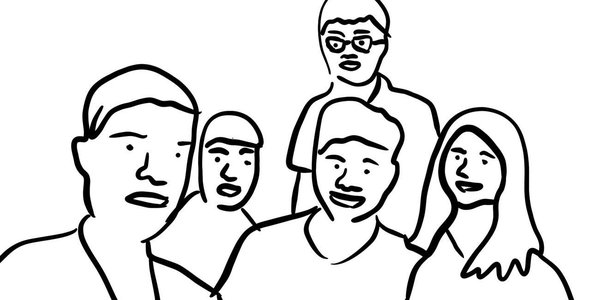
There is a wide diversity of backgrounds in our group, our team members come from different fields including arts, computer science, management, and media. Some have participated in NASA Space Apps for the fifth year, while some are first time participants. We want to find an interesting topic to solve. After a quick glance, we decided to do a romantic challenge : Twinkle, Twinkle, Little Star.
We have always wanted to do the most unique work among these challenges, which comes from a love of the universe, a love of games, and a belief in the infinite possibilities of the future, so making a game to inspire the public about stars was our goal. We believe that the universe is a romantic space, and we want to let people create their own starry sky.
In the process of building the project, we had three partners who were mainly responsible for handling the programming development. They worked together using Unity and Figma to design the interface and the application. The other two partners were responsible for the presentation of the project and for providing necessary information and data.
During the challenge, we studied the reasons why the stars twinkled, learned about various variable stars, and built our work through relevant databases. For two days, all we did was eat take-out, sushi, ramen, pizza from the organizers, took naps, continued working on the project, and finally submitted our projects. In the development process, we often wailed at the computer because we had to calculate the equations for the trajectory, but our team members persevered through it with great determination.
Finally, we would like to thank all our partners, the students we shared the lab with, the organizers of the event, and teachers who helped us out. Every NASA Space Apps is an unforgettable memory, especially in the middle of a pandemic.
References
https://starchild.gsfc.nasa.gov/docs/StarChild/questions/cepheids.html
https://imagine.gsfc.nasa.gov/science/toolbox/timing1.html
https://imagine.gsfc.nasa.gov/science/objects/cataclysmic_variables.html
https://www.space.com/15396-variable-stars.html
https://www.britannica.com/science/flare-star
https://www.atnf.csiro.au/outreach/education/senior/astrophysics/variable_pulsating.html
Tags
#software #game #education #science #star