Awards & Nominations
NASA'yo has received the following awards and nominations. Way to go!
Global Finalists Honorable Mentions

NASA'yo has received the following awards and nominations. Way to go!
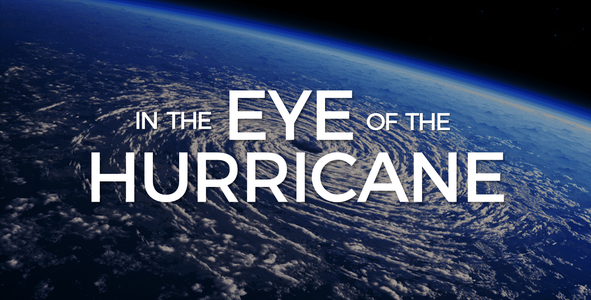
Our team is challenged to create an educational video on how climate change affects us, but is presented creatively. The video is entitled, “In the Eye of the Hurricane”, conveys that when the situation is calm, that is when we should act. Showcasing the major impact of Climate Change in the Philippines, and that is the sudden increase of super typhoons, which caused massive amounts of damage and casualties. Included in the video are NASA solutions concerning disaster risk reduction and management that the Philippines could implement to help battle against this climate change issue. What we want to impart on the people who would be viewing this is that If they don’t act now, then when?
Intense circular storms known as tropical cyclones originate over warm tropical waters, specifically when the air and sea surface temperatures are both over 26°C (PAGASA, 2022). It brings with it torrential downpour and winds with a maximum sustained speed of above 119 km/h. However, secondary phenomena like storm surges, flooding, landslides, and tornadoes cause far more harm to life and property than wind and heavy rain alone (WHO, 2022). As a result, it represents one of the greatest hazards to human life and property on Earth.
Suomi NPP/VIIRS true color image of Hurricane Maria acquired on September 24, 2017
Intense circular storms known as tropical cyclones originate over warm tropical waters, specifically when the air and sea surface temperatures are both over 26°C (PAGASA, 2022). It brings with it torrential downpour and winds with a maximum sustained speed of above 119 km/h. However, secondary phenomena like storm surges, flooding, landslides, and tornadoes cause far more harm to life and property than wind and heavy rain alone (WHO, 2022). As a result, it represents one of the greatest hazards to human life and property on Earth.
Periodic data on tropical cyclones taken from PAGASA
According to the World Risk Report 2022, the Philippines ranks first among the Top 10 countries with the highest disaster risk globally, with 46.82%.
Top 10 countries with the highest disaster risk worldwide
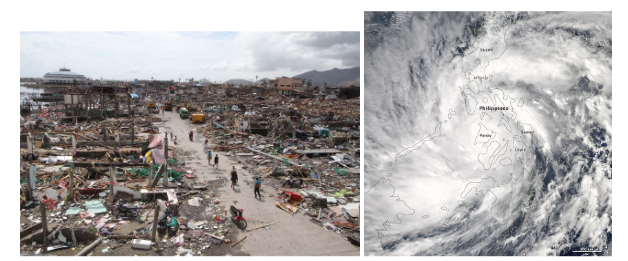
Typhoon Yolanda, globally known as Typhoon Haiyan, was the worst typhoon to ever hit the Philippines, according to the National Disaster Risk Reduction and Management Council. 16.1 million people in 44 provinces were impacted, within it 6,300 people died, 1,062 people went missing, and 28,688 people were injured. The damage to 1.1 million homes, agriculture, and casualties cost an astounding 95.5 billion pesos in total. It is not just the worst typhoon to ever hit the Philippines, but also one of the strongest typhoons to ever make landfall in recorded human history (NASA, 2013).
Devastating effects of Typhoon Yolanda (Haiyan) in Tacloban
Effects of Typhoon Odette (Rai) in Siargao
One of the strongest typhoons recorded in 2021 and the sixth to reach Category 5, Typhoon Odette, also known as Typhoon Rai, made landfall in the Philippines from December 14 to December 18 (NASA, 2021). 7.8 million people in 38 provinces were impacted, resulting in 405 fatalities, 52 missing persons, and 1371 injuries. A total of 33 billion pesos in damage costs were incurred due to the destruction of 2 million homes and the significant impact on agriculture (National Disaster Risk Reduction and Management Council, 2021).
Typhoon Haiyan (Yolanda) V.S. Typhoon Rai (Odette)
Besides that the Philippines is already geographically vulnerable by itself, the addition of economic and lack of framework for better coping mechanisms added weight on how it severely affects us.
Bicol, a region in the Philippines, is one of the areas that is regularly visited by natural calamities such as typhoons. For Bicolanos, “Oragons” as we call ourselves, we have always been like soldiers in the front-lines, facing a mighty enemy every time these calamities brought out torrential rains and its ceaseless tempests. Some have ended up successful in their battles, able to share their glory. However, like any other battlefield, it also costs a number of lives.
We have seen it first-hand.
I, a Bicolano, an Oragon from one of its provinces called Sorsogon, saw how roofs detached itself from houses and fell in front of other people's lawns. I saw how some trees demolished houses while others destroyed cars. I have experienced that when stronger typhoons hit, electricity will be gone for at least three to six months. Due to this, our Christmas was only filled with darkness. These are only some of the physical effects of the onslaughts. In each fellow man's mind could be the most mental scars and traumas wished they could never have.
We are Oragons, the Bicolanos' moniker for the valiant and the brave. However, the Philippines were already coping with increasing poverty, unemployment and a roll-back on development gains following two years of the pandemic. Their resources are now depleted and local coping capacities are severely strained. Some fellow men have no shelter and food, they have to rely on organization and other people’s donations. At the end of the day, courage could not solve the needs of the people.
[0:00 -0:45]
The first 30 seconds of the video is a depiction of our typical and so-called ‘normal’ lives living here in the Philippines. The National Disaster Risk Reduction and Management Council's (NDRRMC) text alerts are one way for the government to warn its citizens about upcoming environmental hazards. (National Disaster Risk Reduction and Management Council, an agency responsible for coordinating and monitoring the implementation of disaster risk reduction and management activities.
[0:46 - 1:49]
In this section, we’ve discussed the typhoons mentioned above that hit the Philippines in its recent history. Namely typhoons Yolanda and Odette. Both typhoons brought a huge devastation to many provinces and caused a lot of loss in human lives and peso in economic losses.
[1:50 - 2:55]
Through mentioning the current projects and plans formulated, and implemented by international agencies (such as the Climate Resilience Toolkit and NASA's ARSET Climate Trainings), the video ended by educating the minds of the audience that the world is changing at an alarming rate and this change in climate is detrimental to humanity.
The video presentation is made according to the following information that was deemed important during the group’s deliberation. It mostly consists of the members' experiences during the onslaught of calamities, factual news and scientific facts revolving around the chosen topic, and the current projects and potential considerations that humanity have in response to the prevailing threats of the change in climate – all of which are mentioned in the sections above.
In order to effectively present our message, and make it accessible and relatable to the masses – especially the Filipinos, the group decided to localize the content of the video. This includes incorporating a scene where a person is bombarded with NDRRMC messages, and using news information on the severity of the aftereffects of the onslaught of calamities here in the country. In contrast, the projects that were mentioned in the video are on a global scale for we believe that climate change is in need of all of humanity’s attention.
In order to fully achieve our goal to educate the masses on climate change and its impacts, the group has gathered and consolidated verified scientific facts such as NASA's finding on the latest annual average anomaly of the world’s temperature: 0.85 degrees Celsius, will help the viewers understand the importance of these kinds of discussions.
Written below are the following space agency data that is used in the video presentation:
Part of NASA’s Climate Action Plan priorities and areas is advancing aeronautics research to reduce contributors to climate change. (https://www.nasa.gov/press-release/nasa-releases-climate-action-plan)
ARSET Climate Trainings that put Earth observations to work using unique global observations from space, air, sea and on land to help better understand our planet’s interconnected systems. (https://appliedsciences.nasa.gov/what-we-do/capacity-building/arset/about-arset)
The U.S. Climate Resilience Toolkit that aims to provide climate change information and tools to build resilience to climate change. (https://toolkit.climate.gov/)
Change in global surface temperature compared to the long-term average from 1951 to 1980 (https://climate.nasa.gov/news/2865/a-degree-of-concern-why-global-temperatures-matter/)
Super Typhoon "Yolanda" (Haiyan) reports gathered by NASA (https://earthobservatory.nasa.gov/images/82348/super-typhoon-haiyan-surges-across-the-philippines)
Super Typhoon "Odette" (Rai) reports gathered by NASA (https://earthobservatory.nasa.gov/images/149228/super-typhoon-rai)
Information regarding Tropical Cyclones (https://www.earthdata.nasa.gov/resource-spotlight/tropical-cyclones)
Our Space Apps experience was filled with myriads of unexplainable emotions but it could be summarized as a catalyst for friendship to grow between our members. Through this, we were able to learn quite a few soft-skills revolving around teamwork such as a healthy collaboration and communication between team members and proper time-management. In addition to that, we were also able to pick up in-depth scientific facts regarding typhoons and climate change from the resources we have got from NASA for this challenge.
During the time that the development of our project set in motion, our group has realized how limited our time was in completing this challenge especially with the fact that we have just joined Space Apps a few days before the start of the submission. We have compensated for this obstacle by putting in the most time and effort that we could in this project.
As the final words of our Space Apps journey, we offer our thanks to PUP – The Programmers' Guild, an organization in our university, that we were able to know the existence of this Space Apps Challenge. We would like to dedicate this paragraph of appreciation for them.
As one of the countries located on the Pacific typhoon belt, the Philippines continuously experiences its fair share of tropical storms. Our group saw this challenge as an opportunity to share our experiences with natural calamities and climate change and an outlet to use our voice to inform everybody about the current state of our battle with climate and its continual change.
Our team utilized a narrative approach in the presentation of our project. We have also made use of images and video clips as we went through the creation and editing of our video.
PAGASA. (2022). Tropical Cyclone Information. In www.pagasa.dost.gov.ph. https://www.pagasa.dost.gov.ph/climate/tropical-cyclone-information
PAGASA. (2022). About Tropical Cyclones. In www.pagasa.dost.gov.ph. Retrieved October 2, 2022, from https://www.pagasa.dost.gov.ph/information/about-tropical-cyclone#:~:text=The%20Philippines%20is%20prone%20to,destructions%20to%20crops%20and%20properties.
Tropical Cyclones. (2019, November 26). Retrieved October 2, 2022, from https://www.who.int/health-topics/tropical-cyclones#tab=tab_1
Philippines Super Typhoon Impact Comparison - Philippines. (2022, January 11). ReliefWeb. Retrieved October 2, 2022, from https://reliefweb.int/report/philippines/philippines-super-typhoon-impact-comparison
WorldRiskReport.org. (2022, September 8). WorldRiskReport 2022 - Focus: Digitalization - World. Retrieved October 2, 2022, from https://weltrisikobericht.de/weltrisikobericht-2022-e/
National Risk Reduction Agency and Management Council. (2013, November). FINAL REPORT re Effects of Typhoon “YOLANDA” (HAIYAN). In ndrrmc.gov.ph. Retrieved October 1, 2022, from https://ndrrmc.gov.ph/attachments/article/1329/FINAL_REPORT_re_Effects_of_Typhoon_YOLANDA_HAIYAN_06-09NOV2013.pdf
NASA. (2013, November). Super Typhoon Haiyan Surges Across the Philippines. NASA Earth Observatory. Retrieved October 1, 2022, from https://earthobservatory.nasa.gov/images/82348/super-typhoon-haiyan-surges-across-the-philippines
Seven years on, yet horrors of ‘Yolanda’ still linger for Taclobanons. (2020, November 9). Manila Bulletin. Retrieved October 2, 2022, from https://mb.com.ph/2020/11/09/seven-years-on-yet-horrors-of-yolanda-still-linger-for-taclobanons/
National Risk Reduction Agency and Management Council. (2021, December). Final Report for Tropical Cyclone ODETTE 2021. In ndrrmc.gov.ph. Retrieved October 1, 2022, from https://ndrrmc.gov.ph/attachments/article/4174/Final_Report_for_Tropical_Cyclone_ODETTE_2021.pdf
NASA Earth Observatory. (2021, December). Super Typhoon Rai. Retrieved October 1, 2022, from https://earthobservatory.nasa.gov/images/149228/super-typhoon-rai
Sileo, W. (2021, December 22). Siargao Island, Home to the Famous Cloud 9 Surf Break, Devastated by Typhoon Rai. The Inertia. Retrieved October 2, 2022, from https://www.theinertia.com/surf/siargao-island-home-to-the-famous-cloud-9-surf-break-devastated-by-typhoon-rai/
Typhoon “Odette” to make landfall in Bohol Thursday night; province still under Signal No. 4. (2021, December 16). boholchronicle.com. Retrieved October 2, 2022, from https://www.boholchronicle.com.ph/2021/12/16/typhoon-odette-to-make-landfall-in-bohol-thursday-night/
Uy, L., & Pilar, L. (2018, February 6). Natural disaster damage at P374B in 2006-2015. PressReader. Retrieved October 2, 2022, from https://www.pressreader.com/philippines/business-world/20180206/281754154770834
NASA. (2021, June 1). Tropical Cyclones. NASA Earth Data. Retrieved October 1, 2022, from
https://www.earthdata.nasa.gov/resource-spotlight/tropical-cyclones
https://www.youtube.com/watch?v=L-AqMjsKpKk&t=54s%20
https://www.youtube.com/watch?v=rhT35NPq24g&t=68s%20-%20typhoon%20yolanda%20
https://www.youtube.com/watch?v=hSiLa_muuIA%20-%20deaths%20
https://www.youtube.com/watch?v=T0v6Gol83F0&t=51s%20
https://news.abs-cbn.com/business/11/21/13/pinoy-coconut-farmers-face-ruin-after-yolanda
https://www.privacy.gov.ph/wp-content/files/attachments/ppt/DataPrivacyAssembly1-16-18PCREL.pdf
http://pedalingpriest.com/from-the-road-blog/2015/9/29/father-hilton-in-tacloban-city
#Typhoon #Yolanda #Odette #ClimateChange #TropicalCyclone #PhilippineDisasters #SevereStorms #NaturalHazards #Awareness #GlobalWarming #SuperTyphoon #NASA #NASASpaceAppChallenge2022