
High-Level Project Summary
Our project aim to solve the energy problem for Venus exploration, with the technologies that we already have in space exploration field, using a MMRTG generator for energy supply, a liquid helium circulation system to keep the thermal control, and a "Dewar" like encapsulation system to prevent external heat to get in to the system
Link to Final Project
Link to Project "Demo"
Detailed Project Description
Power supply
Our project uses the MMRTG generator to provide 100W of power to a rechargeable secondary battery system and uses a primary battery system to be used in case of any failure in the electrical system
Atmospheric and Heat protection
Our lander will be structured as a "Dewar" like encapsulation.
- Platinum (1 mm) - First metal layer to avoid the sulfuric acid to contact the outer layers of the encapsulation
- Titanium (200 mm) - Two-walled metal layer. It have a structural function, to prevent the lander from imploding with the high atmospheric pressure
- Vacuum (10 mm) - Layer to prevent the heat from being conducted from external environment through the outer layers
- Silver with polished surface (1 mm) - Layer to reflect the irradiated heat from outer layers
- Aluminum (1,5 mm) - Layer to comport the internal equipment and serve as part of the cooling system
Cooling system
With a liquid helium circulation system, removes heat from the internal equipment through aluminum tubes and use the most internal aluminum layer as a heat conductor
Space Agency Data
The "Energy Storage Technologies for Future Planetary Science Missions" <https://solarsystem.nasa.gov/resources/549/energy-storage-technologies-for-future-planetary-science-missions/> helped our team understand most of the technical difficulties of powering a spacecraft, in most scenarios faced by previous missions, and especially those involving exploring Venus
And the "Multi-Mission Radioisotope Thermoelectric Generator (MMRTG)" <https://mars.nasa.gov/internal_resources/788/> document helped us understand the workings of a robust and widely used energy system in space exploration
Hackathon Journey
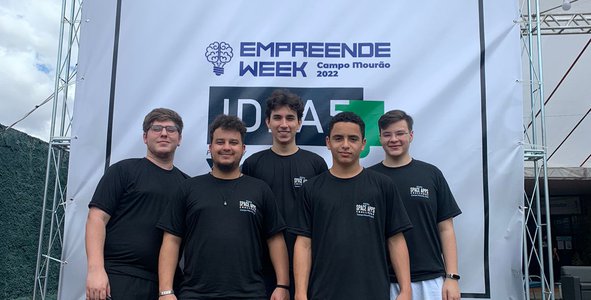
At first, our team faced difficulties in defining the challenge we would develop, but we realized that within the skills of the members, we would be able to create a solution that involved more creativity and innovation than programming and data analysis. So we got together and agreed that we would try to think of ways to help explore the surface of venus
References
https://solarsystem.nasa.gov/resources/549/energy-storage-technologies-for-future-planetary-science-missions/
https://techport.nasa.gov/view/92914
https://homepages.wmich.edu/~leehs/ME539/Final%20Presentation%20on%20eMMRTG.pdf
https://mars.nasa.gov/internal_resources/788/
https://www.sciencedirect.com/science/article/abs/pii/S0011227511001676
https://qd-europe.com/cz/en/product/facts-about-helium-introduction/
https://www.drewexmachina.com/2015/10/22/venera-9-and-10-to-venus/
https://homepages.wmich.edu/~leehs/ME539/Final%20Presentation%20on%20eMMRTG.pdf
https://aip.scitation.org/doi/pdf/10.1063/1.4707054
http://docs.codecalculation.com/mechanical/pressure-vessel/thickness-calculation.html
https://elements.envato.com/planet-rover-BPH9CB4
https://br.depositphotos.com/77699620/stock-photo-america-lander-3d-render.html
Tags
#venus #energy #lander