
High-Level Project Summary
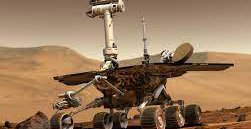
We used materials and tools that have already been invented by NASA for the project. We used a MMRTG as our engine which uses decaying plutonium to make heat which is converted to electricity and stored in a few batteries for use. We used a hull made of an alloy made up of Titanium, aluminum, zirconium, nickel, and other elements. This gives us a heat and pressure proof hull. We filled the hull with liquid nitrogen to cool our components down and added arms and a storage area to collect samples. This solves the challenge as the MMRTG can last for years which blindsides our goal, the batteries can also help store the excess electricity, and the hull allows the rover to survive Venus.
Link to Final Project
Link to Project "Demo"
Detailed Project Description
Our project is specifically designed with one thing in mind, to explore the surface of the planet Venus. The expectation of the project is for it to explore the Venusian surface and get soil and rocks from the planet to send back to Earth.It does this with its MMRTG engine, its liquid nitrogen cooled Titanium-alloy Hull and its equipment. The benefits of this project is profound, we have already started exploring Mars, so Venus is obviously going to be the next step for Humanity to expand. However, you can not expand without prior knowledge of the area you are expanding too, this project could lay the framework for a full colonization of Venus. We hope to achieve that goal, one step at the time. To develop this project and its parts we mainly used parts and info that Nasa has used for its previous rovers, some parts that we recycled is the engine and wheels. One new part that we decided to use was the alloy. Overall we used a mixture of old and new parts with some new ideas to make this project.
Space Agency Data
We used mainly Nasa as our guide. We used Nasa's data about what engine they used for the Perserverence rover to decide what engine we would use and we used their wheels to use on our rover. We took inspiration from the ESA for our underbody arms. The ESA 's ExoMars will use underbody drills for their rover which gave us inspiration to put underbody arms on our rover. We also took inspiration from the University of Alaska which stated that Nasa was funding a person to test substances against the cold temperature of liquid nitrogen. This gave us the idea of using liquid nitrogen to cool down the rover
Hackathon Journey
I would say my review with SpaceApps was pretty good. It was very intresting and fun. We learned a lot about Nasa, and rovers and other things about space. My team was inspired to choose this project as we had already finished our Citizen Poseiden project and decided to do two projects. We resolved setbacks and challenged by never giving up. I have to thank my group members Amal Narasingu, Winson Yung, and Bayar-Undral Tssendorj for helping me(Ritesh Tadigotla) out on this project.
References
https://www.uaa.alaska.edu/news/archive/2022/09/cryogenic-solid-particles-lunar-rovers.cshtml
https://mars.nasa.gov/mars2020/spacecraft/rover/electrical-power/
https://www.neonickel.com/neonickel-news/choosing-the-right-alloys-for-high-temperature-service/#:~:text=Titanium%20is%20a%20lustrous%20transition,of%20600%C2%B0C%20plus.
https://www.esa.int/Science_Exploration/Human_and_Robotic_Exploration/Exploration/ExoMars
https://mars.nasa.gov/mars2020/spacecraft/rover/wheels/
Credits for Background Images:Google Images from Google Slides Background Search
Tags
#Venus#Rover#SpaceApps#Intermediate