
High-Level Project Summary
Energy generation and storage is a major obstacle due to the surface temp. of 465°C and rapid wind speeds(360 kph). Our project combines the use of helium-powered polymeric balloons(PB) and a surface rover to generate power and explore Venus. The PB hover at 60 km above the atmosphere for safe and efficient power generation. The PB descends from 60 to 20km to transmit energy via laser beam transmission which is received by the rover's laser power converters(LPC). This converts laser beams to electricity which will be used by the battery inside. Tesseract tech(energy shield) shields the battery from external damage. The cycle repeats as the PB re-ascends using electric propulsion.
Link to Final Project
Link to Project "Demo"
Detailed Project Description
Energy Generation:
In accordance with the harsh climatic conditions of Venus’ surface, we decided to think beyond the surface. What if, we generated power from the atmosphere?
The thought of an atmospheric power generation system was new and exuberant and it paved the way to the basis of our entire system. For the energy storage system of our surface rover, we are using Radioisotope Thermoelectric Generators (RTGs) are lightweight, compact spacecraft power systems that are extraordinarily reliable. RTGs provide electrical power using heat from the natural radioactive decay of plutonium-238, in the form of plutonium dioxide.
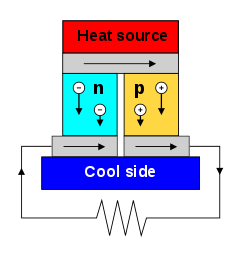
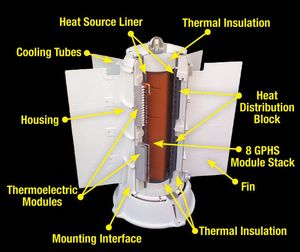
The large difference in temperature between this hot fuel and the cold environment of space is applied across special solid-state metallic junctions called thermocouples, which generates an electrical current using no moving parts.
The RTGs cannot work on the surface rover due to high surface temperature. Therefore, it will be attached to the spacecraft and hover at ~60km above the surface and will descend for power transmission.
If possible in the near future, batteries powered by nuclear fusion technology can also be invented, providing virtually infinite energy for surface rovers and a less sophisticated exploration unit.
Energy Transmission:
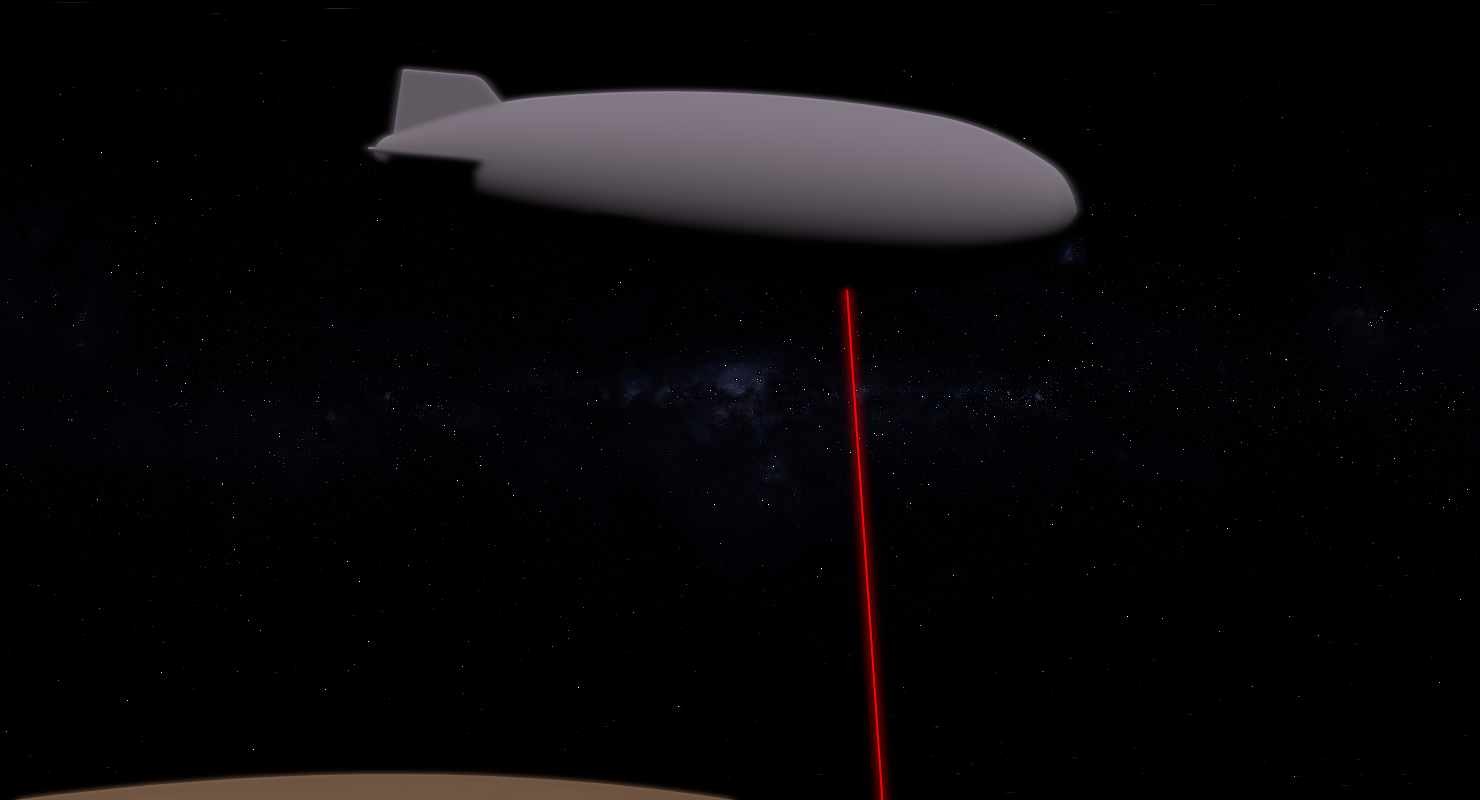
Overview: Once the power generators have topped off the energy storage systems(batteries), the power will be transmitted via laser power beaming from onboard - a Helium powered polymeric balloon platform(PB) - high-temperature batteries to high-temperature batteries on the space rover after de-ascending to a certain altitude suitable for engaging the PB with energy transmission ensuring a bare-minimum exposure to Venus’ harsh atmospheric conditions.
As soon as the rover’s batteries are charged/recharged, the PB carrying the power generation and storage technology will re-ascend back up to the upper reaches of Venus’s atmosphere where the temperature is max.36.85C(day) - min.-173C(night) to recharge its own batteries once again.
In detail, Once the rover’s batteries are topped off(completion of energy transfer), the spacecraft will ascend back to the upper reaches of the atmosphere where the temperature conditions go like this - Venus's upper atmosphere extends from the fringes of space down to about 100 km (60 miles) above the surface. There the temperature varies considerably, reaching a maximum of about 300–310 kelvins (K; 80–98 °F, 27–37 °C) in the daytime and dropping to a minimum of 100–130 K (−280 to −226 °F, −173 to −143 °C) at night. - marking better conditions for power generation and long-term storage compared to the surface - ~480C.
The aircraft will settle 45-60 km above Venus as it is one of the most Earth-like environments in the Solar system. At 50km, the baseline altitude for both robotic and human concepts as studied by NASA are relatively gentle and supportive for energy regeneration and long-term storage.
Helium containers will be fixed on either side of the exposed area of the payload for helium removal and addition for de-ascending and re-ascending purposes.
This sequence has the potential of repeating throughout the life of the surface rover leaving it up to the surety of survival of the components of the surface rover itself.
→ Indirect advantage of having such a spacecraft - The platform is also capable of serving as a communications relay between Earth and the lander.
→ Indirect advantage 2 - The spacecraft can serve as a secondary science mission even after the space rover stops functioning.
The Polymeric Balloon:
The spacecraft consists of helium lifting gas keeping in mind the density of venus’ atmosphere where helium provides more lift capability than an equivalent volume on Earth itself. For propulsion and control, energy generation unit/s part of the payload inside of the ship distribute energy required to drive electric propellers and fin control surfaces-minorly partitioned compared to the major partition that is for transmitting to the space rover.
Tendency to float - With Venus’ atmosphere mostly being made out of CO2, and nitrogen and oxygen being lighter than CO2, breathable-air filled spacecrafts(balloon form) will float at a height of about ~60km from the surface. The energy generation unit will be present at the bottom of the envelope in the gondola.
Tendency to maintain control - During the atmospheric operation, the spacecraft will follow the longitudinal winds while using electric propulsion to counter the high wind speeds.
Aircraft Operational Modes:
The aircraft is set to operate in one of two modes depending on the day or night cycle. The operational mode turned on during night time assumes the longest night(consistent with 85 m/s winds) of 66 hours. During this mode, the energy storage system powers the payload(the energy generation unit) and propulsion system capable of achieving 3 m/s. According to NASA, the poleward winds are approximately 5 m/s which means the airship will drift away from the equator during this time.
The operational mode turned on during day time assumes the shortest day (consistent with 110 m/s of winds) of 44 hours to transmit power to the space rover. Keep in mind: A certain amount of energy is saved for both regeneration of energy and powering the propulsion system to return back to the atmosphere for charging. Also, the propulsion system will be designed for a velocity of up to 15 m/s which means the aircraft will be able to overcome the poleward drift and reach the equator before the night time operational mode begins.
Engaging Laser Beaming Technology:
Energy loss graph below ~
(refer to the graph in our Final Project Link)
Using this model, the loss factor between a ~45 km altitude and the surface of the venus was compared. It can be inferred that the lowest loss factor is 20% at 1022nm, as represented in the above figure.
Short wavelength and high-power lasers in the visible and near infrared coupled with high efficiency LPCs(laser power converters) derived from commercially available photovoltaic cells will enable power transfer(from an altitude below the Venus cloud deck ~20km from surface) to the surface.
The Transmitter -
For the power beaming transmitter, a 1022 nm laser of 450 W would maximize power transmission between below the clouds and the surface of Venus.
The Receiver -
Laser Power converter - GaAs
The bandgap of GaAs was plotted to be up to 300C and was linearly extrapolated up to 465C. The extrapolation means, a bandgap of 1069 nm is maintained at 465C. This makes GaAs a very good LPC candidate with a 1022 nm laser.
Re-emmitting the laser energy on the Surface Rover -
The laser beam energy will be collected by the LPCs placed on the exposed area of the surface rover & will directly supply the converted energy to the laser beam emitter on the surface rover directed towards the tesseract shield which will re-emit the laser beam energy at a high frequency of 1069nm at 450W which is sufficient enough for it to pass the first layer, the platinum shield of thickness 2.8mm. The laser beam energy re-emitted into the tesseract shield will be collected by LPCs present inside of the shield which will convert the energy into electricity which directly powers the battery. The main concern for powering the battery inside of the tesseract shield was the inefficiency of cabling energy transmission wires out of the shield. In this case, since we have the energy being emitted directly through the first phase of the tesseract shield, the laser beam converted into electricity by the LPCs inside of the shield can be directly wired within further(converging) shielding stages of the tesseract allowing us to directly power the battery from that point.
Efficiency - Assuming perfect pointing of a 1 kW laser beam at 1064 nm and a 65% efficient tuned laser power converter (LPC) receiver array, power beaming would provide 650 W to the surface rover. - (read more info on the Final Project Link page)

← Graph that shows the tendency of laser power to penetrate any material(in our case anodized platinum) given the laser power in Watts in varying with the penetration size(thickness of the material).
The platinum will be anodized to disengage possible reflection of the laser light.
Energy Storage:
Battery type - Lithium Thionyl Chloride battery (liquid)
Operational temperature. - 180 degrees C
Why Lithium Thionyl Chloride battery?
Due to its relatively high operational temperature the battery will not face any trouble during any malfunction. And as it will be inside the tesseract we will not need to worry about this part. It has a very high energy content coming in at 480 Wh/kg and meaning it can store a lot of energy.
Compared to the lithium ion battery’s 250 Wh/kg meaning it can store almost double the energy. The self discharge rate of Lithium Thionyl Chloride batteries is very slow and comes in at 1% per year. Meaning it loses about 1% of its power every year while doing nothing. Lithium ion has a self discharge rate of 5%. This means if we take a battery weighing 25 kgs we can estimate the amount of power it can store. This means we can store 12000 Wh worth of electricity.
The Tesseract Isolation System - (Refer to the Breakdown of the Tesseract System in the Final Project Link)
Due to the harsh environmental conditions on Venus most batteries don't last for more than a few hours let alone 90 days. There are 3 main factors that inhibit batteries from performing optimally on venus. These 3 factors are the surface temperature, Atmospheric pressure and high speed of winds where even a small rock can completely eradicate the rovers battery pack. To combat these 3 issues we have carefully handcrafted a case to encapsulate the battery. This design will not only thermally insulate the battery and shield it from the high atmospheric pressure but it will also protect the battery from wear and tear.
The battery case is in the shape of a Tesseract for structural rigidity which can help protect the battery from debris coming in contact with it at high speeds. The main chassis of the tesseract is from Platinum. The reason we specifically chose to use platinum is due to its rigidity, high heat insulation and its non reactiveness with compounds found on venus such as carbon dioxide and sulfuric acid. Moreover the platinum layer of the tesseract is only 2.8mm thick so that Infrared rays with 1022 nm (frequency) can pass through which can be used to charge the battery (You can learn more about this process in the energy transmitting sector of our project).
Inside the platinum layer of the tesseract we have cross sections between the main cube on the inside and the pieces that connect it with the outside cube made out of platinum. These cross sessions are filled with pressurized argon. Pressurized argon ensures that the cube has a higher pressure than the pressure of the outside atmosphere mimicking the inner workings of spacecraft in space thus leading the tesseract to stay intact and not collapse on itself. We specifically chose Argon, because argon is a good heat insulator and because argon is a noble gas ensuring that it does not react with any substances present on venus causing the entire system to fail.
When we go a stage deeper we then enter the main cube level of the tesseract. This level is covered with silicone to add another level of heat insulation and to hold the next 2 stages in place. The next stage is a hollow block of aerogel, aerogel is 98% air because of which it has a high specific surface area and a low thermal conductivity. Due to this, aerogel is the most suitable layer of thermal insulation before the battery. Then at last comes the main battery which powers the rover
Battery - Now that we have a protective shield around the battery which is completely heat insulating. This allows us to use whatever battery we want. The main objective now is to find a battery which is energy dense, a battery with at least 500 Wh/kg this will help us to have a smaller battery with a lot of capacity. With which we also need something that has a fairly high operational temperature. This narrows down the battery options.
We finally chose a Lithium Thionyl Chloride battery. This battery has a fairly high operational temperature and is one of the most energy dense battery types out there. If done right it is very stable as well. As for charging, multiple research teams are coming close to making it stable during charging. The battery is made out of volatile materials, hence the need for care. It reacts with our skin. But once on Venus we don’t require that level of care and incase of emergency the battery still has a high operational temperature.
Space Agency Data
Space agency data -
1. Nasa - Rover design and battery type
- NIAC - Polymeric Balloon measurements
2. Soviet space program - choice for challenge type.
3.ISRO - Data for the efficiency of Electric Propulsion Systems
4.European space agency - Data for the Radioisotope Thermoelectric Power Generation System
We took up the challenge of going to venus and powering the venus rover due to the people over at Soviet space program for going and surviving the dreadful conditions of venus. Then we chose the path of going out of the box and looking at something to cool up the system instead of making the battery work in those conditions. This helped ususe a very energy dense & efficient battery.
The teseract we used has been one of a kind and has not been done before
Hackathon Journey
The famous American author Mark Twain once said, "Success is a journey, not a destination. It requires constant effort, vigilance and re-evaluation". The collective efforts of our team and the rapid spur of brilliance, dedication and commitment is an impeccable echo of Twain's astute quote. As the protagonists of our arduous and rewarding journey, we have proactively researched, created and implemented our solution to be an inviolable mirror of an efficient and innovative design and innovation. We have consistently reflected on our progress throughout the Space Apps Experience and have never conceded defeat at any obstacle. This project has helped us develop invaluable time-management & creative-thinking skills, that may help us improve our character and provide invaluable growth and wisdom in the future. Throughout this project, we have dedicated our time to accumulating and developing skills such as 1. Collaboration, 2. Problem Solving Skills, 3. Critical Thinking and 4. Project Management skills. Our team pursued this opportunity to work in a NASA challenge to engineer valuable experiences and to challenge themselves. The challenge of "Exploring Venus Together" demands crucial problem-solving, creative and critical thinking skills to even produce a fundamental design. An exclusive reason for naming our mission, "Project Kyber" was the imagination and legacy we carried with us. NASA and other space agencies name missions after accomplished and reputed scientists who have brought vital change to their respective fields. We wanted to name our mission, after a universe that brought inspiration, creativity and hope into our lives. We wanted to pay a tribute to the cinematic phenomenon known as "Star Wars" as it provided us with a whole new dimension and a new bearing on human imagination and accomplishment. Kyber is symbolic of Kyber saber cyrstals which in the star wars universe help power lightstabers. Essentially, they are the main power source in the starwars cinemtatic and extended universe which is why we are designing a new system to fully power a rover in venus with energy generated and transmitted along continous cycles within the systems we create by the same name. That's why our mission is "Project Kyber". A project that is designed to test our limits and help us grow. That's why we have chosen this challenge!
Throughout this Journey, eventhough we were able to demonstrate a Full-pledged energy circulation system, we still set out to define possible limitations -
- Due to how thin the platinum layer is the entire tesseract might crack open if a big enough projectile collides with it. This is highly unlikely but it could occur. One way to fix this in the future it to find a more durable metal that matches all our criteria mentioned above to replace platinum. Another solution would be to find a way to transmit energy through thick layers of metal, this currently is not a solution due to which we had to add a thin layer of platinum however if we can find a way to transmit energy through thick layers of metal then we could create as thick layers of platinum as we would like eradicating this limitation.
- Because the battery is in such a secure design in form of a tesseract no wires can be used to transmit energy as that would destroy the entire purpose of the design which is why energy had to be transmitted through the use of infrared radiation. However because we are transmitting energy to infrared radiation, a lot of energy is wasted in forms of heat, due to this it would take a lot of extra energy to charge the battery
The journey proved to us the delightment in solving challenges that might seem impossible at first but have some or the other way to practically be overcomed.
Be it the challenge of transmitting energy to the battery while it remains isolated in the tough Tesaract system overcomed by the reduction in thickness of the platinum phase(first phase) allowing re-emmitted laser beam to pass through which is then collected by an LPC inside of the Tesaract system right beneath the platinum phase or the very first challenge of transmitting electrical energy generated in the atmosphere to the surface rover without having to expose the Polymeric Balloon to the extreme surface conditions of venus overcomed by the use of Laser power beaming and laser power capture technology, the Journey has challenged us to the sky of limits.
I would like to thank our peers for being passionate, dedicated, ambitious and collaborative throughout the duration of the project. I would like to thank our parents for being supportive and encouraging. Most of all, I would like to show gratitude for ourselves, as we have pursued this opportunity and have learnt, progressed and evolved through our 2-day journey.
References
https://ntrs.nasa.gov/citations/20190034022
https://techport.nasa.gov/view/92914
Links for batteries https://www.sciencedirect.com/science/article/abs/pii/037877539380129D - For consideration of use of Lithium Thionyl Chloride battery as a battery in venus mission. https://www.sciencedirect.com/science/article/abs/pii/037877539380129D & https://www.sciencedirect.com/science/article/abs/pii/037877539402064A - for increase in capacity of battery in consideration.
https://www.nature.com/articles/s41586-021-03757-z - Ideas for rechargeability of battery
https://ntrs.nasa.gov/citations/20190034022 - Nasa Innovative Advanced Concepts (Niac) Phase 1 Final Report: Venus Landsailer Zephyr
https://afresearchlab.com/technology/space-power-beaming/#:~:text=How%20Does%20It%20Work%3F,receiving%20antenna%20on%20the%20ground. - space power beaming
https://www.sciencedirect.com/topics/engineering/laser-beam-energy - Laser beam energy
https://www.nasa.gov/directorates/spacetech/niac/2019_Phase_I_Phase_II/Power_Beaming/#:~:text=vehicle%20being%20a%20lander%20that,an%20innovative%20power%20beaming%20system.&text=materials%20and%20using%20high%20temperature%20SiC%20diodes. - power beaming for long life venus missions
https://www.researchgate.net/publication/299905943_High_Altitude_Venus_Operational_Concept_HAVOC_An_Exploration_Strategy_for_Venus - High Altitude Venus Operations Concept
https://hal.archives-ouvertes.fr/jpa-00250874/document - Power laser beaming and applications in space
https://www.sciencedirect.com/topics/engineering/laser-beam-power - Microstructure characteristics and mechanical properties of the magnesium and aluminium alloy laser weld bonded joint
https://www.space.com/soviet-venera-venus-missions-slideshow- soviet venera venus missions
https://trs.jpl.nasa.gov/bitstream/handle/2014/50934/CL%2319-8170.pdf?sequence=1 - Power Beaming for Deep Space and Permanently Shadowed Regions
https://www2.jpl.nasa.gov/adv_tech/ballutes/Blut_ppr/vnusmatl.pdf - EVALUATION OF MATERIALS FOR VENUS AEROBOT APPLICATIONS
https://citeseerx.ist.psu.edu/viewdoc/download?doi=10.1.1.38.7790&rep=rep1&type=pdf - High temp materials for venus ballooon envelopes
https://www.researchgate.net/publication/237850060_PLATINUMII_COMPLEXES_INFRARED_SPECTRA_IN_THE_300-800_CM-1_REGION - PLATINUM(II) COMPLEXES: INFRARED SPECTRA IN THE 300–800 CM−1 REGION
https://www.jauch.com/blog/en/advantages-and-special-features-of-lithium-thionyl-chloride-batteries/#:~:text=Lithium%20thionyl%20chloride%20batteries%20(Li,little%20importance%20in%20everyday%20use. - Advantages and Special Characteristics of Lithium Thionyl Chloride Batteries
Tags
#Hardware #Powerbeaming #Atmoshpericspacecraft #Laserpowerbeaming #Tesseractisolationsystem