
High-Level Project Summary
Future expeditions to Venus will need electrical power, but it is challenging to develop power systems that operate in Venus's hot climate. Options for power systems include photovoltaic solar arrays, batteries, radioisotope power systems, and wind. Surveyed and evaluated is the current state of power technology for Venus' surface sources.
Link to Final Project
Link to Project "Demo"
Detailed Project Description
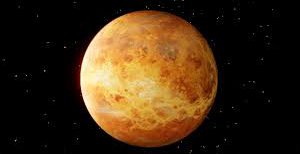
The outer layer of Venus has a typical temperature of 450 degrees Celsius (723.15 K) at an environmental strain of around 92 bars. The temperature is adequately hot to dissolve lead, and the tension is multiple times the strain tracked down on the outer layer of Earth. Despite the fact that no human could make due in these outrageous circumstances, a robot could conceivably be intended to endure these circumstances. The climate of Venus is made basically out of carbon dioxide and its mists contain sulfuric corrosive beads. The design of the Venus air is displayed in Fig. 1.4 The sulfuric-corrosive cloud layers in the center air keeps most of daylight from arriving at the surface. The breeze speeds diminish fundamentally to around 0.3 to 0.6 meters each second at the surface. It is a provoking errand to plan a lander that will make due for a long length on a superficial level. The surface temperature and strain are obstacles to survive or adjust to. This study dissects the conceivable power frameworks for a lander on the outer layer of Venus that will get by for no less than 1 Venus sunlight based day. Past examinations have broke down the utilization of a radioisotope power framework (RPS) for use on the outer layer of Venus.However, every one of them expected the power framework to give cooling to different parts of their rocket, particularly the science package.11 This study3 is different in that no cooling will be given. This supposition that depends on utilization of high . PropulsionandEnergyForum,ClevelandOH,July28-30,2014. 4 American Foundation of Aviation and Astronautics temperature hardware innovation that will empower the gadgets and parts of the lander to work at Venus surrounding temperature at the surface.
Space Agency Data
NASA
Hackathon Journey
GOOD. BUT YOU WOULD HAVE GIVEN MORE TIME FOR PROJECT SUBMISSION. IT MADE A LITTLE DISAPPOINTMENT AND COULDNOT EXPLORE MORE CHALLENGES
References
1 Committee on the Planetary Science Decadal Survey, Space Studies Board, Division on Engineering and physical Sciences, Vision and Voyages for Planetary Science in the Decade 2013-2022, The National Academies Press, Washington, D. C., 2011. 2 Hunten; D. M., Colin, L., Donahue, T. M., and Moroz, V. I. (eds.), Venus, University of Arizona Press, 1983.
3 Boll, N., et al., "Venus High Temperature Atmospheric Dropsonde and Extreme Environment Seismometer (HADES), to be presented, 65th International Astronautical Congress, Toronto ON, Sept. 30-Oct. 2, 2014.
Tags
#survivalofvenus