
High-Level Project Summary
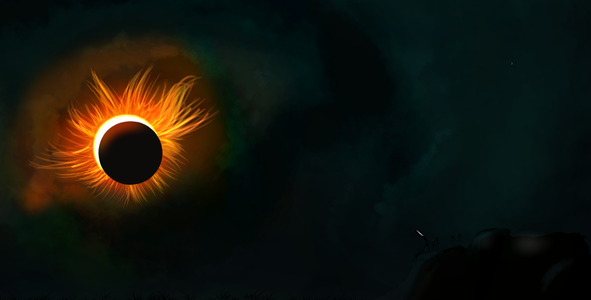
We decided to develop a comic for the “on the way to the sun” challenge, which aims to make room for young audiences with information regarding the “Solar Parker Probe.”NASA has a lot of information on this topic on its pages. Still, one problem it has is technical information, leaving the younger audiences aside.Our project summarizes the path the Parker Solar probe has traveled in the last four years. Our comic will present it in a didactic and straightforward way with topics related to engineering and the mysteries that the universe glimpses—allowing young people to acquire knowledge about the journey of the parker probe and making it easier for them to gain knowledge.
Link to Final Project
Link to Project "Demo"
Detailed Project Description
Join Helio, a little astronaut tlacuache, to understand the history behind Parker Solar Probe: from its building to all the adventures to come. Helio and the very same Parker will help the audience to understand how the idea of the Solar Probe was born, its relevance and function, the launch to space, and the challenges it had to overcome to “touch the sun”. Thanks to this story, we can all appreciate the discoveries surrounding the solar atmosphere and its impact on Earth.
We develop characters that show interest in children and young people based on the probe and on a representative animal of Mexico that is little represented in the media due to prejudice.
We used colors and design to help to keep the reader's attention to dealing with topics of this level.
Our look to the future goes beyond spreading the comic in the English language. Our goal is to translate it into more languages, such as Spanish, French, and, if possible, indigenous languages, to give access to all those who want to access this information. To achieve this, we plan the generation of a web page in which the feats of the Parker probe can be updated as they occur and make known in different social networks for dissemination and can be downloaded in pdf documents for dissemination for those children who do not have access to technology.
We used a variety of tools, although the main ones were NASA sources and the drawing application "Medibang Paint Pro," a free drawing program on the internet.
Space Agency Data
We used all the data we could find on NASA's web pages to completely understand Parker and be able to explain it in an easy way to all kinds of people.
Likewise, during the investigation, those terms that were not clear were searched within the same NASA database.
Hackathon Journey
Our first hackathon was a very satisfying experience, the challenge we chose turned out to be more exciting and daring than expected. Since we were unaware of all the information surrounding the Solar Probe, the data collection was quite entertaining, and the creation of the comic: developed the design and characters. The opportunities for the future gave us our motivation and direction for the project. Initially, we all focused entirely on our young audiences and the objective of bringing them reliable information, fun, and easy. We found ourselves pleased with the challenge objective as we developed the final project.
References
- Darling, S. (2018, July 19). Traveling to the sun: Why won't Parker Solar Probe Melt? NASA. Retrieved October, 2022, from https://www.nasa.gov/feature/goddard/2018/traveling-to-the-sun-why-won-t-parker-solar-probe-melt/
- Wide-Fide Imager for Parker Solar Probe (WISPR), Wide-Field Imager for Parker Solar Probe (2021). Retrieved October 2022, from https://wispr.nrl.navy.mil/
- JHUAPL.(2022).Parker Solar Probe Thriving Four Years after Launch. Parker Solar Probe. Retrieved October 2022, from http://parkersolarprobe.jhuapl.edu/News-Center/Show-Article.php?articleID=179
- Parker Solar Probe.(2022)Jhuapl.Edu. Retrieved October 2022, from http://parkersolarprobe.jhuapl.edu/
- Science|Eclipses-NASA Solar System Exploration. (2022, March). NASA Solar System Exploration. Retrieved October 2022, from https://solarsystem.nasa.gov/eclipses/science/
- How Scientists Around the World Track the Solar Cycle. (2020). NASA. Retrieved October 2022, from https://www.nasa.gov/feature/goddard/2020/how-scientists-around-world-track-solar-cycle-sunspots-sun
- Dunbar, B. (2021, February 8). Eugene Newman Parker. NASA.Retrieved October 2022, from https://www.nasa.gov/content/goddard/eugene-newman-parker
- Dunbar, B. (2021, March 9). Aurora: Illuminating the Sun-Earth Connection. NASA. Retrieved October, 2022, from https://www.nasa.gov/aurora
- Barnet, A. (2019, July 25). In Depth| ACE - NASA Solar System Exploration. NASA Solar System Exploration. Retrieved October, 2022, from https://solarsystem.nasa.gov/missions/ace/in-depth/#:~:text=What%20is%20ACE%3F,evolution%20of%20the%20solar%20syste
- Johnson-Groh, M. (2022, February 9). Parker solar probe captures visible light images of Venus' surface. NASA. Retrieved October, 2022, from https://www.nasa.gov/feature/goddard/2022/sun/parker-solar-probe-captures-its-first-images-of-venus-surface-in-visible-light-confirmed/
- Johnson-Groh, M. (2021, June 15). Total solar eclipses shine a light on the Solar Wind. NASA. Retrieved October, 2022, from https://www.nasa.gov/feature/goddard/2021/total-solar-eclipses-shine-light-solar-wind-ace
- Frazier, S., & Jenner, L. (2017, August 14). Studying the Sun's atmosphere with the total solar eclipse of 2017. NASA. Retrieved October, 2022, from https://www.nasa.gov/feature/goddard/2017/studying-the-sun-s-atmosphere-with-the-total-solar-eclipse-of-2017
- Johnson-Groh, M. (2021, December 13). NASA enters the solar atmosphere for the first time, bringing new discoveries. NASA. Retrieved October, 2022, from https://www.nasa.gov/feature/goddard/2021/nasa-enters-the-solar-atmosphere-for-the-first-time-bringing-new-discoveries
- Nasa's Parker Solar Probe Touches The Sun For The First Time. (2021). YouTube. Retrieved September 30, 2022, from https://youtu.be/LkaLfbuB_6E.
- Hautaluoma, G., & Fox, K. (2019, December 4). First NASA Parker solar probe results reveal surprising details about our sun. NASA. Retrieved October 2022, from https://www.nasa.gov/press-release/first-nasa-parker-solar-probe-results-reveal-surprising-details-about-our-sun
- Parker Solar Probe. (2017). YouTube. Retrieved October 2022, from https://youtu.be/XBudjihQKsw.
- Switchbacks Science: Explaining Parker Solar Probe’s Magnetic Puzzle. (2019). NASA.Retrieved October 2022, from https://www.nasa.gov/feature/goddard/2021/switchbacks-science-explaining-parker-solar-probe-s-magnetic-puzzle
- Welcome to NASA’s #SolarTour! – The Sun Spot. (2021, December 2). Nasa.gov. Retrieved October 2022, from https://blogs.nasa.gov/sunspot/2021/12/02/-to-nasas-solartour/
- Real Engineering. (2022). The Insane Engineering of the Parker Solar Probe. YouTube. Retrieved October 2022, from https://www.youtube.com/watch?v=pOZhPz92Dic.
- Barnett, A. (2022, April 19). Sun. NASA. Retrieved October 2022, from https://solarsystem.nasa.gov/solar-system/sun/overview/
- SciNews. (2018). Nasa’s Parker Solar Probe explained in detail. YouTube. Retrieved October 2022, from https://www.youtube.com/watch?v=zJo0tIxNLxU.
- Manish. (2019). Nasa's Parker Solar Probe : Thermal Protection System. YouTube. Retrieved October 2022, from https://youtu.be/_YYhZh5FXrA.
- Case, A. W., Kasper, J. C., Stevens, M. L., Korreck, K. E., Paulson, K., Daigneau, P., Caldwell, D., Freeman, M., Henry, T., Klingensmith, B., Bookbinder, J. A., Robinson, M., Berg, P., Tiu, C., Wright Jr., K. H., Reinhart, M. J., Curtis, D., Ludlam, M., Larson, D., … Martinović, M. M. (2020, February 3). The Solar Probe Cup on the Parker Solar Probe. IOP Publishing. Retrieved October 2022, from https://iopscience.iop.org/article/10.3847/1538-4365/ab5a7b
Tags
#comic #ParkerSolarProbe #Mexico #originalcharacters #NASA #Sun #OnOurWayToTheSun