
High-Level Project Summary
The group Suaz Anysqua designed a digital tool "COMIC MANGA TYPE" style, which shows the journey of the SONDA PARKER SOLAR PROBE, assuming the challenge: "ON THE WAY TO THE SUN" which is narrated in digitized drawings. This tool makes a comparison of the operation of Parker and the plant, recognizing these plants as the most important axis for the recovery of balance in nature. Therefore, proposing the implementation of sustainable vertical agriculture in the urban area for the mitigation of climate change, and in the rural area as a strategy for the use of small plots of farmers in the Province of Sugamuxi, also providing a solution to the problem of food security that looms globally.
Link to Final Project
Link to Project "Demo"
Detailed Project Description
The project proposed by the Suaz Anysqua group aims to match with the knowledge of NASA represented in the challenge "ON THE WAY TO THE SUN" and thanks to the study of the journey of the PARKER SOLAR PROBE an anchor in the past-present look, where the axis of environmental recovery and sustainable food production go hand in hand in the attempt to integrate two (2) looks in terms of sustainable development that achieves on one hand, the ecological conservation of the territorial space and on the other, friendly practices of food production. Therefore, the Suaz Anysqua group seeks to investigate the cultivation practices of indigenous groups that inhabited the ‘Cundiboyacense’ highlands in accordance with the four (4) techniques that Nasa encourages regarding vertical cultivation processes (Aeroponics, Aquaponics, Hydroponics and Modular Farms).
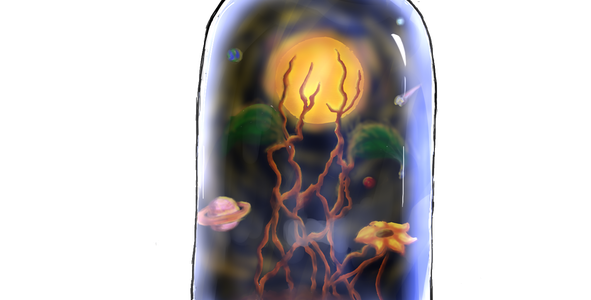
The comic called SUAMOPOLIS: THE PROPHECY OF GOD SUA is the digital playful-pedagogical tool chosen to respond to the challenge "ON THE WAY TO THE SUN", it is a resource designed in PAINT TOOL SAI 2, PHOTOSHOP, COREL DRAW AND ILLUSTRATOR, all the drawings were authored and created by the members of the group, the creation process included sketches on paper and then freehand digitalization in the programs mentioned above. The comic shows a fictional story that includes real data provided by NASA that were previously selected and then introduced into the narrative of the comic. The story of SUAMOPOLIS: THE PROPHECY OF GOD SUA focuses on the province of Sugamuxi, considers the ancestral culture of care and preservation of the environment inherited from the indigenous inhabitants of the Cundiboyacense highlands, and seeks social appropriation through history and representative places of the city. It shows the relationship between the mechanism and the crossing of the park and the physiological mechanism of the plants and tries to explain from this parallel the relevance and transcendental function of the plant population in the environment. It shows the problems of the province of Sugamuxi in terms of the little space for crops due to the smallholding, the nutritional wear of the soil, therefore it proposes four agricultural techniques.
SYNOPSIS
In the year 1407, Zihiba, who was a native Muisca, lived with his family and community in complete harmony with the environment, in SUAMOPOLIS, they considered nature sacred, they took care of water, trees, plants and territory.
One night, Zihiba was resting at home, sleeping peacefully, God Sua manifested in a dream and revealed to him through a vision, the chaotic future of SUAMOPOLIS in the year 2050. The city is in ruins due to environmental damage and the extinction of the land and its inhabitants, the disaster is so big that territories are no longer sacred, and damage is irreparable. Sua, after showing Zihiba what is coming, gives him a task: after the revelation, Zihiba is transported to the future to the year 2017, where he is survived by a descendant named Parker, whose blood has love and care for the earth and the environment. Together they will begin an astronomical mission consisting of carrying the sacred seed and searching for the protective sapphire needed in the future to carry out the prophecy of Sua.
It is the year 2009, mother earth claims, mother earth is plundered, and its resources exploited. Parker, who is a scientist at the National Aeronautics and Space Administration (NASA), has been concerned about the damage that humanity has generated, ending species, disrupting the climate, depleting resources, he has sensed the chaos approaching, so he has devoted much of his life in constant research to assist in the healing of the planet. Today is a great day. He has finally succeeded in his efforts! After years of tracking down an ancient prophecy: "Eureka" has found the existence of a portal located in the sun's corona, capable of traveling through time. He faithfully considers going back to the past and coming up with solutions for humanity to continue its course but without affecting mother nature. He intends to reach the middle of the 20th century time when humanity begun to lash out at the environment. Parker considers that it is a good starting point to regenerate the damage. Enthusiastic about exploring the sun and finding the door to the past, he decides to start the construction of a solar probe that will take him to the beginning of the end.
The task has not been easy for Parker, several years have passed and, several attempts have been made, but the scientist beyond the technological side must overcome his own limitations, insecurities, fatalism, and demotivation, however, he does not lose hope that the prophecy of Sua can be fulfilled. One day, before Parker's exhausted and hopeless eyes, out of nowhere, a portal opens and in front of the scientist's incredulous eyes appears a being brought by Sua himself, a mysterious being who will bring with him many answers to develop the prototype of the travel device, with the missing piece or sacred seed, which will lead them to the past for proposing recovery and conservation techniques of climate and nature and innovating in sustainable agricultural practices to ensure food security in the world.
Vertical planting is a sustainable technique that increases the productivity on the surface by extending the cultivation of plants to the vertical dimension, where producing a vertical square meter is equivalent to producing 50 horizontal square meters. In Sugamuxi province, crops are widely managed with chemical fertilizers or pest control inputs, which leads to soil deterioration and sterility. The water traditionally used to irrigate vegetables such as potatoes, corn, lettuce, carrots, cabbage, and different aromatic plants consumed by the population of the province is irrigated with water from rivers, that are highly polluted with organic and inorganic waste. In this case, the Chicamocha River is the source of irrigation along its length and supports numerous crops. On the other hand, farmers are culturally dedicated to monoculture. They mainly produce potato, onion, corn, beans, peas, and some vegetables, which means a large use of land for these crops with the aggravating factor that these crops take 6 to 12 months from planting to harvest; also, most of the farmers have small plots or smallholdings, which limits both the rotation and the variety of crops. Similarly, urban areas are true concrete jungles and high sources of pollution and gas emissions that negatively impact the environment. It can be said that most cities are depopulated with plants and therefore their pollution levels are higher because there are no autotrophic organisms to balance them.
For these reasons, Suaz Anysqua group through the information gathered from NASA and other reliable sources of information proposes the implementation of sustainable vertical agriculture, and identified 4 techniques to solve the problem raised, because they allow the control of conditions such as: humidity, temperature, lighting, and substrates.
- Aeroponics: Improved by NASA since 1990, it consists of growing plants in media other than soil, where we can implement the plantation of peas, beans, stew cucumber, pumpkin, blackberries, oregano, and pumpkin, all of them planted on substrates composed of coconut husks, black soil and rice husks, which are added in equal amounts; this can also be complemented with vermicompost. It is considered safe and ecological thanks to the recycling of water, and the minimum use of it, it does not require control because infections are almost nonexistent due to the isolation of roots.
- Hydroponics: It consists of planting in mineralized aqueous media that provide all the necessary nutrients to the plant. NASA has used it in the Vegetable Production System (VEGGIE), it is a good mechanism to optimize the rational use of water. Lettuce, cabbage, tomato, stewed cucumber, garlic, onion, blueberries, and carrots are proposed for the province. The food obtained is free of herbicides and pesticides and consumes 20 times less water compared to conventional agriculture, and it can be installed indoors.
- Aquaponics: It consists of planting on an aqueous medium where plants and fish coexist symbiotically, due to the context it is possible to produce spinach, lettuce, cauliflower, carrots, and onions in mutualistic symbiosis with rainbow trout. The use of inorganic fertilizers is unnecessary, the environmental impact is almost null, and the reuse of water is permanent.
- Modular farms: They consist of steel containers in which plants can be grown separately and harvested all year round regardless of seasonal climatic or geographical factors; in addition, species from other places and different climates can be grown because they are controlled modules.
According to the trajectory that Parker followed in his journey to the sun, there are two relevant points to consider: the magnetic field and solar winds. The implementation of the agricultural techniques proposed in this project could be positively related in the following way:
- Magnetic field: for Parker it represented the stability and alignment of its elliptical orbit, helping it to control its motion and direction. The magnetic field controls the particle field and forms the trajectory for Parker's path.
Hydroponics: The magnetic field is useful in the project because it increases the ability to absorb nutrients.
Aeroponics: Keeps plant growth in order, in turn, stimulates it; the force of gravity determines the orientation useful in aeroponics for plants to grow upwards.
Aquaponics: activates sensors in the neurons of the fish so that they orient themselves and herd together.
Modular farms: controls the orientation of plant growth.
- Solar winds: determine the behavior of space weather and drive energy processes useful for satellites and telecommunications. By studying the behavior of solar winds, it is possible to understand the phenomena that will occur on earth because of the winds to apply and predict them, thus knowing when to plant, where to plant, what to plant and how to plant according to the sun's irradiation waves.
In this order of ideas, we retake the spirit and memory of our ancestors in the search to recover and recover their cultivation and production practices. In a territory such as the ‘sogamoseño’, where its own industrial development has generated a highly negative impact in relation with the management of water sources and consequently, impacted the processes of irrigation and cultivation of food, this associated with the waste of the industry receive a high load of compounds that are harmful to health. On the other hand, this same process of irrigation and sowing generates an impact of desertification and soil contamination with a high health effects on local consumers, thus the contributions that can be rescued from the healthy practices of sowing and fertilization of the indigenous groups turns into a point of reference to reconcile the need of a population that requires more resources, but at the same time the safeguard of the environment and the social appropriation through the history and representative places of the province of Sugamuxi.
Three (3) central elements can be learned from the ethnic memory and in this framework, the first one is the respect to nature as a sentient being and prone to changes of improvement or affectation; the second one is the rational and assertive use of the resource projected in the present moment as the vertical agriculture aligned with the ecological systems, and the last one the awareness of communities in the preservation and care of their ecological environment.
For this reason, the need for vertical agriculture is proposed as a structural solution for the proactive use of space and the achievement of environmentally friendly results accompanied by high food profitability. On the other hand, the space objectivity principle and the rational and efficient use of it is applied firstly, by recognizing both the cultural environment and the dynamics of the land of the inhabitants in Sogamoso, since they have limited access to the cultivation space (smallholding), and secondly, by encouraging this type of cultivation practice in parallel, there would be a lower use of water and agrochemical fertilizers, which significantly decreases the negative impact of these.
Our view, based on the experience in development, goes beyond the local practice and seeks the generation of a standard protocol with a social content that allows replicating this experience in different geographical and cultural contexts, where the problem of food production becomes central to the existence of these same population groups. The proposal goes through the emerging problem of ensuring food security and provides an effective, accessible, low environmental impact, environmentally friendly solution that is also flexible with the territorial context where it is developed.
Space Agency Data
THERMAL PROTECTION SYSTEM
https://www.nasa.gov/feature/goddard/2018/traveling-to-the-sun-why-won-t-parker-solar-probe-melt
SELF-SUSTAINABLE CULTIVATION
https://www.nasa.gov/feature/el-comandante-de-la-misi-n-prospera-como-jardinero-espacial
CLIMATE
https://climate.nasa.gov//
CLIMATE CHANGE ALTERNATIVES
https://climate.nasa.gov/solutions/resources/
ENERGY EFFICIENCIES
https://www.nasa.gov/feature/goddard/2021/on-a-changing-planet-nasa-goes-green
EFFECTS OF GLOBAL WARMING
https://climate.nasa.gov/effects/
CARBON DIOXIDE IN PLANTS
https://earthobservatory.nasa.gov/images/51289/a-global-garden-plants-storing-carbon
PLANT MONITORING
https://earthobservatory.nasa.gov/images/146348/ecostress-sees-plants-waking-up
BEGINNINGS AND DEVELOPMENT OF CLIMATE CHANGE
BEGINNINGS OF CLIMATE CHANGE
COOLING (EVOTRANSPIRATION)
https://ciencia.nasa.gov/datos-de-la-nasa-sobre-la-transpiracion-vegetal
VEGGIE GREENHOUSE
https://blogs.nasa.gov/ISS_Science_Blog/tag/plants/
MAGNETIC FIELD AND PLANTS
https://ciencia.nasa.gov/science-at-nasa/2002/15may_maggrav
PLANT CULTIVATION IN LIQUID AND AIR
https://ciencia.nasa.gov/investigaciones-en-la-estacion-preparando-el-camino
PARKER SOLAR PROBE OVERVIEW
PARKER CHALLENGES
TYPES OF OUTDOOR SPIDERS
https://www.nasa.gov/feature/goddard/2021/five-weird-things-that-happen-in-outer-space
PARKER SOLAR PROBE
https://www.nasa.gov/feature/goddard/2019/nasas-parker-solar-probe-sheds-new-light-on-the-sun
VENUS FLYBY
NASA'S AGRICULTURE AND FOOD SECURITY PROGRAM.
https://nasaharvest.org/
PROJECTS DEVELOPED AND SUPPORTED BY NASA WITHIN THE AGRICULTURE FIELD
https://nasaharvest.org/all-projects
FORESTS AND CARBON DIOXIDE
https://www.jpl.nasa.gov/news/nasa-finds-good-news-on-forests-and-carbon-dioxide
GLOSSARY
https://earthobservatory.nasa.gov/glossary/all
GREENING OF NORTH AMERICA
https://earthobservatory.nasa.gov/images/1804/northern-greening
https://earthobservatory.nasa.gov/images/47739/our-reliance-on-plants-is-increasing
https://ciencia.nasa.gov/mapa-altura-de-los-bosques
https://earthobservatory.nasa.gov/images/15318/famine-in-niger-and-mali
IMPORTANCE OF PLANTS
https://ciencia.nasa.gov/eventos-meteorologicos-extremos-aumentaran-riesgos-cultivos-de-maiz
RELEVANCE OF TREES
https://earthobservatory.nasa.gov/world-of-change/Biosphere
https://earthobservatory.nasa.gov/images/92851/early-warnings-for-crop-failures
FAMINE IN AFRICA
ttps://climate.nasa.gov/news/3214/nasa-usgs-map-minerals-to-understand-earth-makeup-climate-change/
https://history.nasa.gov/SP-4225/science/science.htm
RISKS TO CROPS DUE TO CLIMATE CHANGE
https://www.scientificamerican.com/espanol/noticias/nasa-crea-mapa-global-de-la-calidad-del-aire/
https://earthobservatory.nasa.gov/blogs/earthmatters/category/in-case-you-missed-it/[SCUG1]
EFFECTS OF CHLOROPHYLL
https://earthobservatory.nasa.gov/blogs/earthmatters/category/in-case-you-missed-it/
CROP MONITORING
https://spaceplace.nasa.gov/sun-corona/sp/
https://nasaharvest.org/
Hackathon Journey
We thank NASA for the experience lived in this challenge, it was so enriching especially on the personal side. It has meant a lot to each member of the Suaz Anyscua group due to the possibility of facing themselves and take themselves to the limit to access knowledge, recognize the environment and its problems, but most importantly, the responsibility that means using knowledge and science for problem solving, and be contributors to the community of the province Sogamoso. It has been really inspiring to recognize the greatness of human intelligence taken to space and to know that with discipline and perseverance of creative and proactive people, by using the PARKER SOLAR PROVE, the humanity today has reached for the first time a part of the sun and has been able to overcome adversities to achieve this goal. The approach that was given to the development and proposed solution is based on the respect and ancestral values of the indigenous communities that inhabited the region, their respect, care and admiration for nature, with the firm conviction that the answer to the different environmental problems is in nature itself and its mechanisms of action, therefore, we must enhance and use them in a sustainable way, but most especially, the assertive use of the information collected by NASA. The path to what was proposed was out of the comfort zone; it involved several challenges: learning, the challenge of scientific understanding, the exhaustive hours of work; however, the desire to learn and to fulfill the challenge as for the solar probe PARKER PROVE exceeded the incredible and amazing, gave the team the necessary strength to successfully complete the feat through effective and empathetic communication, teamwork and respect for the multiple and different ideas.
References
flipsnack.com
Photoshop
Illustrator
Paint Tool SAI 2
Corel Draw
Office
Tags
#comic, #art, #sun, #parkersolarprobe, #parker, #NASA, #SuazAnysqua, #verticalfarming, #venus