
High-Level Project Summary
We developed a system that visualizes the ionosphere. This system also provides a platform for interaction and equips users with relevant up to date information concerning the ionosphere.Our project exploits the fact that the visualization of the earth ionosphere imagery together with raw data in prompt need may not be available for both amateur radio operators and citizen scientists .Eye on the ionosphere solves this problem immediately raw data is input into our data base system. It provides parameters such as critical frequency and electron density.
Link to Final Project
Link to Project "Demo"
Detailed Project Description
We, a team of undergraduate students equipped application skills together with research skills and further extensive knowledge on the earth ionosphere parameters used our ability to develop this application.
We developed an application in flutter and dart, using firebase as the backend.
We used extensive database for raw data storage and retrieval, beautiful apps for design and we added multiple user types that is administration and radio enthusiasts
We also included the over laying data on the globe.
As the challenge required visualization, we developed a system that allows amateur radio operators and citizen scientists all over the world to submit their data ionosphere data that they have collected in terms of latitude, longitude, Geo X, Geo Y, altitude.
We then used an equation to calculate the critical frequency for the data that has been submitted.
Our system is an interconnected system of applications and a progressive web app all connected to the same data base both built in flutter and with firebase as the backend.
Our system ably handles data from both these applications and performs calculations at will.
Additionally, the apps visualize data in form of chats and maps that aid in communicating data to the users.
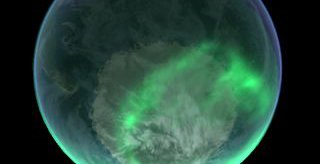
Furthermore, an information section is included where users can find helpful information about the ionosphere explaining events such as the Aurora lights, and certain terms used including the electron density and others. We added this so as to enhance curiosity on the concept of space as well as the application.
The functionality of our application is such that individual files or properly parsed csv files can be submitted by radio specialists and the system will automatically organize the data and submit it into the data base.
To make it even better the app features a google earth where the user is able to locate a specific area of interest powered by a full text support feature backed up by the google places API as a result the user is able to view ionosphere parameters about that particular location as organized and visualized in graphs.
Also, a user is able to visualize cumulative average electron density data collected in the system over a particular year’s period which they can compare to the data they have so that they could make informed decisions about when and how to operate their ham radios.
Space Agency Data
We used the data below for the data sets in the application.
https://cdaweb.gsfc.nasa .gov/cgi-bin/eval2.cgi
The data below enabled us to see how to better apply the data sets.
ISS_SP_FPMU_190745 data
Hackathon Journey
NASA Space Challenge!
Sounded interesting and equally intriguing. All the presented changes were identically enthralling. Exciting though it could have been to attempt all of them, we zeroed in on one that captivated our attention most as telecommunication engineering students.
Calling all radio enthusiasts!. Although it appeared Unique and taxing, after we sat down and analyzed it, we understood what was required of us.
In due time we made a working algorithm to aid us in navigating the challenge.
We all presented our skills on the table so that we could work better as a team.
After that we set off on daily meetings and worked on our project producing, “Eye on the ionosphere”.
We faced several set backs but often sought guidance from people with more experience than us in the telecommunications and space fields. The discord challenge channel also helped us find the correct dataset to use for our project.
We worked with a great deal of hope that with our project published for all, many will become drawn with awe to space exploration.
References
https://cdaweb.gsfc.nasa .gov/cgi-bin/eval2.cgi
zurich.com/en/media/magazine
swpc.noaa.gov/content/education
https://www.hamradiosecrets.com/ionospheric-propagation-of-radio-waves.
Tags
#inclusive #research