Awards & Nominations
GEN-3 has received the following awards and nominations. Way to go!
Global Nominee

GEN-3 has received the following awards and nominations. Way to go!
"The Gen Missions" is a text-based adventure game developed to help users learn about the various stresses of spaceflight and how different organisms react to these stresses. The hazards players will learn about are isolation, radiation, changes in gravity, distance from the earth and hostile/closed environments. Players will get to learn about these stresses but also about the various science missions that have been done in space and how the things we learn can be applied in future. It's important because it makes the information on sites like NCBI and NASA more accessible to a wider community and it can arouse interest in the sciences.
"The Gen Missions" is a text-based game, similar to classic games like Zork and Colossal Cave Adventure. It is partially fictitious and set in the near future. The player is woken up by a strange robot who tells them they're on a spaceship that's just left Earth. The robot informs the player that they are experiencing short-term memory loss from the shock of launch and g-LOC and the robot then offers to take the player on a tour around the ship to jog their memory.
The player has a choice of which areas of the ship to explore first. It is mainly divided into 5 sections: the upper deck, crew quarters, life support module, the laboratory and the cockpit. As players move through each area, they are presented with information relating to the hazards of spaceflight. This is where the fictional and futuristic aspect to the game comes in as some of these risks are "handled" now in the future.
Now, you may have noticed that GRAVITATIONAL CHANGES have not been mentioned yet. This is because information regarding this topic and the effect it has on our bodies is sprinkled throughout the game.
By the end of the tour, the player is told that they are an ecologist and they are on the ship to work on a recombinant DNA project that will allow us to isolate the genes of tardigrades which allow them to survive certain harsh conditions of spaceflight. By isolating these genes, we will be able to create a new species of tardigrade that is better adapted to spaceflight AKA our Space Biology Superhero! The information gathered during this mission could also prove to have further applications.
The benefits of this game is that it takes information that can be fairly difficult to understand or find if you aren't a part of the science community and presents it in a more palatable way. It could also be a gateway for people to become more excited about the scientific work being done in space and fully realize the potential in it.
I hope that this game sparks someone's interest in the sciences or shows them something they didn't know about. We live in a fast-paced world and I hope the slower and more minimalistic style of a text-based game can allow users to really digest the information presented to them as well.
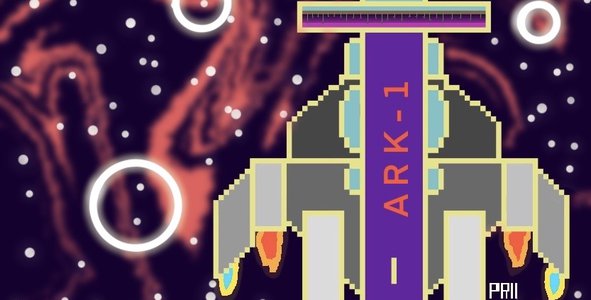
I developed this first edition of the game using a platform called Twine. It uses a story format called SugarCube as well as CSS to visually influence how the story is played out. All artwork used in the game was designed by me using Procreate . The artwork was then hosted on ImgBB.
Data that NASA offers regarding the hazards of spaceflight was used. It provided valuable information as to why these hazards occur, the effect they can have on the astronauts and some ways to deal with them or monitor them.
This information is used throughout the game when informing the player of the various hazards. It is condensed and summarized in the hopes that it is easier to understand than if the player were to look up academic papers covering the same studies that the information is coming from.
Information was taken from the Human Research Program, GeneLab and the Canadian Space Agency's report on deep-space healthcare. Additionally, information gained through watching YouTube videos such as those starring Astronaut Chris Hadfield were referenced in subtle ways throughout the game. This really allowed me to bring some reality to the game and toss in a few Easter eggs for players that are already well versed in the space community.
My Space Apps challenge has been, well.. challenging! I decided to try taking on the challenge by myself to test my capabilities and this process has assured me that I am capable of just about anything I put my mind to.
To make this game, I learned how to use a whole new interface. I also learned about CSS and HTML, how to use them and how much coding goes on behind the scenes. Additionally, I got to work on my digital art skills by using Procreate to generate the background images for the game.
What inspired me the most to choose this challenge was my love of biology! I'm a graduate biomedical scientist but science has always been a part of my life and something I've been interested in. Now, I am on the path to becoming an astrobiologist! But I only realized that this was an option in the last 6 months. Even though I've always enjoyed spacey things, the thought never occurred to me to pursue a career in it because media always portrays science jobs in the field as engineers, astrophysicists or astronauts! I only realized there was a slice for biologists when I watched a documentary talking about it. This is my drive behind the game: to ignite that curiosity in someone else. In a fun way! That was my approach to this challenge.
It was not easy. Taking on the challenge alone meant I was responsible for absolutely every part of this project. There were times where frustration got the best of me and I nearly gave up when the sun started rising and I was still coding! But this challenge was an amazing opportunity and I'm so grateful I participated in it.
I'd like to thank my dad, who is back in my home country. He doesn't really understand what all this is but he's proud as can be and has always supported me. I'd also like to thank Sara, whose name provided the inspiration for the planet that is featured in "The Gen Missions".
#buildaspacebiologysuperhero, #art, #storytelling, #spaceadventure, #biology, #recombinantDNA, #game, #intereactive, #software, #digitalart, #CSS, #story, #scienceinspace, #spaceexploration, #spaceflight
Space exploration involves overcoming numerous challenges: extreme gravity, disrupted sleep and circadian rhythms, limited supplies, and access to medical care, etc. Your challenge is to design a platform that allows users to explore space travel stresses, understand how diverse organisms deal with these stresses, and then build a “Space Biology Superhero” by combining features from these organisms.