
High-Level Project Summary
For this challenge we created a virtual set that was made by using an open source coding; a space station was made, this place will be divided into several categories that each one will display NASA’s and other open source data. This information will be presented to the user in a simple and logical way that allows users to understand this information. All the information that will be displayed on the space station will be available to everyone. Nevertheless, we want our virtual environment to be a guide which people can use to visit and use to know some of the things that NASA have done and encourage people to get involved in investigation topics and on STEM.
Link to Final Project
Link to Project "Demo"
Detailed Project Description
For our project we decided to use the open source coding “Gather Town” which simulates different surroundings and how we, as humans, interact with each other; it is like if you are about to go to a new place and meet a new friend! Our challenge lies on an exploration of the space station we created on Gather Town. This space station is divided into different categories; people, once they create an avatar, are going to be able to move around the space station. When the user gets into a specific area, NASA’s and others open source data is going to be displayed, this information is going to be shown to the user in a creative and friendly way. People will be able to navigate across the space station and will be capable of visiting whichever stand they like, everything will depend on what the person wants to know about. By using this space station, people can consult the information is there as many times as they want; this information is going to be available at any time, so persons from around the world can consult it whenever they want.With this challenge and its achievement, we expect that more people get interested in looking and using the open source data besides form showing them that anybody can understand NASA’s information and the importance of using this data as an advantage.
Space Agency Data
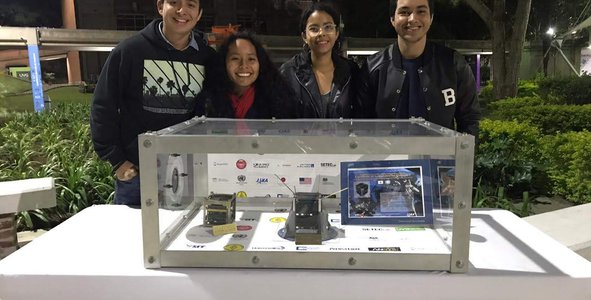
For this challenge we used some NASA articles and others from Space.com. We decided to use this information because, for us the Artemis’s project has some significance and makes us feel proud because our college was involved in this project and mission. For us it represents the quality of this college and, most importantly, shows us that there is no boundary that we can confront.
Hackathon Journey
This has been an experience where we all have learned to see things from different perspectives, since the problems we were looking for a solution to were focused on other people's perspectives. During the brainstorming that we used to find a solution we learned how other people perceive information and the best way to learn since the main objective was to provide information that is understandable to all audiences, for this we asked other people which is their favorite way to learn and they answered "interactively" so we looked for a way where people can have fun while learning, this solution was "Gather town" and with this platform we learned more about teaching tools. On the other hand, one of the main reasons that inspired us to choose this challenge was our own experience in college and how we in the course of college have found and adapted different ways to improve our way of learning.
References
- Adams, J. (2021, October 15). What Is the Artemis Program? NASA. Retrieved October 2, 2022, from https://www.nasa.gov/audience/forstudents/5-8/features/nasa-knows/what-is-the-artemis-program-58.html
- Bartels, M. (2020, April 3). NASA unveils plan for Artemis “base camp” on the moon beyond 2024. Space.com. Retrieved October 2, 2022, from https://www.space.com/nasa-plans-artemis-moon-base-beyond-2024.html
- Gather Town Presence, Inc. (October 2, 2022) from Gather | Building better teams, bit by bit
- Getting to Know You: Interim Cryogenic Propulsion Stage. (n.d.). NASA. Retrieved October 2, 2022, from https://www.nasa.gov/sls/interim_cryogenic_propulsion_stage_141030.html
- Gohd, C. (2019, August 2). Who Will Be the First Woman on the Moon? Space.com. Retrieved October 2, 2022, from https://www.space.com/who-will-be-first-woman-on-moon.html
- NASA: Artemis. (n.d.). NASA. Retrieved October 2, 2022, from https://www.nasa.gov/specials/artemis/
- NASA. (n.d.). NextSTEP H: Human Landing System. Retrieved October 2, 2022, from https://www.nasa.gov/nextstep/humanlander2/
- Powtoon.com, inc. (October 2,2022) from Editor de video | Hacer videos y animaciones en línea | Powtoon
Tags
#Space, #STEAM, #art, #investigations