Awards & Nominations
ZLAB has received the following awards and nominations. Way to go!
Global Nominee

ZLAB has received the following awards and nominations. Way to go!
We created an app for people to have a space travel experience in the solar system with art and science. The journey is presented with self-made original video, cartoon, music, data converted sound, etc. We also welcome users to participate and upload pieces of their journey with any other creative form. Our aim is to use art to promote science and share space knowledge to a broad audience.
We created an app for users to enjoy and share a space journey to mars, to Saturn, to the Sun, or any other planet in the solar system you wish.
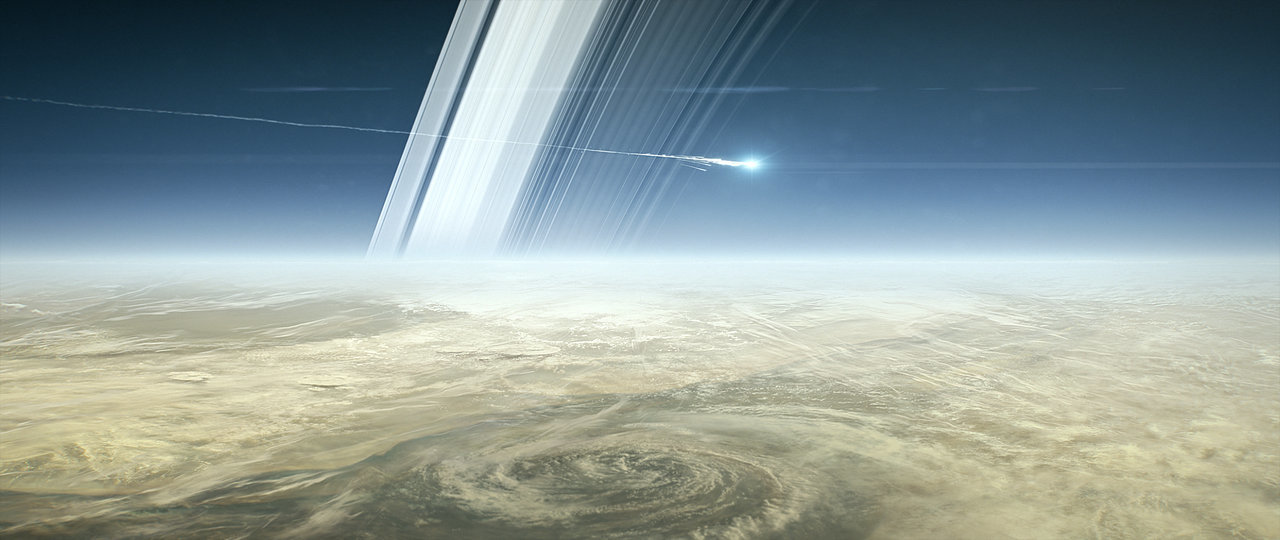
The app provides a solar system as a space map. The user can choose the destination and enjoy the journey. The journey is made of video/audio clips of the spacecraft launch, leaving the earth, traveling through interplanetary space, the viewing and arrival on various planets in the solar system, close view of the sun and so on. You can have an exciting space journey by combining those video clips to make a full space journey, for example, going from earth to the sun.
We used data, images and information from the nasa solar system (https://solarsystem.nasa.gov/) to make the video clips. Those video clips are informational and rich in knowledge. The phenomena such as solar wind, coronal mass ejection (CME) are explained. We hope the user can learn solar interplanetary environment science in an enjoyable way. We made the video clips with various art forms, for example videos, cartoons, music or data converted sound, etc.
We encourage the users to participate and share their space learning by uploading videos or audios in various forms. The aim of these clips is to provide an easy way for the audience to understand interstellar objects, phenomena, and the space travel experience. We encourage diversity and creativity in the making and sharing of your space journey. You may use visual details, music, or any other method to demonstrate space science. With visual features, people who don’t understand English can understand the video clips and people with a hearing disability can enjoy them as well. We included audio, so people without eyesight can learn the space experience. We are a girl majority team, and we also hope this can encourage more girls to participate and become interested in space science.
We hope you can enjoy our app and we welcome more people to participate by providing video/audio clips or providing feedback to enrich the app.
We have used the data, images and information from NASA solar system and data of the park solar probes. The images and information are fantastic and we cannot wait to get more people to learn those. We made video/audio clips with recording, cartoon, presented the physical phenomena such as solar wind and coronal mass ejections in a fun way incorporating art and science. We want to make science more fun and interesting.
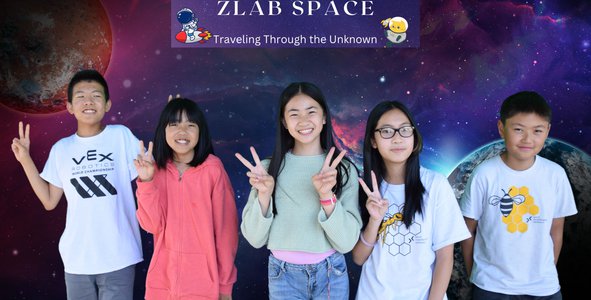
Alexander:
I personally enjoyed this challenge very much, and learned many things along the way. We chose the Turning STEM into STEAM challenge because we want to present science and technology in a more interesting way using art, so a broad audience can learn and enjoy space science. I was fascinated by nasa’s data on the solar system, and enjoyed looking through it. It was an extensive two days of research and learning, with excellent teamwork. We hope that our idea and app can allow more people to learn about space science and enjoy the space experience.
Zooey:
I enjoyed the challenge, “Turning STEM into STEAM” and as a team, we learned the power of friendship, teamwork, and what it truly means to be a leader. In these two days, we explored the solar system, found new ways to incorporate different resources and animations all into one website and app. Even though it was a short time, the experience will never be forgotten and the strong bond will never be broken no matter what. :)
Baolyn :
This challenge was a good experience for me. It let me experience more about space. I learned how to work with my teammates and how to cooperate as well as communicate with them. In the beginning, we had several meetings and I joined them, but I wasn’t very involved with the challenge. Later on, I got more involved, and did so much in a few days. I made so many new friends and I had a lot of fun with them. I hope I can experience this again.
Lexie:
We chose the challenge “Turning STEM into STEAM and I enjoyed it very much. I learned many new things while making this and these might be one of the only times that learning stuff was fun. I not only learned about space, but also how to use many sites and do research efficiently. We all worked together to complete this challenge and it truly has been an awesome experience to me.
Lexing:
The challenge we chose is the Turning STEM into STEAM. At first, our challenge was “On the way to the Sun” but we decided against it because there were so many participants. During this challenge, I learned that sometimes, just one person’s ideas can’t power a whole mission. Everything has its ups and downs, and other ideas can patch those holes, resulting in teamwork.
#art #steam #girl #diversity
A goal of open science is to make scientific information available to all, and original and innovative approaches can be helpful to effectively communicate scientific information to people with different cultural, socioeconomic, and ethnic backgrounds. Your challenge is to develop a creative method that uses the arts to share and explain the design, process, and/or scientific results from a NASA or partner space agency research project to your audience—i.e., develop an approach that combines science, technology, engineering, the arts, and math (STEAM).