 Tulgar Batu Alan
 Tulgar Batu Alan
Project name:
Simple synthesis of superhydrophobic coating material that can be easily applied to all surfaces
The goal of the project:
The word hydrophobic means water dislike in Latin. Hydrophobic surfaces are water-repellent surfaces. With this project, we aimed to make all kinds of surfaces superhydrophobic as cheaply and practically as possible.
The era we live in is an era in which nanotechnology science is formed and rapidly developing. Now, nanotechnology is used in every field from textile to informatics, from engineering to medicine.
Some of the reasons why nanotechnology has developed so rapidly and entered human life are as follows:
It can be applied in every field,
It allows for cheaper and more efficient production,
It saves space,
Minimizing time loss,
Improving people's quality of life.
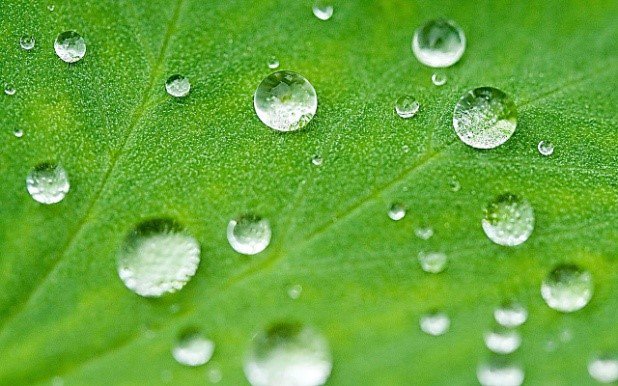
We also used nanotechnology to produce the super hydrophobic surfaces. Our biggest source of inspiration was the works of art in nature (Picture 1 and Picture 2).
If the angle between a water droplet and the surface it is between 90⁰-150⁰, this surface is called hydrophobic surface. Surfaces with a contact angle greater than 150⁰ are called superhydrophobic surfaces. In these cases, the liquid cannot adhere to the surface and cannot wet the surface.
Results and discussion:
In this project, a hydrophobic material that can be easily applied to any surface was successfully synthesized. At this point, the following properties of the material are important for us:
The chemical synthesis of the material is short and easy
Can be applied to any surface
Simple application procedure (The resulting solution is sprayed as a spray)
The chemicals used to synthesize the material are relatively inexpensive (it can be made much cheaper by using other long-chain fatty acids instead of Palmitic acid).
When we look at the characterization results, we see successful results. In SEM images, it is seen that hydrophobic chains come together and form very thin paper-like layers. This makes the surface hydrophobic. These very, very small rough structures on the surface are another factor that gives the surface a hydrophobic feature.
In addition, when the contact angle is considered, the hydrophobic feature of the surface is clearly seen. The results obtained were also compared with the results in the literature and it was confirmed that our results were healthy results.
Tulgar Batu Alan