
High-Level Project Summary
LENS is a game that strives to teach people about Nasa telescopes and using them to observe space objects in the most interactive and fun way possible while using virtual reality. You are an astronomer trying to build your resume by finding different space objects with the use of different telescopes (Webb, Hubble, Spitzer, Chandra, WISE). Each telescope has different capabilities and missions which integrate features of the telescopes. Progressing in the game is achieved by finding space objects thus` completing missions. To find a space object you have to play around with variables like zoom, wavelength, and many more which will break or make point of the mission.
Link to Final Project
Link to Project "Demo"
Detailed Project Description
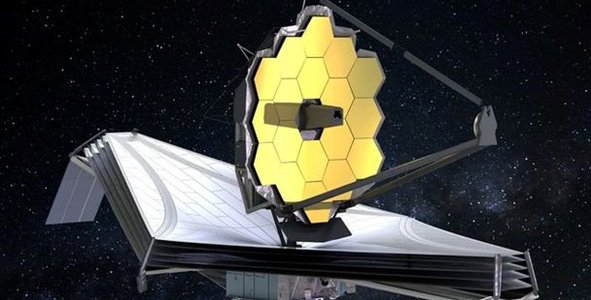
LENS focuses mainly on teaching its users how a telescope works and how to operate one from a simple one to a sophisticated one such as the recent James Webb telescope. To achieve this we will be using virtual reality software to make close to a first hand experience. You are an astronomer trying to master six telescopes for your resume : a simple Telescope, WISE, Spitzer, Chandra, Hubble, and James Webb. To make it more user friendly and attractive we are implementing missions for each telescope. Each telescope has its own capabilities and features. For example James Webb will have light frequency analysis which will show what elements are present . Lens starts with a tutorial mission which will be carried away by a simple telescope which will explain how to position the telescope, focusing on a celestial object, and how to zoom in. Each mission will provide a HUD compass that will guide you to finding a celestial object, let it be a star cluster, asteroid belt, even a white dwarf star. As you progress the missions will become more difficult by adding different variables such as time, wavelength, debris dodging, etc. When the missions are all completed you will unlock online competition mode. It will let players compete on different aspects of the game such as efficiency on telescope usage, period of time, and clarity of the picture. The scores will be shareable and stored online, and as such accessible to everyone thus attractive to space-competitive players . The players will access the game through Virtual reality software and hardware which will help its users learn about the limitless universe and the telescopes while having fun 360 degrees.
Space Agency Data
We used images from NASA’s James Webb and Wise Image Gallery to implement our project. We will use them as parts of the game where the user needs to find specific parts. We checked a lot of information from NASA’s Open Data to learn about different telescopes and ways we can use them as different parts of the game. We took inspiration from the vast amount of images from the James Webb and WISE telescopes, having these resources made us think of the possibilities and that there are limitless ways to expand LENS.
Hackathon Journey
Houston. When the NASA Space Apps project was announced we all applied without hesitation. When the 1st of October came, we met each other then and formed a team. At the beginning we could not find common ground between what challenge we liked better, and as such we lost a lot of time until we found the challenge all of us liked- “Learning through the looking glass”. We were mesmerized by its objective, making a game to teach the capabilities of the James Webb telescope. However, finding the right solution proved difficult. We were juggling around different ideas from a board game which you win by pointing the light at its photoreceptor to a building set with lenses which would form a star sky from the light. Then we found the idea which changed it all. A game which uses virtual reality as an asset to learning about the James Webb telescope while using its predecessors' history such as Hubble. Furthermore, we included the aspect of stargazing through space where we made missions for players to complete like finding a star and focusing on it by changing variables: Position, Focal length, Light intensity, and Depth of space. Fortunately work was not the only thing we did. We socialized with other teams from our country, exchanging ideas between each other, playing ping-pong, and staying all night to complete the project. Overall, NASA Space Apps helped us develop an idea we could only dream of under a starry sky and make space-enthusiastic friends with people from around the country. We are ready to take off.
References
Image Galleries Webb/NASA - https://webb.nasa.gov/content/multimedia/images.html
Wise Image Gallery | NASA- https://www.nasa.gov/mission_pages/WISE/images/index.html
https://www.spaceappschallenge.org/documents/694/2022_Space_Apps_Logos.zip
https://www.spaceappschallenge.org/documents/393/2020_fonts.zip
Tags
#LENS #Telescope #Universe #WISE #JamesWebb #Hubble #Chandra #Spitzer #VR