
High-Level Project Summary
Our project, “Neo’s Quest” is a computer program which has the objective of causing an impact, inspiring and creating interest in future generations, through telescope learning. The program is settled in an aeroespacial base. The user’s mission is to find a habitable planet with the help of the telescope. There are a total of 4 games with different dynamics related to the functions of the telescope. Our goal is to encourage young people and demonstrate to them that learning astronomy and solving challenges doesn’t have to be tedious. Interactive ways of learning are the tools that motivate future astronomers and discoveries.
Link to Final Project
Link to Project "Demo"
Detailed Project Description
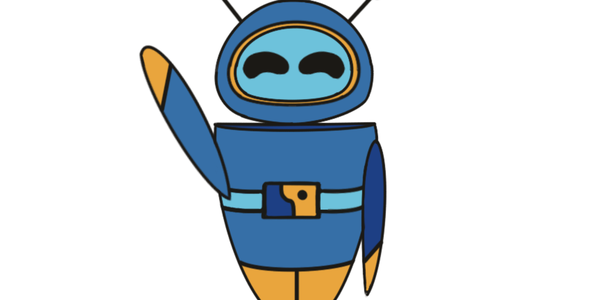
CONTEXT: Our video game is situated during the last years of Earth's existence before it is consumed by the Sun, which expands continuously through the years. The player’s mission is to find an exoplanet that will be habitable with the telescope. The player is accompanied and introduced to this problem with a robot named NEO. The guidance of this robot will help the player throughout the entire game.
AEROSPACE BASE:
- Wave Alignment:
During this first stage, NEO will provide some historical background about Newton’s experiment. NEO will explain that the experiment consists of letting in a string of sunlight that will be refracted by the prism, and that every color has its unique wavelength which is part of the electromagnetic spectrum, resulting in a rainbow on the other side of the prism. The telescope receives the light coming from the planets which goes through the gasses creating its own spectrums, and that is how the telescope can identify the gas components of different planets with the spectrums.
After NEO’S explanation the user will be able to start the first game, the player must align the wave with the one behind by using the arrows in order to make it correct.
- Memory Game:
The player’s next task consists of a memory game with part of the telescope. The player starts with all pictures facing down, the user makes progress when he picks two cards, and they match, the game is done once the player matches every pair of cards.
- Power Management:
This next game focuses on sending the telescope to space, the user has to calibrate the different variables with the controllers: fuel mass, combustion, acceleration, structure mass, and air friction. The user has to move the controllers until the bar on the top fills up, that means that the telescope is ready to launch.
- Galaxy (scratch idea)
Now the player has made it to space, it is almost time to finish the mission. The player has to color one of the galaxies captured by the James Webb Space Telescope. Each color has its own different light frequencies that correspond to a specific color, the frequencies can be gamma rays, x-rays, ultraviolet, infrared, microwaves and radio. This will determine the color each section will be, the user must color the drawing to its corresponding frequencies. The frequency color options are shown in a bank, and the drawing has the frequencies indicated. This mini game could not be finished, therefore it is not included in the final version of the game.
- Exoplanet Discovery
CHONPS, which stands for carbon, hydrogen, oxygen, nitrogen and sulfur, are essential elements for a planet to be habitable. During this last stage, the player must pick the right spectrum that matches the one shown in the game. The user will have three spectrums to choose from, and on the right, the spectrum for the elements of CHONPS will be displayed. The mission will be completed once all of the correct spectrums are selected.
At the end of the game a Congratulations! screen will appear and it will take you back to the principal menu.
FINAL PITCH: https://youtu.be/uxcZQBOJRpM
Space Agency Data
In order to get to know the amazing capabilities of the James Webb telescope, we analyzed some of the images it took of different space phenomenons found in the Canadian Space Agency Website. Looking at them we were fascinated by the image taken of the cartwheel galaxy taken in February 2022. We decided to include it in one of our minigames named Galaxy, which will include a drawn version of the galaxy, color divided by 4 of the range of colors in the electromagnetic spectrum found in the picture. The video game will indicate to the player what each color represents, infrared or ultraviolet rays, and which color corresponds to each of the divided parts.
Hackathon Journey
The space challenge was an outer space experience. We learned so much about our team's abilities and transformed into reality what once was an idea of what could be possible if we took our capacities to the maximum. The knowledge we gained covers the design of animations, characters and scenarios, the use of the program Unreal Engine to develop the video game, the behavior of various physics and biologic concepts in the telescope, rocket and space phenomenons, including the importance of combustion, velocity, gravity, time and mass in the launch of a rocket, the elements needed for human life in exoplanets (carbon, hydrogen, oxygen, nitrogen, phosphorus and sulfur), spectroscopy in Newton’s prism experiments showing the rays that compose white light (gamma rays, x-rays, ultraviolet, infrared, microwaves and radio) and how it represents the function of the telescope. What inspired us to choose this challenge was to motivate and show teens to learn about new technologies and devices in space with functions that let us observe and analyze the universe that surrounds and the fascinating phenomenons that are in it. Reaching this goal, we long for our and future generations to create and design technologic innovations and new discoveries to understand and, in the following years, probably live on another planet.
During this challenge, we sure encountered difficulties, but we learned how to solve them together. Developing a game from a newly known program and creating a storyline that solves the challenge we chose was quite laborious and exciting. We organized our ideas and divided the tasks among us to be able to complete everything in shape and form. We are very much grateful for the help of our physics teacher Abraham Ramsés Velázquez Kraff and our academic institution Tecnológico de Monterrey Campus Sonora Norte for motivating us and overall making this experience possible and memorable.
References
Adobe Inc. (2019). Adobe Photoshop. Retrieved from https://www.adobe.com/products/photoshop.html
Amos, J. (2022). James Webb Space Telescope extends secondary Mirror. Retrieved from https://www.bbc.com/news/science-environment-59885687
[AstronautaLiLi]. (2021, 30 agosto). Todo listo para el lanzamiento de James Webb - El mayor telescopio espacial de historia sin Starship [Vídeo]. YouTube. Recuperado 2 de octubre de 2022, de https://www.youtube.com/watch?v=50NcxWIBsMs&feature=youtu.be
A. Z., Z. (2020, 15 diciembre). Sunvox (1.9.6c) [Software]. https://www.warmplace.ru/soft/sunvox/
Edwards, S. (2012). Issac Newton and the problem of color. AAAS. Retrieved from https://www.aaas.org/isaac-newton-and-problem-color
Epic Games. (2019). Unreal Engine (4). [Computer software]. Retrieved from https://www.unrealengine.com
Espectros atómicos. (2004). Casanchi. Retrieved from http://casanchi.org/fis/espectros/espectros01.htm#2
Jane Butner. (2011). Procreate (5.2.6). [Mobile App]. Retrieved from https://procreate.art
National Geographic. (2022). Rainbow. Retrieved from https://education.nationalgeographic.org/resource/rainbow
M. P., P., C. O., O. & C. A., A. (2013, enero). Canva (3.0) [Software]. https://www.canva.com/\
Roggendorf, B. R., Behles, G. B. & Henke, R. H. (2021, 23 febrero). Ableton Live 11 (11.1.1) [Software]. https://www.ableton.com/en/live/
YouTube. (2017). YouTube. Retrieved October 2, 2022, from https://www.youtube.com/watch?v=6Fw-zBrtrO8
YouTube. (2019). YouTube. Retrieved October 2, 2022, from https://www.youtube.com/watch?v=i8akVtZwSaA
YouTube. (2020). YouTube. Retrieved October 2, 2022, from https://www.youtube.com/watch?v=l3TZf03hPOw.
Tags
#nasaspaceappschallenge #telescope #videogame #robot #adventure #space #unrealengine #software #programming #hackathon #space