Awards & Nominations
Alpha has received the following awards and nominations. Way to go!
Global Nominee

Alpha has received the following awards and nominations. Way to go!
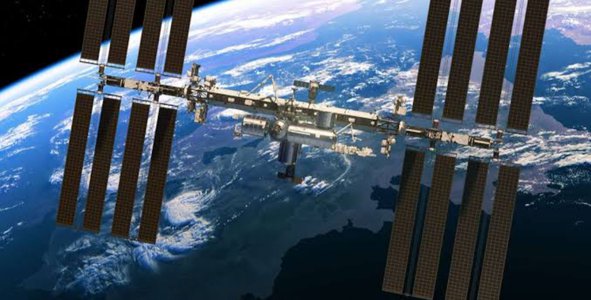
I've developed a feature-rich open-source web application that tracks the space station and fully depicts the Earth, the space station orbit, and the Station itself and every other satellites in three dimensions. My project provides users an accessible and realistic interface to track satellites in an aesthetic and responsive 3d modeling . Users can track the real-time position and trajectories of the space station across time (including future and past positions), look the altitude from the earth and the effect of the speed of the satellite by adjusting in real-time. The Idea will help users better understand and experience the ISS in Realistic way by tracking from any where and any device !
Various space station trackers are available online, but they often have limited features and capabilities. For example, some are bidimensional and do not provide 3D depictions. Other trackers provide some 3D depictions but show the Station as a dot or a 2D icon instead of a 3D model. Many that do provide full 3D depictions are desktop applications and are not readily accessible via a web browser. And many trackers that are fully 3D and web-based are closed-source—there's no way to access the code to learn how they work or to improve them.
This project solves the challenge by providing users an accessible interface for tracking the positions and trajectories of satellites particularly the International space station . By changing the speed of the satellite , the user can see how the satellite will differ from its normal speed , which provides insight into the relationship between Altitude(height) and velocity. when an instantaneous increase in velocity applied at one point in the orbit will result in an increase in altitude, peaking 180 degrees later (the opposite side of the planet) with a return to the original altitude at the initiating point. In other words, it will make the orbit elliptical. Users will see and understand that there is an inverse relationship between velocity and height.

An object in a circular orbit will have a greater velocity at a lower orbit than it will at a higher orbit. This makes sense because it has to overcome a stronger gravitational pull at the lower orbit and thus needs to be moving faster.
My project is important as it can be used to better understand and track the space station and fully depicts the Earth, the space station orbit, and the Station itself and various satellites in three dimensions.
Besides, It can show the real-time altitude from the earth in a chosen location.
One of the unique features is Allow users to browse the position of the space station across time (including future and past positions)coordinated with speed , Along with this Users can feel the real experience as one of the seven crew member on the ISS using HD and meticulous animation and coding.
In Addition to those features, The user can Display docked space crafts. The web application provides short pop up documentations to accompany the web app


 I used different JavaScript libraries like Three.js and satelilte.js for orbit prediction. Users can enjoy the view from the International Space Station in real-time. Everything that is visualized like earth, sun and moon is in original scale and at the exact position in space at this time in HD. (Real-time location tracking and predictions based on latitude and altitude) You can see or track live the position of the ISS with tremendous zooming capability, interactive on the map online in any browser. Users can also see the future orbit of the Space Station.
Project code Link:
I made extensive use of the NASA 3D resources library (https://nasa3d.arc.nasa.gov/), which provided 3D models when modelling the International space station and various satellites . These allowed me to develop Realistic and animated tracking web interface, making our project interactive and tangible experience to users.
Besides I've used the NASA WorldWind virtual globe resource.
I have been participating in NASA Space Challenge for the second time . My hackathon journey was really incredible . It was really satisfying reaching the end when I finally got my platform to produce fantastic results. I have learned a lot both about 3D modelling but also about consistency and producing high quality code in a short length of time! Besides, I learnt about time managment through building this big technical project.
I would describe myself as one curious being trying understand the world. I am always on the lookout to feed my curiosity(CLICK HERE) The world is full of fascinating problems waiting to be solved ,And I want to be a part of that solution to challenges on our planet earth!
What inspired me to choose this challenge is the the extreme curiosity to know what's happening on earth at the moment? IS the only way to look this beautiful earth in real-time is by being astronaut?
When I finally got my realistic platform to produce fantastic results I just wondered and breathes these random words “I see Earth! It is so beautiful.” as Yuri Gagarin said when travelling to space for the first time in the history of mankind.
I would like to thank my family for their contribution by giving constructive comments and editing. I can say they were a second party invisible team members.
I wish I had more time to work on my challenge Nevertheless, the experience and the knowledge that I got in this short amount of time far outweigh anything else.
Programming Languages Used:
Tools Used:
RESOURCES AND ASSETS:
#web, #satelitetracker, # webapp,#iss #space ,#satellite, #tracking, #3D, #visualization