
High-Level Project Summary
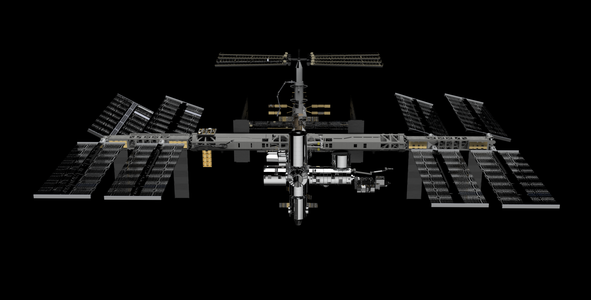
We developed a website that allows for tracking the space station in 3D. It "solves" the challenge by allowing users to be able to see the 3D image of the space station and where it is located at. This tracking tool is important as it can be used for an educational role where users can see how the ISS rotates around the earth, and how it behaves.
Link to Final Project
Link to Project "Demo"
Detailed Project Description
The project, in the form of the website, tracks the trajectory of the space station and maps them on a 3D model of earth. The space station is rendered in 3D and the station is constantly changing in orientation to simulate changes in the orientation of the ISS in space. It has the benefit of allowing users to see where in space and time the ISS is, and not just where on earth, as it shouldn't be.
A python web framework was initially used for creating the initial website. However, realizing the multiple drawbacks using this system, we chose to use Github pages to continue our project.
We hope to achieve a much improved space station tracker that can also be used to track other space objects in 3D and allow users to study how these bodies rotate and interact with earth.
Space Agency Data
We used NASA's tracking data for the ISS to plan our project, such that we planned to incorporate the data into our website to predict where the ISS will be going next, and through that, give the location of where the ISS is at or near at.
Hackathon Journey
As this was our first Space Apps, we did not have many ideas of what to expect. Adding to the "coincidence" that there were a lot of exams and assignments due right before and after the hackathon, the group members had to pull time to do and study their assignments, and also pull off the project for the hackathon.
Our team chose this challenge as we believe that we can improve and make a unique space station tracker that stands out from the rest and potentially allow for this to become a go-to educational tool to study more about our manmade space objects.
There were a lot of disorganizations early, and a lot less planning to design the web framework. We had to learn to compromise based upon our experiences. However, through the two-day challenge, we learned a number of experiences, such as the drawbacks of Django, having a clearer project goal, a reasonable plan and timeline.
References
https://www.esa.int/Applications/Observing_the_Earth/Copernicus/Sentinel-5P/Ozone_layer
https://science.nasa.gov/get-involved/toolkits/spacecraft-icons
https://earthobservatory.nasa.gov/images/885/earth-from-space
https://www.istockphoto.com/photo/carbon-dioxide-emission-asia-gm1082458016-290308946
vsr83/OrbitsGL: Visualization of elliptic orbits with WebGL (github.com)
Tags
#iss #software #visualizer #public