
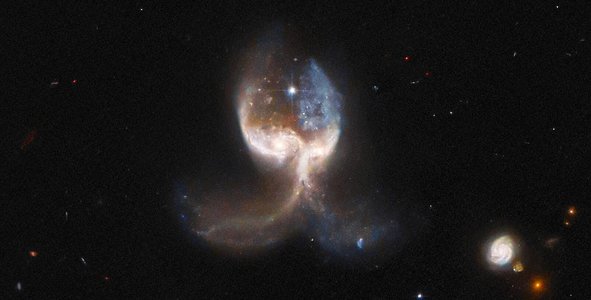
High-Level Project Summary
Our team developed Artemis to be a universally accessible web application that allows audiences to interact with their local star system. The benefit of our platform is that it's low-code approach allows anyone to easily drag and drop their favorite open data and share it with the entire community. This encourages anyone to contribute, regardless of age or technical aptitude.
Link to Final Project
Link to Project "Demo"
Detailed Project Description
Our team developed a Web Application (Web App) that allows visitors to customize the local stars in their orbit. Enjoy a unique experience of Artemis via the following features:
Accessible (UI/UX) practices ensure a consistent experience across any device.
Real-time NASA open-data presents visitors accurate information on the stars in their orbit.
Technologically expansive by allowing users to save Geo-spatial data across cloud-native storage.
Education focused allowing anyone to publish their dashboard to the community marketplace.
Material UI drag-an-drop any elements of the stars to expand the user experience.
Ingestion support with low-code Application Programmable Interface (API) to expand collected data-sets.
Shareability across the universe with support of popular Instant Messaging and Social Media platforms.
Website:
https://clever-dasik-399063.netlify.app/
Main Page:
 Cataclysmic Variables Page:

Cepheids Page:

Light Curves Page:
Space Agency Data
Our team's multiplatform web app utilizes API's to ingest and graph spatial information geographically from sources such as NASA Open Data. This allows us to utilize the JavaScript features of Material UI and React to visually present a acurate representation of a star in orbit with data from Google Earth. An example of this data below was graphed with Python for the sample-set from the Canadian Space Agency's Brite Program.
Data Sample Source:
https://docs.google.com/spreadsheets/d/1dehh5wEvhYDvLBYIpc_3OqeM-lp_JDKDLey5yC9fgKE

Hackathon Journey
We had an awesome weekend competing in the NASA Space Apps challenge at Tampa HackerSpace. Our team developed an out-of-the box approach to our project with open data sets. The final outcome was a result of our collaboration that divided up the tasks to match each skill set that allowed us to cross the finish line within the allocated 48 hours. Hopefully the data we presented inspires future generations to solve the future challenges involved with deep space exploration.
References
Project Samples:
https://clever-dasik-399063.netlify.app/
https://docs.google.com/presentation/d/1EDf8AWJuFVHzdFv7RtVaz71FrOitJF3j3Ol5xGnni2c/edit?usp=sharing
https://docs.google.com/spreadsheets/d/1dehh5wEvhYDvLBYIpc_3OqeM-lp_JDKDLey5yC9fgKE
Open Source Data:
https://asc-csa.gc.ca/eng/open-data
https://data.nasa.gov
https://earth.google.com
Other References:
https://brite-constellation.at
https://w3.org/TR/WCAG20
Software:
https://figma.com
https://mui.com
https://python.org
https://reactjs.org
Software Code Snippets:
https://github.com/abeyra/Artemis
https://github.com/Munk-E/spaceappsstars
Tags
#Artemis, #Galaxy, #LittleStar, #NASASpaceApps, #NASASpaceAppsChallenge ,#NASASPACEAPPSTAMPA, #SpaceApps, #STARS, #TwinkleTwinkleLittleStar