Awards & Nominations
Twinkle Tycho has received the following awards and nominations. Way to go!
Global Nominee

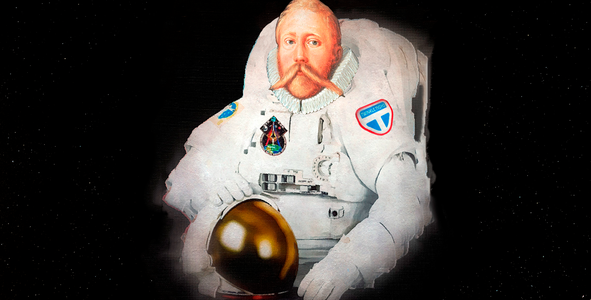
Twinkle Tycho has received the following awards and nominations. Way to go!
Twinkle Tycho is an End-to-End solution and an amazing journey through the variable stars with: Dynamic classes to learn about stellar variability and a Quiz to be tested with real stars; A complete visualizer to explore the sky, see variable stars and speed it up to watch them blinking; A Machine Learning model to predict which stars are variable; 3D modeling with Light Curves converted into sound to create your own Star; A friendly IA ChatBot designide to help. The focus of Twinkle Tycho is to teach and comunicate about stellar variability based in solid science and effective/real models. We produce 3D modelling, AI and Machine Learning models that can be escalate with even more data!
Scientists have identified many thousands of variable stars and countless more are yet to be discovered. Some stars vary intrinsically – that is, their actual brightness increases and decreases. These variations can be regular: our Sun varies by about 0.1% across its 11-year Solar Cycle, while some Cepheid variables can double their brightness over the course of a week! Intrinsic variation can also be irregular or semi-regular due to flares or explosive events. Some stars vary extrinsically – that is, something external causes their apparent brightness to change. Eclipsing binary stars provide one example of extrinsic variation when one star in the binary star system passes in front of the other and blocks its light. Thanks to satellites such as the Kepler Space Telescope and the Transiting Exoplanet Survey Satellite, NASA has monitored many thousands of stars for years and there is a rich sampling of stars whose variability has been measured. However, since these variations are typically small and slow and the stars are faint, people can’t just look up in the night sky and see these changes.
Learning about things like the variability of stars and concepts involved in this phenomenon can be very complicated, above all due to the lack of sources and the unavailability of simplified information, something essential for everyone to learn. Therefore, we decided to put together a curriculum in the form of short and dynamic videos presented in an easier way to make learning simpler. All the videos have subtitles so they are accessible. The curriculum is entirely based on data from NASA, Partner Agencies and Public Universities allowing a scientifically based theoretical foundation.

Fig 1. Main page of the web application.
Based on this, the curriculum is designed in a logical and cumulative way to teach why and how stars vary, as well as characteristics such as the intensity and period of variation and the curve of light observed from Earth, the classes being divided into:
(1) Basic concepts of star variability such as apparent magnitude and period of variation;

(2) Intrinsic Variables - Pulsating Variables

Fig 3. Module 2: Pulsating stars.
3) Intrinsic Variables - Cataclysmic Variables

Fig 4. Cataclysmic variables.
4) Extrinsic Variables - Eclipsing and Rotational Binaries;

Fig 5. Extrinsic variables.
5) Rare events that cause stellar variation such as Solar Flares and Supernovas.

Fig 6. Peculiar variables.
At the end of the curriculum, it is possible to access an interactive quiz where you can test what you have learned during the classes.
After learning about the variability of stars and becoming an expert on the subject, what better way to test your knowledge than an interactive quiz? The Quiz is designed to show gifs of varying stars, leading the person to try to find out what the class of the variable star is.

Fig 7. Quiz game screen showing star variating. Fig 8. Quiz screen when answered.
Each type of variation is shown differently, giving feedback on the successes and, if desired, allowing the person to rewatch a specific module of the curriculum to reaffirm knowledge.

Fig 9. Quiz final screen, 1 correct answer out of 4. Fig 10. Quiz final screen, 4 correct answers out of 4.
A viewer was developed using the opensource tool "Aladin Sky Atlas" allowing the user to browse digitized astronomical images. In these images, we identified the location of variable stars (generated from the variability prediction) that were highlighted by an interactive target. When selected by the user, a sheet with star information such as: main ID, object type, expectral type, declination and right ascension are displayed. To promote accessibility in the viewer, legends with the specification of each attribute are displayed alongside, as well as a menu containing the definition of the main functions.

Fig 11. Visualizer screen,
To be able to understand why and how the stars change, first we need to find which stars are variables and which are not, so we can analyze them. For this part of our challenge, we first used the LightKurve library from python to find target pixel files. Target pixel file is an object that contains a time series of the brightness changes of a star, specifically the value changes on the pixels where the star is located in the full frame images. In the image below, we can see how a single frame of this target pixel file looks like:

Fig 12. Pixel column by flux graph.
The target pixel file used came from TESS and KEPLER mission, the object imported can be converted to a light curve graph that can show us how the brightness of the star fluctuate or varies over time. The light curve graph looks like this:
Fig 13. Light Curve Graph from a star.
For our model to be able to understand this type of data, the light curve object was stored in a data frame. The final data frame has 27 stars observed over 1250 days, the target name, classification (variable or non-variable) and the coordinates according to the Astronomical coordinate system for each of them.
The dataset was split in 60% for training and 40% for testing, then four different models were tested: Logistic regression, Naive Bayes Gaussian, Random forests and Multilayer Perceptron (2 hidden layers with 5 and 2 neurons respectively). The Naive Bayes, Logistic regression and Multilayer Perceptron all got around 78% accuracy, and the Random Forest got 64% accuracy.
The test classified with Naive Bayes Gaussian were then displayed at the visualizer.
As a tool to help you understand what a variable star would look like, you can create your own star. Set parameters such as the type of variability, the period and the intensity of the variation. After choosing these characteristics, you will be able to see what your star would look like. Change the star's characteristics as often as you like to better understand how each parameter affects the star's appearance and variation.
The star modeling process is done using the Blender 3D modeling software. Modeling is done in order to reproduce as accurately as possible the scientific data and phenomena behind each variation.
The star itself is modeled as a 3D body in Blender using different modifiers.

Fig 14. Relação de modificadores na modelagem da estrela.
The modeling of how the star's brightness and size varies is completely based on satellite data obtained from the ASAS-SN Catalog of Variable Stars based on the ASAS-SN (All-Sky Automated Survey for SuperNovae) and NASA’s Database
From the ASAS-SN database, light curves are obtained for different types of variable stars such as pulsating ones. The light curves are then transformed into an audio file in mp3 format containing “the sound of the star”.

Fig 15. Light curve obtained for the Binary System Fig 16. Audio files in mp3 format obtained
ASASSN-V J000513.83-073235.9 / HX Cet. for lightcurves from different variable stars.
This mp3 file is then used to model the variation of the star's brightness according to this "star sound" from a Blender wavefunction, where the value of the star's emission is controlled by the value of waveforms placed from the graph editor with the Blender Bake Sound to F-Curves tool.

Fig 17. Modeling light emission using the mp3 file created from the lightcurve.

Fig 18. Light Curve for a Cepheid Variable. Fig 19. Cepheid Variable Star modeled.
Fig 20. Light Curve for a RotationalVariable. Fig 21. Ratational Variable Star modeled.
In this way, it is possible to model phenomena of variation of a star. It is possible to reproduce any star through a modeling software such as Blender and then use the light curve as a wave function that regulates the variation of the star's apparent brightness, which is an excellent way to understand how a certain star varies visually over time. In this application we do this for some examples of stars and many more could be done.
For the Star Simulator logic we used a decision tree based on satellite data and Scientific information provided by NASA and its partners. This decision tree is designed in such a way that it does not allow, for example, the user to create a Cataclysmic Variable with a fast period of variation or low variation of magnitude, since the light curve of events such as a Supernova are extremely bright. and the variation of its light occurs over months. On the other hand, events such as Rotational Variables or Eclipsing Binaries occur in periods ranging from hours to months and, therefore, it would not make sense to model an eclipsing system with a period of years.

Fig 22. Decision Tree for the Star Maker .
Thus, based on this decision tree, the simulator is designed in order to allow the creation of scientifically accurate stars, making the star modeler a way of knowing precisely the possibilities. From this, it is possible to choose the type of variability, the intensity of the variation, the period of variation and then generate your own star as it would really be.

Fig 23. Inicial Star Maker screen (23.a) and Star Modeling Menu (23.b)

Fig 24. 3D models produced from the Star Simulator showing a Cepheid (24.a) and a Ratational Variable (24.b)
Only some types of stars are modeled, but the logic and the way of modeling developed allow the creation of as many stars and events as you want, allowing the creation of a varied database and models.

Fig 25. Future models that may yet be produced showing a Supernovae (25.a) and a Binary System (25.b)
The journey through knowledge is an incredible and limitless path. After learning about stellar variability, creating your own star, testing your knowledge in a quiz and visualizing the variation of stars in the sky above your head, you can already consider yourself almost an expert on the subject. However, the curious mind is a machine for producing doubts and questions. Sam, a friendly ChatBot built on Artificial Intelligence, will help you on the journey of knowledge, answering questions and answering questions in an interactive way. The name Sam is given after SN 1572, the first variable star discovered by Tycho Brahe in 1572. The AI ChatBot was built using IBM's Watson Assistant. Watson Assistant is a virtual tool that uses artificial intelligence to understand questions in different contexts and provide quick, consistent and accurate answers. This artificial intelligence model uses a training database where the same question on a certain topic is asked in several different ways, indicating what the expected answer would be for that question topic. In this way, variations of the same question are used to train the ChatBot to understand when the user is talking about a certain subject.
Fig 26. AI ChatBot training for questions and answers.
From this training with the database, a probability model is generated to predict the chance that a user is talking about a certain subject and then direct it to conversation flux that responds in the most appropriate way to the user's questions. In this way, we can generate a really smart and friendly ChatBot capable of understanding the user's doubts in the best possible way and then answering them.
Fig 27. Resulting Ai ChatBot - Sam.
The ChatBot's conversational capability is completely dependent on the training database. Here we demonstrate the possibility of creating this ChatBot to teach about Stellar Variability. Afterwards, an exponential amount of data can be added to the database to make Sam even smarter and more prepared. A particularly interesting idea would be collecting questions from children and teenagers and setting a large database to teach the chatbot. This would give it the best training to talk directly to the younger generations.
By creating models such as a Star Simulator based os light curve converted into sound or an Machine Learning Predictor to identify if a star is variable or not, we do so entarely based on science data and serious analyses of the data. We do so to show that creating realistic models based on real science is possible and is also a really good option to teach about anything, such as Star Variability.
Furthermore, the models we created have already shown to be precise with "few" data. Prove of it is that the predictor of variable stars has shown a precision of 78% in its prediction using only 13 star to its learning. Imagine what we could do with a database of thousands of stars. In the future, much more data and huge databases may be used to train the Machine Learning Variable Star Predictor, creating a reliable tool to identify variable stars.
Also, much more complex analyses and light curves may be used to model stars and produce a model that shows the real look of a variable star.
The applications in science and education are immeasurable.
GITHUB: https://github.com/MrVtR/Twinkle_Tycho_NASA_Space_Apps_2022
An extensive use of data from Kepler telescope was done (https://archive.stsci.edu/pub/kepler/target_pixel_files)
This data was used to get archives with Kepler's pixelfiles to extract lightcurves. The lightcurves was later used to visualy see the pixels, see the luminosity variations (light curve) and create the Machine Learning model trained to recognize patterns in light curves and differ variable stars from ordinary stars.
Data from WEB API Aladin was used for creating the star visualizer. Aladin uses data from NASAs Satellite MAST and HEASARC and was the main source of data for plotting the stars in the visualizer.
Last year we were in the online hackathon. It was a good experience and we made really far. But this year we are together, face to face. We are more experienced, decided, we know what we want. Wornking together again has been amazing and this year we're going even further!
The stars may blink, but we'll shine forever!
Catálogo de estrelas variáveis: https://heasarc.gsfc.nasa.gov/W3Browse/all/gcvs.html
Curvas de Luz: https://imagine.gsfc.nasa.gov/science/toolbox/timing1.html
Variáveis Cataclísmicas (Super Nova): https://imagine.gsfc.nasa.gov/science/objects/cataclysmic_variables.html
Gif data: https://hpf.psu.edu/2014/07/03/gliese-581/
Rotational variables: https://www.astro.keele.ac.uk/workx/superwasp-variable-stars/Intro.html
[1]Samus', N. N., Kazarovets, E. V., Durlevich, O. V., Kireeva, N. N., and Pastukhova, E. N., “General catalogue of variable stars: Version GCVS 5.1”, <i>Astronomy Reports</i>, vol. 61, no. 1, pp. 80–88, 2017. doi:10.1134/S1063772917010085.
NASA
https://starchild.gsfc.nasa.gov/docs/StarChild/questions/cepheids.html
https://imagine.gsfc.nasa.gov/science/objects/cataclysmic_variables.html
https://imagine.gsfc.nasa.gov/science/toolbox/timing1.html
https://heasarc.gsfc.nasa.gov/W3Browse/all/gcvs.html
Others
https://starchild.gsfc.nasa.gov/docs/StarChild/questions/cepheids.html
https://www.atnf.csiro.au/outreach//education/senior/astrophysics/variable_cepheids.html
https://www.youtube.com/watch?v=A5kYMOdv3Hg
https://spaceplace.nasa.gov/supernova/en/
https://www.britannica.com/science/supernova
http://spiff.rit.edu/classes/phys370/lectures/eclipse_1/eclipse_1.html
https://www.aavso.org/rotating-variables-mapping-surfaces-stars
https://hpf.psu.edu/2014/07/03/gliese-581/
https://www.youtube.com/watch?v=UH-zqJ2Jx64
For light curves and sound used in modeling stars: https://asas-sn.osu.edu/atlas
Modelar base: https://www.youtube.com/watch?v=2pLYyn86qQU
Texturas: https://www.solarsystemscope.com/textures/
Rotação Órbita: https://www.youtube.com/watch?v=HfnMmN1nYYQ & https://www.youtube.com/watch?v=IF9juYtbyoI
No próprio centro: https://www.youtube.com/watch?v=5qEnamh0aqE
https://heasarc.gsfc.nasa.gov/docs/tess/Target-Pixel-File-Tutorial.html
https://docs.lightkurve.org/index.html
https://spacetelescope.github.io/notebooks/notebooks/MAST/Kepler/Kepler_TPF/kepler_tpf.html
https://docs.astropy.org/en/stable/#
Archives with Kepler's pixelfiles to extract lightcurves: https://archive.stsci.edu/pub/kepler/target_pixel_files
Light Curves: https://imagine.gsfc.nasa.gov/science/toolbox/timing1.html
Cataclysmic Variables: https://imagine.gsfc.nasa.gov/science/objects/cataclysmic_variables.html
Cepheids: https://starchild.gsfc.nasa.gov/docs/StarChild/questions/cepheids.html
Star coordinates: https://heasarc.gsfc.nasa.gov/db-perl/W3Browse/w3table.pl?tablehead=name%3Dgcvs&Action=More+Options
Declination and ascension: https://solarsystem.nasa.gov/basics/chapter2-2/
Coordinates/Target ID: https://mast.stsci.edu/portal/Mashup/Clients/Mast/Portal.html
#VariableStars , #Sky, #Learning, #StarVariability, #StarTravel


